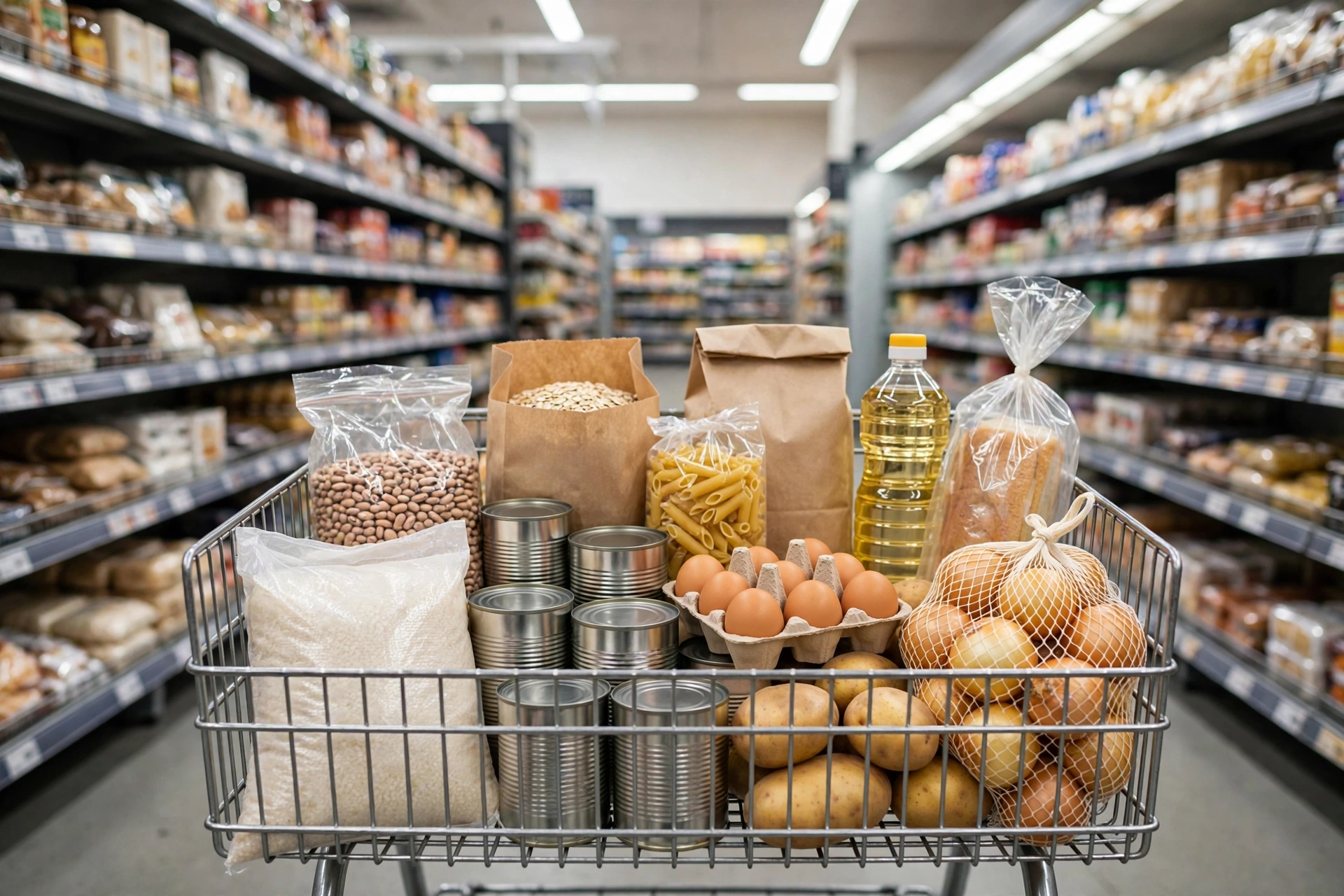
Grocery prices remain stubbornly high across America. The average family now spends hundreds of dollars more per year on food than just a few years ago — and every trip to the checkout feels like a negotiation. The good news: you have more control over how to cut grocery bills than you think. Small, consistent changes in how you shop can cut grocery bills and save your family $1,000 or more annually.
This complete guide goes beyond generic tips into the strategies that actually move the needle.
1. Plan Meals to Cut Grocery Bills (Saves $100+/month)
Impulse buying is the number one budget killer. Studies consistently show that shoppers without a list spend 20-40% more than planned. The fix takes just 15 minutes a week:
- Plan 5-6 dinners (leave one night for leftovers or eating out)
- Check your pantry, fridge, and freezer first
- Write a precise list organized by store section
- At the store: buy only what is on the list
Families who adopt weekly meal planning routinely report saving $100 or more per month.
2. Buy Store Brands Without Fear (Saves 15-30%)
Store-brand products are frequently manufactured in the same facilities as national brands — sometimes literally the same product in different packaging. The savings are substantial:
- Pantry staples (rice, pasta, canned goods, flour): 20-30% cheaper
- Dairy (milk, cheese, yogurt): 15-25% cheaper
- Frozen vegetables and fruit: 20%+ cheaper
- Cleaning and paper products: often 30%+ cheaper
Start with low-risk categories where brand differences are minimal, then expand as your confidence grows.
3. Shop Seasonal Produce (Saves 30-50% on produce)
Out-of-season produce is shipped thousands of miles and priced accordingly. In-season fruits and vegetables can cost half as much while tasting dramatically better. Print a seasonal produce chart for your region and keep it on the fridge. Farmers markets in peak season often beat supermarket prices on local produce.
4. Embrace the Freezer Aisle
Frozen fruits, vegetables, fish, and even bread are nutritional equals of fresh — produce is typically frozen at peak ripeness. Benefits:
- Lasts months instead of days (near-zero waste)
- Frequently 20-40% cheaper than fresh, especially out of season
- Pre-portioned options reduce overbuying
5. Buy in Bulk — Strategically
Warehouse clubs deliver real savings, but only on the right items:
Buy in bulk: Non-perishables, paper goods, cleaning supplies, frozen foods, pantry staples
Do NOT bulk-buy: Fresh produce, dairy, or bread unless you will genuinely consume them before spoiling — waste erases all savings
Calculate the per-unit price (most shelf tags show it) to verify the deal is real.
6. Rethink Meat: The Biggest Lever
Meat is typically the priciest part of the grocery bill. You do not need to go vegetarian — just strategic:
- Designate 2-3 meatless dinners weekly using beans, lentils, eggs, or tofu
- Buy cheaper cuts (chicken thighs vs. breasts, chuck vs. ribeye) — slow cooking makes them delicious
- Watch for manager’s specials on meat nearing sell-by dates; cook or freeze the same day
- Use meat as a flavoring rather than the centerpiece (stir-fries, pasta, soups)
7. Kill the Convenience Markup
Pre-cut fruit, shredded cheese, pre-washed salad mixes, and single-serve packs carry markups of 50-200% over whole versions. Fifteen minutes of weekly prep — washing lettuce, shredding a block of cheese, portioning snacks — saves serious money.
8. Stack Store Apps, Loyalty Programs, and Cashback
Modern grocery savings are digital:
- Download your chains’ apps for digital-only coupons
- Join free loyalty programs for automatic discounts
- Stack manufacturer coupons on top of store sales
- Use cashback apps for additional rebates on groceries
- Time big shops to weekly ad cycles (most run Wednesday-Tuesday)
9. Shop Your Pantry First: The $0 Grocery Trip
Before every shopping trip, inventory what you own. Challenge yourself to build 2-3 meals from existing ingredients. This single habit reduces both spending and food waste — the average American family discards a shocking amount of edible food yearly.
10. Master Leftovers and Food Storage
- Store herbs in water like flowers; wrap greens in damp towels
- Freeze bread, cheese, and even milk
- Repurpose: roast chicken becomes soup, then stock
- Learn the difference between “sell by” (store guidance) and “use by” (safety) dates
Putting It All Together: A Sample Month
A family spending $800/month on groceries that adopts even half these strategies typically lands around $600-650 — saving $1,800+ yearly. That is a vacation, an emergency fund boost, or debt payments.
The Bottom Line
You cannot control inflation. But disciplined shopping habits return hundreds to your budget every month. Start with meal planning and store brands this week — the two highest-impact changes — then layer in the rest.
Smart Shopping Strategies by Store Type
Different stores serve different purposes in a smart grocery strategy. Warehouse clubs (Costco, Sam's Club, BJ's) excel for non-perishables, paper goods, and frozen items — but the membership fee only pays off if you shop there regularly and avoid impulse buys on non-essentials. Discount grocers (Aldi, Lidl) offer remarkably low prices on staples with minimal frills. Traditional supermarkets run the deepest weekly sales and accept coupons, making them ideal for strategic stock-ups. Ethnic grocery stores often have the best prices on produce, spices, rice, and specialty ingredients.
The savviest shoppers split their trips: monthly warehouse runs for basics, weekly supermarket trips timed to sales, and produce stops wherever quality-per-dollar is highest.
The Psychology of Grocery Marketing (and How to Beat It)
Stores are scientifically designed to make you spend more. Understanding the tricks helps you resist them:
- Essentials (milk, eggs, bread) are placed at the back, forcing you past tempting displays
- Eye-level shelves hold the highest-margin brands; look high and low for better values
- End-cap displays suggest deals that often are not discounted at all — always check the price
- Larger carts encourage more buying; use a basket for small trips
- Bakery smells and sample stations trigger impulse hunger buying — never shop hungry
- “10 for $10” promotions rarely require buying ten; check the fine print
Shop with a list, shop alone when possible (companions, especially kids, increase spending), and give yourself a 24-hour rule on unplanned purchases over a set amount.
Meal Prep: The Multiplier Effect
Meal planning saves money; meal prepping multiplies the savings. Dedicating 2-3 hours on a weekend to cook grains, roast vegetables, prepare proteins, and portion snacks eliminates the weeknight "too tired to cook" takeout trap — which is where food budgets truly hemorrhage. A $40 takeout order replaces a $8 home-cooked meal; just two avoided takeout nights weekly saves over $3,000 yearly.
Start simple: prep one grain, two proteins, and chopped vegetables. Even partial prep dramatically reduces weeknight friction.
Growing Your Own: The Ultimate Discount
Even apartment dwellers can grow high-value herbs (basil, cilantro, parsley, mint) on a windowsill — fresh herbs are among the priciest per-ounce items in the store. A small patio or community garden plot can supply summer tomatoes, peppers, lettuce, and zucchini. Seeds cost pennies; the return on a $20 garden investment often exceeds $200 in produce.
Teaching Kids About Food Budgets
Involving children in meal planning and shopping teaches lifelong skills. Give older kids a category budget ("you have $15 for snacks this week — choose wisely"). Let them compare unit prices. These lessons compound for decades.
The Bottom Line, Revisited
Grocery savings are not about deprivation — they are about intention. The families who spend least on food are rarely those who eat worst; they are those who plan most. Every dollar saved at the grocery store is a dollar for your goals: debt freedom, emergency security, education, or simply peace of mind.
2 thoughts on “10 Simple Ways Americans Can Cut Their Grocery Bills Right Now”