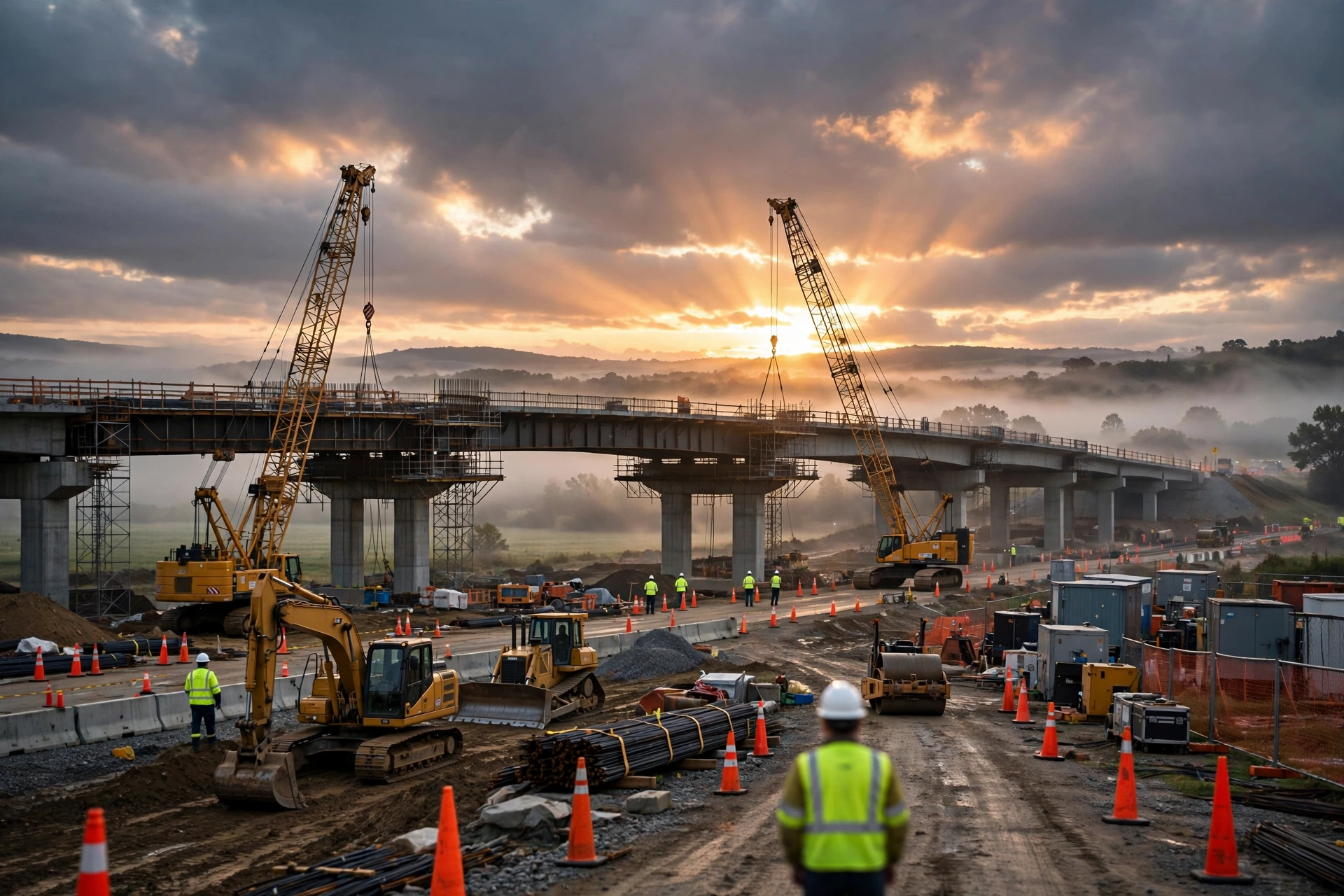
America's infrastructure — the roads, bridges, water systems, and broadband networks underpinning daily life — is getting its biggest investment in generations. But decades of deferred maintenance mean the race to rebuild is really a race against decay. This comprehensive guide to US infrastructure 2026 examines the state of American infrastructure, what's being fixed, what isn't, and what it means for you.
US Infrastructure 2026: The Scale of the Challenge
The American Society of Civil Engineers regularly grades US infrastructure, and recent report cards have been sobering: overall grades hovering around C-minus, with categories like transit, dams, and levees scoring worse. Behind those letters are tangible realities:
- Tens of thousands of bridges rated structurally deficient or functionally obsolete
- Water systems losing trillions of gallons to leaks from century-old pipes
- Traffic congestion costing Americans billions of hours and massive economic waste
- Broadband gaps leaving rural communities digitally stranded
- Aging dams and levees posing safety risks to downstream populations
These problems accumulated over decades of underinvestment. Fixing them will take years of sustained effort — there are no quick wins in infrastructure.
Roads and Bridges: The Front Lines
The Repair Backlog
America's 4+ million miles of public roads include vast stretches past their design life. Deferred maintenance compounds: every dollar of delayed road repair typically costs four to five dollars — a costly pattern US infrastructure 2026 planners are racing to reverse in eventual reconstruction. Potholes are not just annoyances — they damage vehicles, cause accidents, and signal deeper structural decline.
Bridges tell a similar story. While catastrophic collapses are rare, thousands of bridges carry weight restrictions or require monitoring. The average age of American bridges keeps rising. Replacing a major bridge takes years of planning, permitting, and construction — the pipeline must stay full.
What's Changing
Federal infrastructure investment is flowing to states for the largest bridge repair program in modern history, targeting the most critical structures first. Highway formula funding gives states flexibility to address their worst corridors. Innovative approaches — from ultra-durable materials to accelerated construction techniques that replace bridges in weekends rather than years — are stretching dollars further.
Water Systems: The Invisible Crisis
Americans turn on taps without thinking — but much of the nation's water infrastructure is shockingly old, with some pipes dating to the Civil War era. Lead service lines still deliver water to millions of homes, a public health imperative driving replacement programs. Wastewater systems overflow during heavy rains in many cities, contaminating waterways.
The investment need is staggering — hundreds of billions over coming decades. Federal funding is helping, but water utilities, many small and under-resourced, struggle with the engineering and financial capacity to execute upgrades. Consolidation of tiny systems and technical assistance programs are part of the answer.
Broadband: Infrastructure for the Digital Age
The pandemic proved broadband is essential infrastructure, not luxury. Yet millions of Americans — disproportionately rural, tribal, and low-income — lack adequate high-speed access. Federal broadband programs represent the largest connectivity investment in history, funding fiber builds to unserved areas.
Challenges persist: mapping exactly who lacks service (early maps were notoriously inaccurate), ensuring funded networks actually get built, keeping prices affordable, and developing the workforce to do the construction. But the trajectory is clear — universal quality broadband is now explicit national policy.
Public Transit: At a Crossroads
Transit agencies face a paradox: ridership patterns permanently altered by remote work have blown up fare-based funding models, even as the need for alternatives to driving grows. Systems are cutting service precisely when reliability matters most for winning riders back — a vicious cycle.
Yet transit investment continues: new rail extensions, bus rapid transit lines, and fleet electrification. The systems that thrive will be those redesigning networks for today's travel patterns rather than 2019's — more all-day frequent service, less peak-commuter focus.
The Workforce Challenge
Infrastructure money is only useful if workers exist to build. Construction trades face severe shortages as experienced workers retire faster than apprentices replace them. Programs connecting infrastructure investment to workforce development — pre-apprenticeships, community college partnerships, supportive services — are essential companions to funding.
This is also an opportunity: infrastructure careers offer good wages without college debt, and targeted outreach can bring new workers into the trades from underrepresented communities.
Permitting Reform: The Hidden Bottleneck
Money and workers mean little if projects die in permitting purgatory. Major infrastructure projects can spend a decade in environmental review and litigation before breaking ground. Bipartisan momentum exists for permitting reform that maintains environmental protections while imposing reasonable timelines and limiting duplicative reviews. Progress here multiplies the value of every infrastructure dollar.
Climate Resilience: Building for the Future, Not the Past
Every infrastructure dollar should account for the climate of coming decades, not past averages. That means elevating roads and bridges above projected flood levels, designing stormwater systems for heavier rainfall, hardening energy infrastructure against extreme temperatures, and in some cases, strategically retreating from indefensible locations.
Resilience investments pay for themselves many times over in avoided disaster costs — but require planning horizons longer than election cycles, a persistent political challenge.
What It Means for You
As a driver: Expect years of construction zones — frustrating but necessary. Support local infrastructure levies; the alternative is costlier emergency repairs.
As a homeowner: Water line replacement programs may affect your street. Lead line replacement is free to homeowners in many programs — check your local utility.
As a worker: Skilled trades offer strong prospects. Training programs funded alongside infrastructure spending lower entry barriers.
As a citizen: Infrastructure decisions made now shape communities for 50+ years. Engage with local planning — the unsexy public meeting determines whether your neighborhood gets sidewalks, transit, or flooding.
The Bottom Line
America is finally investing in its foundations at the scale the problem demands. The work will be slow, disruptive, and expensive — and absolutely necessary. The infrastructure built (or neglected) in the next decade will determine American competitiveness, safety, and quality of life for generations. The race to rebuild is really a race to decide what kind of country America will be.
How Infrastructure Gets Funded (and Why It Is Complicated)
American infrastructure funding is a patchwork: federal formula funds distributed to states, competitive grants for marquee projects, state gas taxes and vehicle fees (eroding as vehicles get more efficient), local bonds and levies, tolls and user fees, and increasingly public-private partnerships. Each source has politics attached. Gas taxes have not kept pace with inflation or fuel efficiency, leaving a structural shortfall. Tolling is efficient but unpopular. Bonds require voter approval. This fragmented system is a major reason investment lagged needs for decades — and why dedicated, sustainable funding remains the unsung prerequisite for everything else in this guide.
2 thoughts on “US Infrastructure 2026: Bridges, Roads, and the Race to Rebuild”