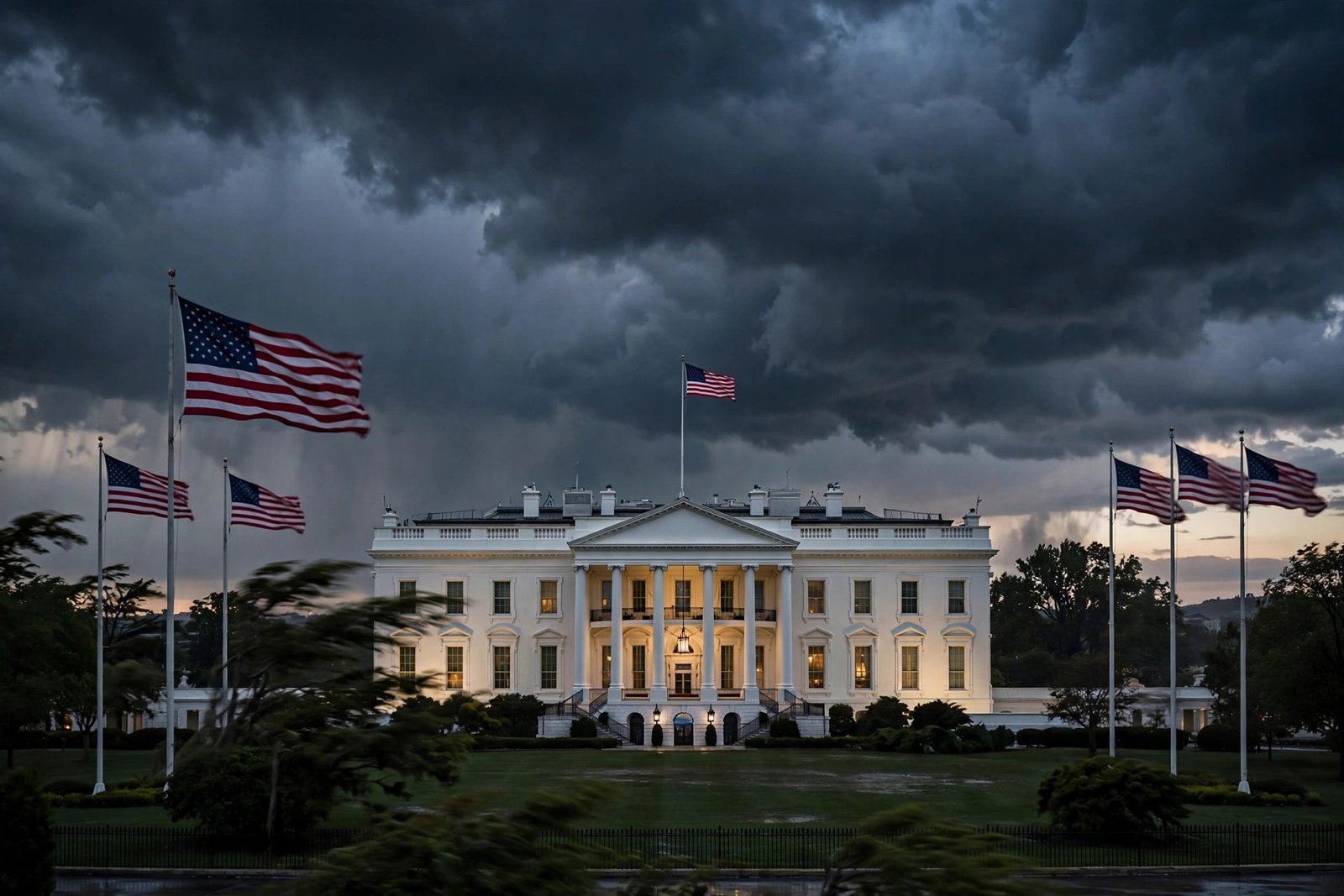
As Trump waives Russia sanctions that Congress passed with overwhelming bipartisan support, President Donald Trump has signed an executive order late Friday suspending the tough new penalties just two days before they were due to take effect. The move, which the White House says is in the national interest of the United States, shelves the 500% duties on Russian goods and the 100% secondary tariffs on countries that keep buying Russian oil and gas.
The order, titled “Implementing the Lindsey O. Graham Sanctioning Russia and Iran Act of 2026,” was signed on October 16, 2026 — the same day most of the law’s measures were meant to be locked in ahead of an October 18 enforcement deadline. As Trump waives Russia sanctions that lawmakers in both parties championed, the decision has ignited a fresh clash between the White House and Congress, scrambled global energy markets, and put the midterm election spotlight squarely on the president’s warming posture toward Moscow.
Named for the late Senator Lindsey Graham, its primary author, the law passed the Senate 86 to 11 in August and was signed by Trump on September 18. It wrote the toughest Russia penalties in years into federal statute — then handed the president a broad power to waive them. Trump has now used that power before the first duties and sanctions ever took hold.
- What Trump’s Executive Order Does
- The Sanctions That Will Not Happen: 500% Duties and Secondary Tariffs
- Why Trump Says the Waiver Is in the National Interest
- What the Order Keeps in Place: Older Sanctions and New Monitoring
- Congress Reacts: Bipartisan Anger Over the Waiver
- The 15% Rule: How the Tariffs Would Have Hit China and India
- Lindsey Graham’s Law, His Sister’s Election, and the Peace-Deal Bargain
- What’s Next
Trump Waives Russia Sanctions: What the Executive Order Does
Section 4 of the executive order is the heart of the action: it waives any duties provided for in sections 112 and 113 of the Graham Act, or in the order itself. It also sets aside the sanctions provision in section 102(d) and a long list of additional provisions — sections 102(a), 102(e), 103, 104, 105, 106, 107, 108, 109, 110, 111 and 117 — effectively gutting the law’s new enforcement teeth while leaving the statute formally on the books.
The order, as the White House published it, states: “I am hereby waiving the application of such sanctions, restrictions, and duties provided for in the Graham Act. I have submitted to the Congress a certification that the issuance of such a waiver at this time is in the national interests of the United States.” That certification, with an accompanying report explaining its basis, was required by section 115 of the act — the very escape hatch Congress built into the law.
Timing was everything. Most of the act’s measures were to be imposed within 30 days of enactment — by October 18, 2026, a Saturday — and the order uses that same date as the cutoff for “new purchases” of Russian oil or gas by the largest importers. By signing on Friday, Trump ensured the tariffs never switch on at all.
The waivers are not permanent on paper: they stay in effect until the president, or the secretary of state acting in consultation with the Treasury secretary and the trade representative, decides that further action is appropriate. In practical terms, however, the suspension lasts as long as the White House wants it to. Read StateLineDaily’s full timeline of the Katie Zacharia exit for a sense of how much this administration’s inner circle can shift in a matter of days.
The Sanctions That Will Not Happen: 500% Duties and Secondary Tariffs
To understand what just vanished, consider what the Graham Act would have imposed starting this weekend. Without the waiver, the order itself spells out the steep rates: goods from Russia would have faced a duty increase of 500 percent. Goods from the five largest importers of Russian crude oil and natural gas would have faced a 100 percent increase if those countries knowingly made new purchases of Russian oil or gas on or after October 18, 2026. Goods from the top five facilitators of Russian oil sanctions evasion would also have faced a 100 percent increase.
Reuters reported the law would have imposed tariffs of up to 100 percent within 30 days on goods from the five largest importers of Russian crude oil or gas. A Baker McKenzie briefing noted that most of the act’s measures were to be imposed within 30 days of enactment, by October 18, 2026. The summary of the order adds that the waiver also covers sanctions on Russia’s central bank, major commercial banks, state-owned enterprises and government officials — reaching restrictions on investment in Russia, energy trade and purchases of sovereign debt.
The law also included sanctions against Russian President Vladimir Putin and senior figures within the Russian government, as well as banks and other financial institutions. Those personal and institutional sanctions were part of the penalty package meant to choke off the financial resources fueling Russia’s war against Ukraine.
For importers and for governments buying Russian energy, the result is simple: the new Graham Act duties will not be collected while the waiver stands, and the new Graham Act sanctions will not be applied. The older sanctions system, built by executive order over several years, remains the one in force.
Why Trump Says the Waiver Is in the National Interest
The White House has not published the full report accompanying the national-interest certification, but the contours of the administration’s reasoning are visible in recent weeks of policy. Reuters reported that the move comes as Trump waives Russia sanctions while warming toward Russia and publicly criticizing Ukrainian President Volodymyr Zelenskyy, including suggesting that Ukraine needs a new leader — remarks that drew sharp rebukes from Kyiv.
Countries such as India, among the biggest buyers of Russian oil, had raised concerns about the bill, Reuters said. Beijing and New Delhi both lodged formal diplomatic objections about the secondary sanctions during the bill’s passage. With the November 3 midterms just 18 days away, financial analysts warned that sweeping trade barriers on major oil-importing nations threatened to spike global energy prices — and domestic gasoline prices — at precisely the moment voters judge the economy. See StateLineDaily’s coverage of September’s inflation jump for why the administration is wary of anything that pushes pump prices higher.
The administration also points to diplomatic flexibility. Leaving the door open on sanctions gives the White House leverage in its ongoing talks with Moscow and Kyiv. Trump has repeatedly said the United States is in discussions with Russia and China about reducing nuclear arsenals, telling Newsmax this week that he had spoken with Chinese President Xi Jinping about denuclearization.
What the Order Keeps in Place: Older Sanctions and New Monitoring
The executive order is careful on one point: nothing in it affects sanctions under earlier executive orders on harmful foreign activities of the Russian government, including the national emergency that Trump continued on March 24, 2026, as those measures stood the day before the Graham Act became law. People sanctioned under those older orders stay sanctioned, and the older sanctions architecture keeps operating.
The order also keeps a monitoring system running. The United States trade representative, working with the secretaries of state, Treasury and energy, must track which countries buy Russian crude oil and natural gas, watch for sanctions evasion, and report back to the president — including on whether the waivers should change. The USTR is to report developments to the president regularly, giving the administration an evidence trail if it ever decides to flip the tariffs back on.
That monitoring mechanism may matter more than it looks. If Russian oil exports surge or sanctions evasion networks grow, the White House will face documented pressure from its own agencies to act — and Congress will be watching the reports.
Congress Reacts as Trump Waives Russia Sanctions: Bipartisan Anger
The waiver landed amid an already furious Capitol Hill. Before the order, lawmakers of both parties had pressed the administration in writing to enforce the law by October 18. Twelve senators — six of them Republicans — called an earlier Treasury license, issued this month, that lets Russian diesel be sold on world markets until April 2027 “a gift to our adversary and a betrayal of our Allies” on October 13. Ukrainian President Volodymyr Zelenskyy called that license “not fair and not honest.”
Democratic Representative Don Beyer characterized the executive waiver as an unacceptable concession that undermines Ukrainian sovereignty, drawing sharp criticism from Democratic lawmakers and national security hawks who accuse the administration of undercutting statutory war penalties.
As of Friday night, the bill’s Senate sponsors had not published statements on the waiver — but the law’s bipartisan passage tells the story. The Senate passed the measure 86 to 11 on August 7, with votes from across the aisle, and twelve senators had already warned the administration against exactly this kind of softening. Watch for whether Congress now tries to write the sanctions into law without a waiver — the one maneuver that would close the escape hatch Trump just used.
The 15% Rule: How the Tariffs Would Have Hit China and India
One detail most coverage has glossed over is how the secondary tariffs were actually designed to work — and which countries were in the crosshairs. The tariffs would have hit countries importing Russian crude and gas, such as China and India, unless those nations imported less than 15 percent of Russia’s natural gas exports and took significant steps to reduce those purchases, according to BBC reporting.
That 15 percent threshold was the law’s safety valve: it gave big importers a path to dodge the tariffs by cutting back sharply on Russian energy. In practice, though, both China and India are far above any conceivable de minimis line, since they are the dominant buyers keeping Russian oil flowing. Reuters reported that India had raised particular concerns about the bill — its refiners are among the world’s largest processors of discounted Russian crude — even as Trump waives Russia sanctions broadly rather than granting any single country an exemption.
Russian investment envoy Kirill Dmitriev labeled the suspension a historic development, a signal of how loudly Moscow welcomed the decision. The October 16 executive order notably does not name India or China explicitly, applying the waiver broadly to the specified tariff provisions rather than granting any single country a separate exemption — a choice that lets the administration claim the move is policy, not a favor.
The energy market angle also ties directly to the midterms. Brent crude has swung above $109 a barrel amid tensions around the Strait of Hormuz, where the White House paused strikes on Iranian anti-ship missile and drone launch platforms ahead of the election, according to American officials cited by Axios. With gas prices already a major campaign issue, the White House faced a simple political calculation: new 100% tariffs on goods from major oil importers risked reducing petroleum liquidity and lifting prices right as voters head to the polls. For how energy costs are already shaping the race, see StateLineDaily’s 2026 midterm predictions analysis.
Lindsey Graham’s Law, His Sister’s Election, and the Peace-Deal Bargain
The law’s namesake adds a layer of political drama no other sanctions bill carries. The late Senator Lindsey Graham, a South Carolina Republican, wrote the bill with Senator Richard Blumenthal, a Connecticut Democrat, and championed it until his death in July 2026. Its central bargain was explicit: the penalties could be lifted for good only if Russia “signed a peace agreement that is accepted by the free and independent Government of Ukraine.”
Trump’s waiver needs no peace agreement and no ceasefire. It uses the law’s own suspension power to hold the penalties in abeyance indefinitely — achieving the opposite of what the bargain promised, without a single condition met.
The story also collides with the midterms in a personal way. Graham’s sister, Senator Darline Graham of South Carolina, is the Republican nominee for her late brother’s seat — running under his name, on his record. Democrats will now argue that the Republican White House gutted her brother’s signature achievement while his successor campaigns for it. Meanwhile Senator Susan Collins of Maine, in a competitive race, had signed the October 13 letter pressing for enforcement.
And history offers an uncomfortable precedent for the waiver itself. Presidents have repeatedly used national-interest waivers to suspend congressionally mandated sanctions — from Iran sanctions under the Obama administration to CAATSA waivers in the first Trump term. The pattern is familiar: Congress passes a tough law, the White House signs it for the headline, then quietly invokes the built-in waiver to preserve executive flexibility. What makes this episode stand out is the scale — the Graham Act’s 500% and 100% tariff schedule was among the harshest ever written — and the timing, two days before the deadline and 18 days before the midterms.
What’s Next
Will the tariffs ever take effect? Only if Trump or the secretary of state decides “further action is appropriate.” The White House holds the lever, and the monitoring reports from the trade representative will shape — or justify — that decision. Expect the issue to resurface the moment oil purchases by China or India spike.
Could Congress override the waiver? Lawmakers could amend the act to remove or narrow the Section 115 waiver power, but that requires a veto-proof majority and time the lame-duck calendar barely has. A more likely response is hearings and public pressure on the administration’s national-interest report.
What does Moscow do now? Russia’s biggest oil customers, among them China and India, no longer face new U.S. tariffs, though the president can reimpose them at any time. Kirill Dmitriev’s “historic development” framing suggests Moscow reads the waiver as a policy shift, not just a pause.
How does this play in the midterms? With the election 18 days out, Democrats will frame the waiver as Trump going soft on Russia; Republicans will frame it as Trump protecting American consumers from gas-price spikes. The battle over whose story voters believe will play out in Senate races like South Carolina and Maine — and in the generic ballot, where polls already put Democrats within reach of a House majority.
What should Americans watch this week? The report explaining the president’s certification, statements from the bill’s sponsors and from Kyiv and Moscow, oil purchases by China and India after October 18, and whether Congress tries to write the sanctions into law without a waiver.
Additional Details
Description: President Trump waived most of the new Russia sanctions and tariffs in the Lindsey O. Graham Sanctioning Russia and Iran Act of 2026 with an October 16 executive order, suspending 500% duties on Russian goods and 100% secondary tariffs on top Russian energy buyers two days before the October 18 enforcement deadline. This report covers what the waiver suspends, why the White House certified it as in the national interest, what sanctions remain, the bipartisan congressional backlash, the 15% import threshold for China and India, the law’s peace-agreement bargain, and what the waiver means for the November 3 midterms.
4 thoughts on “Trump Waives Russia Sanctions: Graham Act Executive Order Suspends New Tariffs Days Before Oct 18 Deadline”