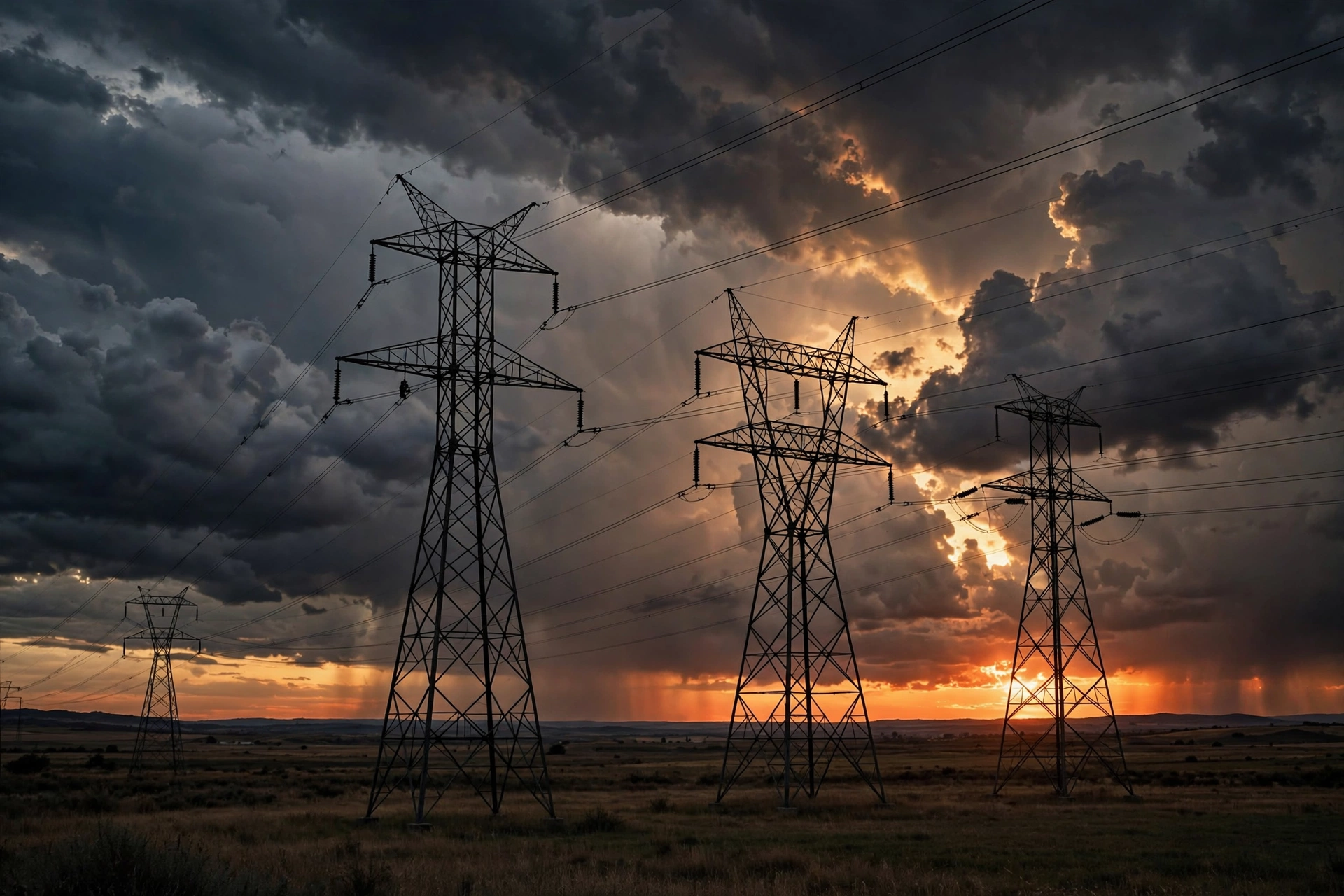
When the lights go out, modern life stops. Yet few Americans understand the vast, complex machine that delivers electricity to their homes — until it fails. This comprehensive guide to US power grid outages explains how the grid works, why outages happen, what is being done to strengthen it, and how you can prepare.
How the Power Grid Actually Works
The US power grid is often called the largest machine ever built — and that is barely an exaggeration. It comprises three major interconnections (Eastern, Western, and Texas/ERCOT), thousands of power plants, millions of miles of transmission and distribution lines, and countless substations and transformers.
The three stages of electricity delivery:
- Generation: Power plants (natural gas, coal, nuclear, hydro, wind, solar) produce electricity
- Transmission: High-voltage lines carry electricity hundreds of miles from plants to population centers — this is the grid’s interstate highway system
- Distribution: Lower-voltage lines deliver electricity the “last mile” to homes and businesses — the local streets
- Build an emergency kit: flashlights, batteries, portable chargers, battery radio, manual can opener, one gallon of water per person per day
- Know how to manually open your garage door and secure your home
- If anyone depends on powered medical equipment, register with your utility’s medical priority program and have backup plans
- Consider a portable generator (never run indoors or in garages — carbon monoxide kills) or battery backup station
- Keep phones charged when storms threaten; enable emergency alerts
- Report it to your utility (don’t assume neighbors did)
- Keep refrigerator/freezer closed — food stays safe about 4 hours in a fridge, 48 in a full freezer
- Unplug sensitive electronics to protect from surges when power returns
- Use flashlights, not candles (fire risk)
- Check on elderly neighbors
- Never approach downed lines — always assume they’re energized
- Restock emergency supplies
- Discard perishables that exceeded safe temperatures (when in doubt, throw it out)
- Reset clocks, check breakers, and inspect for damage
Grid operators must balance supply and demand every single second. Electricity cannot be easily stored at scale, so generation must match consumption instantaneously. This balancing act, performed by regional operators, is one of the most complex real-time engineering challenges in existence.
US Power Grid Outages: The Major Causes
Severe Weather (The #1 Cause)
Weather causes the majority of US power outages. High winds topple trees onto lines. Ice storms coat lines and snap poles under extraordinary weight. Hurricanes destroy transmission infrastructure across entire regions. Lightning strikes equipment. Flooding damages substations. As climate change intensifies extreme weather, weather-related outages are trending upward — a serious and growing challenge.
Trees and Vegetation
Falling limbs and growing branches contacting power lines cause a huge share of distribution outages. Utilities spend billions on tree trimming, but the battle never ends — vegetation grows constantly, storms strike unpredictably, and property disputes complicate clearing.
Equipment Failure
Transformers, insulators, breakers, and other grid components age — and aging equipment remains a leading driver of US power grid outages. Much US grid infrastructure dates to the mid-20th century, operating well past intended lifespans. When aging equipment fails — sometimes spectacularly, as in transformer explosions — outages follow.
Wildlife
Squirrels are legendary grid saboteurs, causing thousands of outages yearly by bridging connections in substations. Birds, snakes, and other animals contribute their share. Utilities install guards and deterrents, but nature persists.
Vehicle Accidents
Cars striking utility poles cause localized outages regularly — a mundane but significant cause, especially in suburban and rural areas.
Demand Overload and Heat
Extreme heat drives air conditioning demand to record levels, stressing every grid component simultaneously. When demand approaches available supply, operators may order controlled rotating outages to prevent uncontrolled cascading blackouts — the deliberate, limited pain that prevents catastrophic failure.
Cyber and Physical Threats
Grid cybersecurity is a national priority as digital control systems create new attack surfaces. Physical attacks on substations have also occurred. Utilities and federal agencies invest heavily in both cyber defenses and physical security, treating grid protection as critical infrastructure defense.
Major Outages in American Memory
The 2003 Northeast blackout — cascading from Ohio across eight states and Canada, affecting 50 million people — revealed how failures propagate across interconnected systems and spurred major reliability reforms. Texas's February 2021 freeze, when winter storm Uri knocked out power for millions in brutal cold, exposed the dangers of inadequate weatherization and isolated grid design. California's public safety power shutoffs during wildfire season represent a different tradeoff: deliberate outages to prevent deadlier fires.
Each disaster taught painful lessons that shaped today's grid policies.
What's Being Done: Grid Modernization
Hardening Against Weather
Utilities are burying power lines underground in vulnerable areas (expensive but highly effective), installing stronger poles, elevating substations above flood levels, and weatherizing equipment for temperature extremes. Storm-hardening investments run into the billions annually.
Smart Grid Technology
Sensors, automated switches, and advanced software are making the grid self-healing: when faults occur, smart systems can isolate damage and reroute power in seconds rather than hours. Smart meters provide real-time outage detection, replacing the old system of waiting for customer calls. These technologies are steadily reducing both outage frequency and duration.
Transmission Expansion
America needs far more high-voltage transmission to connect renewable energy (often generated far from cities) to demand centers and to share power between regions during emergencies. Transmission projects face lengthy permitting battles, but momentum is building behind streamlining approvals.
Battery Storage
Grid-scale batteries are transforming reliability economics. They store excess generation and discharge during peaks, smooth renewable variability, and provide backup during disruptions. Deployment is growing exponentially as costs fall.
Microgrids and Resilience Hubs
Hospitals, military bases, universities, and some communities are building microgrids — local systems that can disconnect from the main grid and operate independently during outages. Community resilience hubs with solar and storage keep critical services running when the broader grid fails.
What You Can Do: Outage Preparedness
Before an outage:
During an outage:
After restoration:
The Future Grid
The grid of 2040 will look substantially different: more distributed (rooftop solar, community storage), more digital (AI-optimized balancing), more resilient (hardened, with islanding capability), and cleaner. The transition requires enormous investment — estimates run to trillions — but the alternative, an increasingly fragile grid in a more extreme climate, is costlier still.
The Bottom Line
The US power grid is an engineering marvel operating under growing stress from age, weather, and changing demands. Outages will happen — but understanding why, supporting modernization investments, and preparing your household turns vulnerability into resilience. The lights may go out; your readiness determines what happens next.
The Human Side of Grid Work
Behind every restored outage are lineworkers doing genuinely dangerous work — climbing poles in storms, handling high voltage in brutal heat and freezing cold, often working 16-hour shifts during major restoration efforts. Utility crews routinely travel across state lines through mutual-aid agreements, leaving their own families to restore strangers' power. The next time your lights come back on after a storm, remember it was not automatic — someone risked their safety in miserable conditions to make it happen. Thank a lineworker.
2 thoughts on “Understanding the US Power Grid: Why Outages Happen and What’s Being Done”