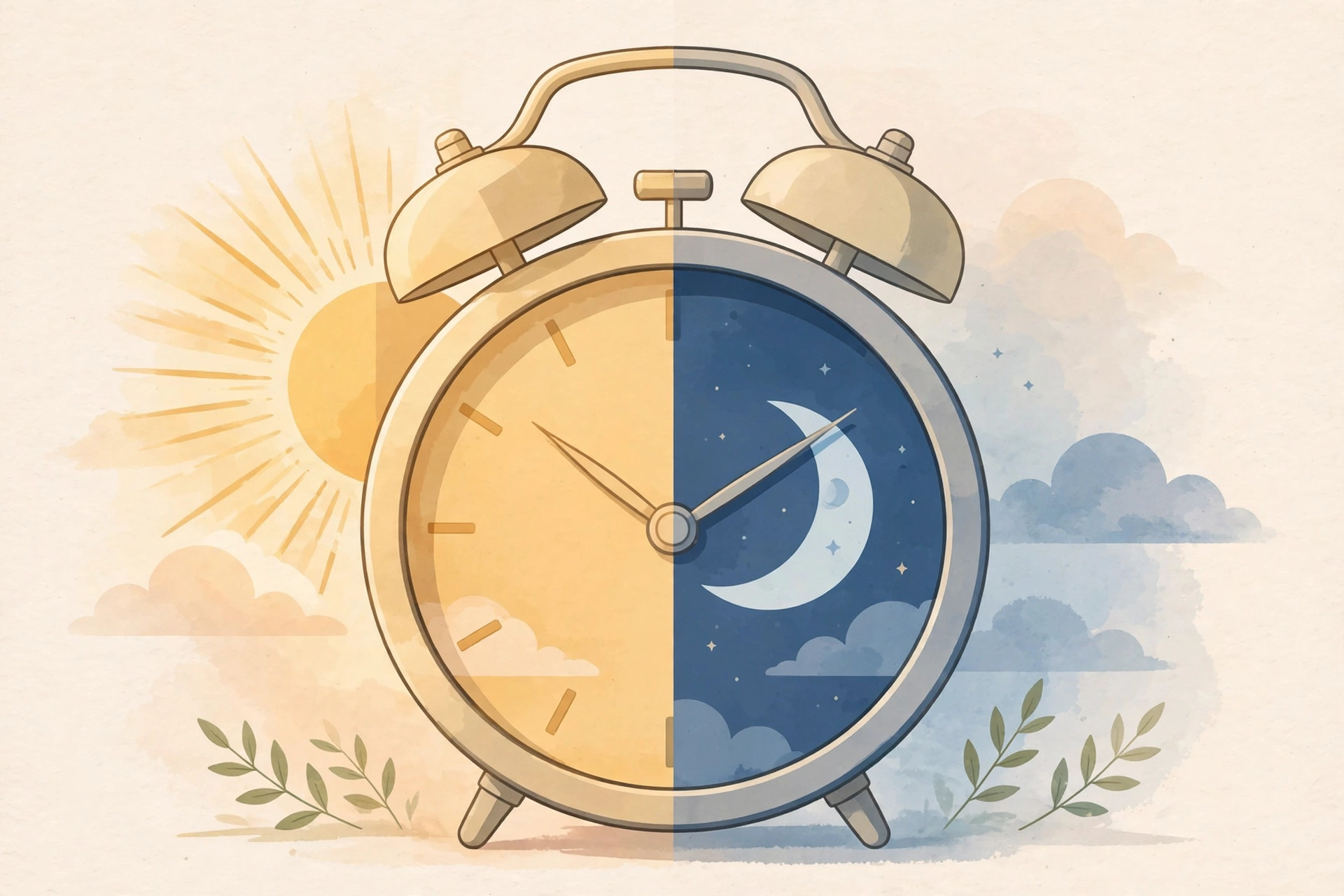
Twice a year, Americans perform the familiar ritual of changing their clocks — and twice a year, millions ask the same question: why are we still doing this? This comprehensive guide covers everything about daylight saving time 2026: when clocks change, how it affects your health, the state-by-state landscape, and the serious movement to end the switching for good.
Daylight Saving Time 2026: When Do Clocks Change
Spring forward: Clocks move ahead one hour in March, marking the start of daylight saving time.
Fall back: Clocks move back one hour in November, returning to standard time.
The exact dates shift yearly (second Sunday in March, first Sunday in November). Set phone reminders — and remember the mnemonic: spring forward, fall back.
Who does not participate: Hawaii and most of Arizona (except the Navajo Nation) stay on standard time year-round. US territories including Puerto Rico, Guam, and the US Virgin Islands also opt out.
The History: Why Do We Do This?
Daylight saving time was first widely adopted during World War I as an energy-saving measure — the logic being that shifting daylight to evening hours reduces artificial lighting needs. It was standardized nationally in the US with the Uniform Time Act of 1966, extended during the 1970s energy crisis, and extended again in 2007 to its current March-November span.
The original energy rationale has largely evaporated: modern studies find minimal or no net energy savings, as reduced lighting is offset by increased air conditioning and changed behavior patterns. What remains is essentially tradition — and a massive coordination problem in changing it.
How Time Changes Affect Your Health
The science here is increasingly clear and increasingly concerning:
Sleep disruption: Losing an hour in spring fragments sleep for days; gaining one in fall disrupts rhythms too. It takes the average person about a week to fully adjust — longer for night owls, children, and older adults.
Heart and stroke risk: Studies consistently show spikes in heart attacks and strokes in the days following the spring transition — on the order of 20%+ increases on the Monday after. The fall transition shows smaller effects.
Accidents: Traffic accidents and workplace injuries increase after the spring change, attributed to sleep-deprived drivers and workers.
Mood and mental health: Disrupted circadian rhythms worsen depression and seasonal mood disorders. The effects concentrate in vulnerable populations but touch everyone.
The consensus among sleep scientists: The American Academy of Sleep Medicine and growing numbers of researchers advocate abolishing the transitions entirely — the switching itself, not either time standard, is the health hazard.
Standard Time vs. Permanent Daylight Saving Time 2026: The Real Debate
If transitions end, which time should be permanent? This is where consensus breaks down:
Permanent standard time (favored by sleep scientists): Aligns clocks with solar time, meaning morning light — the most important circadian signal. Winter mornings stay brighter, benefiting schoolchildren waiting for buses in darkness under permanent DST.
Permanent daylight saving (favored by business and recreation interests): Extends evening daylight year-round. Supporters cite retail, recreation, and reduced evening crime; critics note dark winter mornings, especially for northern states and children.
The Sunshine Protection Act — proposing permanent daylight saving time nationally — has been introduced repeatedly in Congress with bipartisan support but has not become law. States cannot unilaterally adopt permanent DST (federal law prohibits it), though they can adopt permanent standard time — a one-way door that complicates reform.
The State-by-State Landscape
Dozens of states have passed legislation or resolutions favoring an end to clock-switching, contingent on federal action. A few have moved toward permanent standard time. But without Congress changing federal law to permit permanent daylight saving, most state actions remain symbolic — poised but parked.
This creates the odd situation where overwhelming public and legislative sentiment favors change, yet the mechanism remains stuck in Washington.
How Other Countries Handle It
The European Union has debated ending seasonal changes for years without resolution. Russia tried permanent daylight saving, then permanent standard time — a cautionary tale about getting the choice wrong. Japan has never observed it. The global trend, where change happens, favors permanence — but agreement on which permanence eludes most.
Practical Tips for Adjusting
Whether or not reform comes, you still have to live through the transitions:
Before spring forward:
- Shift bedtime 15 minutes earlier for 3-4 nights prior
- Get bright morning light on transition days to reset your clock
- Avoid the temptation to “catch up” with long naps that further disrupt rhythms
- Be extra cautious driving the Monday after — the data on accidents is real
Before fall back:
- The extra hour tempts late nights; keep your schedule consistent anyway
- Use the transition to recommit to sleep hygiene
- Prepare for earlier darkness: adjust evening routines, lighting, and outdoor exercise timing
For parents: Children's routines are especially sensitive. Shift kids' schedules gradually in the days before, keep mornings bright and evenings dim, and expect a few cranky days regardless.
For shift workers and the vulnerable: Those with sleep disorders, heart conditions, or demanding schedules should be particularly deliberate about transition planning — and discuss concerns with doctors.
The Economic Arguments
For ending switches: Health costs of transitions, productivity losses from sleep-deprived workers, and the sheer absurdity of maintaining a system whose original rationale expired.
Complications: Industries built around current schedules (broadcasting, transportation, finance) face transition costs to any change. The debate is less about whether to stop switching than about what replaces it — and that disagreement is what keeps the status quo alive.
What Happens Next
Watch Congress: any federal change requires legislation, and momentum builds each year as health evidence accumulates. Watch your state legislature too — state actions create pressure and, for standard time, can act unilaterally. Public opinion polls consistently show large majorities favor ending the switches; the question is purely which permanent time wins.
The Bottom Line
Daylight saving time transitions are a twice-yearly, population-wide health experiment with mounting evidence of harm and evaporated benefits. The scientific case for ending the switches is strong; the political question is what comes next. Until then, prepare deliberately, protect your sleep, drive carefully on transition Mondays — and maybe contact your representatives. This is one policy where public pressure could genuinely tip the scales.
The Global Clock: Who Else Changes?
Roughly 70 countries observe some form of daylight saving, concentrated in North America and Europe. Most of Asia, Africa, and South America do not bother — equatorial regions gain little from shifting daylight that barely varies seasonally. The patchwork creates real confusion for international business, travel, and technology systems twice yearly. If America abandoned the switch, it would join the global majority — and simplify life for everyone coordinating across time zones.