The US inflation September 2026 report delivered the worst possible news for the White House at the worst possible time. The Bureau of Labor Statistics said on October 14 that consumer prices rose 0.6% in September, lifting the annual inflation rate to 3.7% — up from 3.4% in August and above the 3.6% pace economists had forecast.
It was the fastest annual inflation pace since May, and it landed just 20 days before voters head to the polls in the November 3 midterm elections.
Gasoline did the damage. A 9.1% monthly surge in pump prices accounted for more than half of September’s entire price increase, the BLS said, while the broader energy index jumped 5.2% in a single month. This is also the last consumer price report before Election Day — October’s doesn’t arrive until mid-November — making 3.7% the inflation number that will define the midterm economic argument.
Asked about the report on October 14, President Donald Trump waved off the bad news. “We’re doing great,” he told reporters — a message that, as NPR’s White House correspondent Deepa Shivaram put it, is “not in line with what voters feel.” A Gallup poll released a day earlier found that, for the first time in more than a decade, Americans clearly trust Democrats more than Republicans on the economy — a 14-point advantage that spells trouble for the GOP’s final three weeks of campaigning.
- What the September CPI Numbers Show: US Inflation September 2026 in Detail
- Gasoline and Energy: The Engine Behind the US Inflation September 2026 Surge
- Core Inflation, Food and Shelter: The Details Beneath the Headline
- Trump Says “We’re Doing Great” as Voters Blame Him for High Prices
- Kevin Warsh and the Fed: A Rate Hike Six Days Before the Midterms?
- The 4.6% Number Nobody Is Talking About: What the Trend Really Signals
- Why Russian Diesel Won’t Lower US Pump Prices Anytime Soon
- Midterm Stakes: The Final Inflation Reading Before Election Day
- What’s Next
- Additional Details
What the September CPI Numbers Show: US Inflation September 2026 in Detail
The BLS released the September consumer price index at 8:30 a.m. ET on October 14, and nearly every major figure came in hotter than expected. Headline CPI rose 0.6% on a seasonally adjusted basis, pushing the 12-month rate to 3.7% — above the 3.6% Dow Jones consensus and the third straight monthly acceleration, Seeking Alpha reported. It was the highest annual reading since May, according to Catenaa’s analysis of the BLS data.
Energy supplied most of the push: the energy index climbed 5.2% in a single month and is up 20.4% over the past year amid the conflict involving Iran, the Daily Caller reported. Fuel oil surged 74.2% over 12 months — ominous with heating season approaching. Shelter also firmed, up 0.4% on the month and 3.2% on the year, Realtor.com’s analysis showed, squeezing households alongside a 30-year mortgage rate near 7.4%.
Gasoline and Energy: The Engine Behind the US Inflation September 2026 Surge
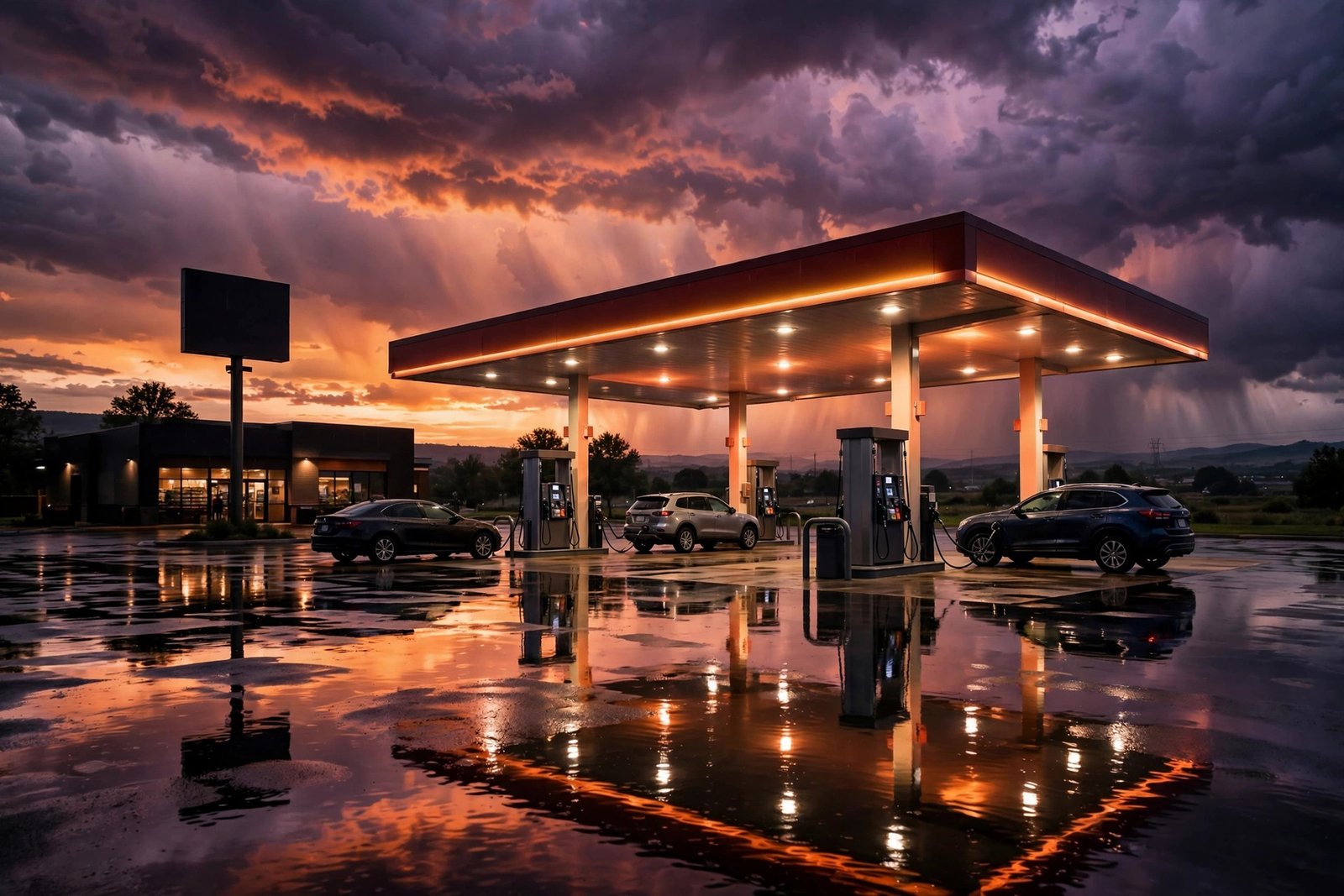
The US inflation September 2026 report has a single villain: the gasoline pump. Prices jumped 9.1% in September and are up 34.2% over 12 months — with the BLS attributing more than half of the month’s entire 0.6% increase to gasoline alone.
Drivers feel it in real time. AAA measured regular gasoline at $4.33 a gallon on October 14, versus $2.98 before the U.S.-Israel war with Iran began in late February; by Thursday the national average had climbed to $4.36, against $3.11 a year earlier, Reuters/Ipsos coverage noted. Diesel — the fuel powering America’s trucks, tractors and construction equipment — stood at $6.30 a gallon, up $2.41 from a year ago, raising the cost of virtually every good that moves by road. Read StateLineDaily’s full guide on why gas prices are so high in 2026 for the deeper breakdown of the refinery and geopolitical pressures at the pump.
Core Inflation, Food and Shelter: The Details Beneath the US Inflation September 2026 Headline
Look past volatile food and energy in the US inflation September 2026 data and the picture softens — but not by much. Core CPI rose 0.3% in September, and the 12-month core rate climbed to 2.6%, up from August’s five-year low of 2.4% and above the 2.5% forecast. Realtor.com’s chief economist Jake Krimmel called the core uptick “more worrying” than the headline, Realtor.com reported, because it suggests price pressure is spreading beyond energy.
Food was the one genuine bright spot: the food index was flat — groceries fell 0.1% while food away from home edged up 0.2%. Used cars and trucks rose 0.7%, and apparel climbed 0.3%, running 3.4% above a year ago — an early signal of how Trump’s tariffs are passing through to clothing prices. Airline fares surged 22.4% year over year, while a few services got cheaper: motor vehicle insurance fell 5.0% and health insurance dropped 9.0%, Catenaa’s breakdown noted.
Trump Says “We’re Doing Great” as Voters Blame Him for US Inflation September 2026
The White House’s response was a study in political optimism colliding with kitchen-table reality. When reporters asked Trump about the hot numbers, he answered, “we’re doing great” — a remark NPR’s Deepa Shivaram described as a message “not in line with what voters feel,” NPR reported. Trump has spent the fall touting his administration’s successes — including the Iran war and tariffs, both unpopular and both drivers of higher costs — while warning a Democratic win would bring a “1929-style economic depression.”
The official line was only slightly more detailed: a White House spokesperson told Fox News Trump is “bringing inflation down after it was astronomically high under Biden,” while NEC Director Kevin Hassett said he sees a “bunch of good news,” dismissed the fuel surge as “temporary,” and predicted the administration’s food and drug-price efforts are “going to motor through.”
Against the backdrop of the US inflation September 2026 surge, the polling tells a different story. A Gallup Governance poll conducted September 1-17 found 51% of Americans say Democrats would do a better job than Republicans of “keeping the country prosperous,” versus 37% for the GOP — the Democrats’ largest recorded economy advantage since 2007 and a reversal from 2023, when Republicans led by the same margin, the Washington Post reported via Political Wire. Among independents, Democrats lead 50% to 32%.
A Reuters/Ipsos poll completed October 5 found a bipartisan majority blaming Trump’s policies for rising costs, with 47% of registered voters calling the cost of living the single most important factor in their congressional vote and 71% disapproving of Trump’s handling of it, the Daily Caller reported. One Kansas Republican who voted for Trump in 2016 told Reuters the Iran war’s effect on gasoline prices had been “very disheartening” and that he now plans to vote for a Democrat for Senate, Reuters reported.
Kevin Warsh and the Fed: A Rate Hike Six Days Before the Midterms?
The US inflation September 2026 report lands directly on Fed Chair Kevin Warsh’s desk — and his next move may come six days before Election Day. Warsh, confirmed in May on a 54-45 Senate vote to succeed Jerome Powell, led a 25-basis-point hike in mid-September to 3.75-4.00%, the first since 2023. Sixteen of 18 Fed officials projected at least one more 2026 increase.
The FOMC meets October 27-28, and the hot CPI has put another hike firmly back in play. Futures pricing puts October hike odds at roughly 37% — up from about 22% before the report — against a 63% chance of a hold, Seeking Alpha reported; Market Briefer’s read was more hawkish, with hike odds near 44-49% as yields climbed and the dollar hit an 18-month high, Market Briefer reported.
Inside the Fed, Cleveland’s Beth Hammack has warned persistent inflation may “require a more restrictive policy,” while New York’s John Williams has sounded a more dovish note in recent days, Realtor.com’s analysis noted. RSM’s Joseph Brusuelas expects a hold on October 28 — partly given the awkward midterm timing — followed by a 25-basis-point hike in December, while economist Jeremy Siegel argued the September jobs report (29,000 payrolls, unemployment at 4.2%) gives Warsh “cover to hold” for now.
Whatever the Fed decides, borrowers already feel the squeeze: the 10-year Treasury yield has topped 5.3% and the 30-year mortgage sits around 7.40%. See StateLineDaily’s guide to understanding interest rates in 2026 for how Fed moves feed through to mortgages, credit cards and car loans.
The 4.6% Number Nobody Is Talking About: What the Trend Really Signals
Most coverage fixates on the 3.7% annual figure — but that number looks backward, comparing prices to September 2025. The number that should worry the Fed more is one RSM’s Joseph Brusuelas flagged: on a three-month annualized basis, inflation is running at 4.6% — the last three months’ price gains stretched as if they ran a full year. That says inflation isn’t just elevated, it is actively accelerating.
The US inflation September 2026 acceleration is already eating through paychecks: September’s jump wiped out recent wage gains, leaving the average worker’s purchasing power lower for the month. With the Fed’s target at 2% and the three-month annualized pace at 4.6%, a December hike stops looking like a question of whether — and starts looking like a question of how much.
Why Russian Diesel Won’t Lower US Pump Prices Anytime Soon
With diesel at a record $6.30 a gallon, the White House has floated relief ideas including a controversial diesel arrangement with Russia. Read StateLineDaily’s coverage of Trump’s diesel deal with Russia and the political firestorm it sparked here. But here is what most coverage misses: even if the deal goes through, analysts say it is unlikely to move US pump prices — or change the US inflation September 2026 picture — anytime soon.
The problem is logistics, not headlines. Diesel hit a record even as crude prices softened — a sign the crisis is rooted in refining capacity, distribution bottlenecks and sanctions-era supply chains rather than the price of a barrel. Sanctioned Russian diesel cannot simply flow into American fuel terminals; trade restrictions and insurance bans make near-term retail relief improbable. And winter demand looms: fuel oil is up 74.2% year over year. And because diesel fuels the trucks, tractors and construction equipment behind nearly every consumer good, September’s fuel shock will keep rippling through supply chains — and core inflation — long after the pump-price headline fades.
Midterm Stakes: The Final Inflation Reading Before Election Day
This US inflation September 2026 reading is the last inflation report before the midterms — the October CPI doesn’t arrive until mid-November — making 3.7% the number defining the campaign’s final three weeks. Trump has urged Republicans to run as if he is on the ballot, telling voters to “pretend I’m on the ballot” even though his name appears nowhere in the midterms.
But gasoline is the most politically visible price in America — posted in giant digits on every street corner — and at $4.36 a gallon it is a daily reminder of the report’s bottom line. With 47% of registered voters calling the cost of living their top voting issue and 71% disapproving of Trump’s handling of it, the final inflation reading before Election Day may prove the most important number of the midterm campaign.
What’s Next
Will the Fed raise interest rates on October 28? Markets price roughly a one-in-three chance of a hike at the October 27-28 meeting, with a hold likelier. The bigger question is December: with 16 of 18 Fed officials projecting at least one more 2026 hike and three-month annualized inflation at 4.6%, a December increase looks like a matter of when, not if.
Could inflation keep climbing into 2027? Gasoline is up 34.2% year over year, fuel oil up 74.2%, shelter firming, and tariff-sensitive apparel prices rising. If energy shocks persist or tariffs widen, 3.7% could prove a floor rather than a peak — with the Fed pressured toward further hikes in early 2027.
Will gas prices fall before winter? Little relief is in sight. The Iran conflict keeps a war premium in fuel prices, diesel sits at a record high, proposed fixes like the Russian diesel deal are unlikely to reach American pumps quickly, and winter heating demand could add further pressure.
What does the 3.7% reading mean for the November 3 midterms? This is the last inflation data before Election Day, and it is bad news for the party in power. With Democrats holding their first clear Gallup lead on the economy in over a decade and a majority blaming Trump’s policies for rising costs, the US inflation September 2026 report is set to dominate the campaign’s final stretch.
Additional Details
Description: The US inflation September 2026 report showed consumer prices rising 0.6% in September, lifting the annual inflation rate to 3.7% — up from 3.4% in August and above the 3.6% forecast. Gasoline surged 9.1% on the month and 34.2% over the year, accounting for more than half of the monthly increase; the energy index rose 5.2% and fuel oil jumped 74.2% year over year. Core inflation rose to 2.6% annually. President Trump dismissed the report, saying “we’re doing great,” while a Gallup poll gave Democrats a 51%-37% lead over Republicans on the economy — their first clear advantage in more than a decade.
Fed Chair Kevin Warsh faces an October 27-28 FOMC decision six days before the November 3 midterms; markets price roughly 37% odds of a hike. Three-month annualized inflation runs at 4.6%, and diesel sits at a record $6.30 a gallon even as analysts doubt Russian supply deals will lower US pump prices soon.
4 thoughts on “US Inflation Jumps to 3.7% in September as Gasoline Prices Surge Ahead of Midterms”