Federal authorities are investigating a wave of letters containing “suspicious substances” mailed to congressional offices and election offices across the country, just three weeks before the November 3 midterm elections. The FBI, the U.S. Postal Inspection Service and the U.S. Capitol Police are treating the suspicious packages election offices received as “potentially hazardous,” according to a notice from the Senate Sergeant at Arms obtained by the Associated Press.
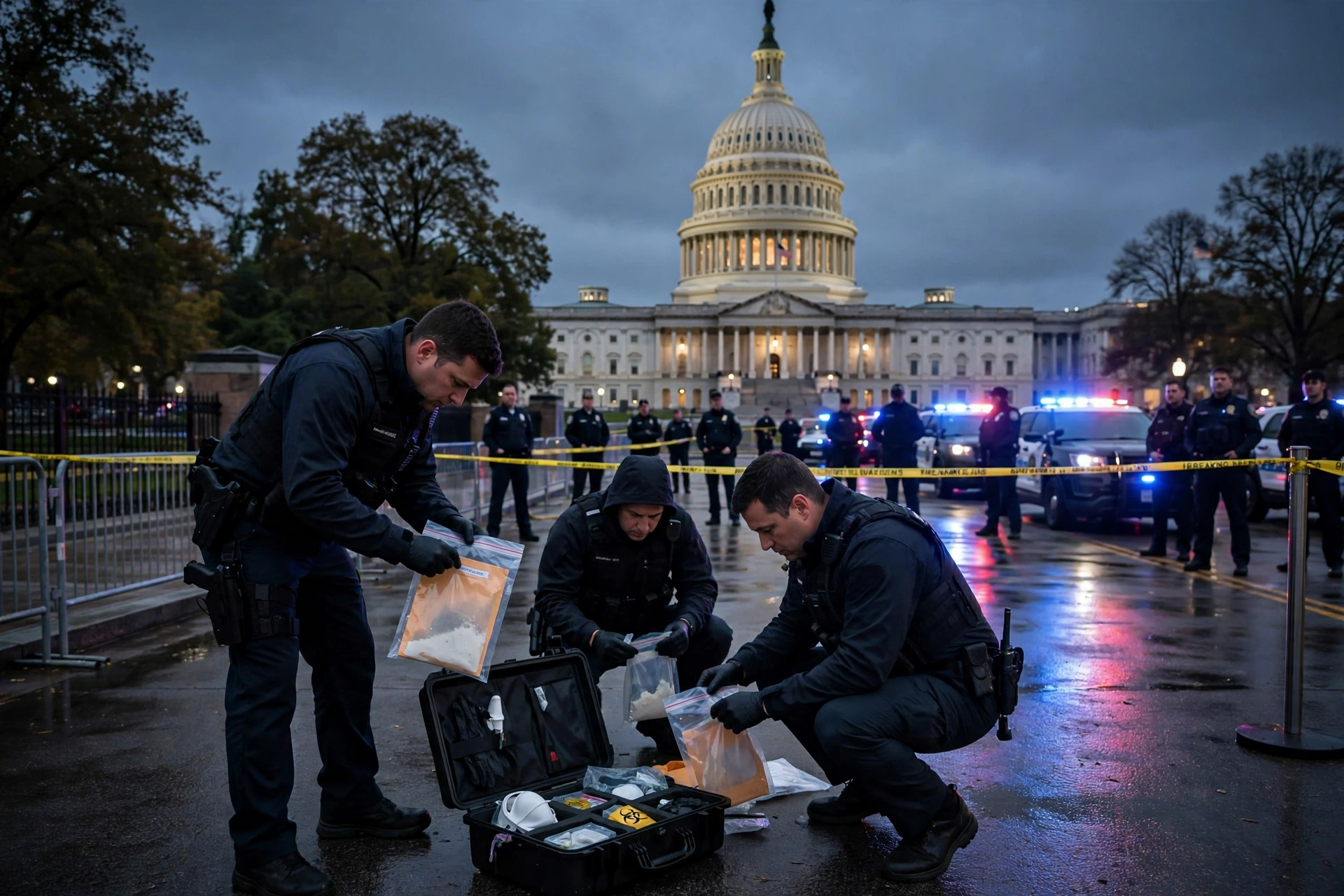
FBI investigators are examining the suspicious packages election offices received as part of a three-agency probe ahead of the November 3 midterms.
The investigation was disclosed Thursday after election offices in Louisiana and Oklahoma were evacuated this week over envelopes containing a powdery white substance, and the Postal Service intercepted similar mailings bound for offices in Ohio, New Hampshire and Connecticut. In a statement confirming the probe, the FBI said it is investigating “a series of suspicious mailings sent to various addresses nationwide, including Secretary of State offices and their related election offices,” adding that some of the letters contained an unknown substance and that investigators are working to identify those responsible.
The suspicious packages election offices scare has put Capitol Hill on alert as well. The Senate Sergeant at Arms told Senate offices that law enforcement is working to intercept additional letters before delivery — but warned that “it is possible that some letters may reach their destinations.” Authorities have not publicly identified the substance, announced a motive, or named a suspect, and officials stressed that the presence of an unknown powder does not by itself establish the material is toxic.
- Suspicious Packages Election Offices Received: What the FBI Is Investigating
- The Capitol Hill Alert: “Potentially Hazardous”
- Louisiana, Oklahoma, Ohio: This Week’s Incidents
- More Than 100 Suspicious Packages Election Offices Received: The Growing Scope
- Election Officials Respond: “Will Not Deter Us”
- Not the First Time: The 2023 Fentanyl Letters
- How the System Fights Back: Intercepts and Ballot Safeguards
- What’s Next
- Additional Details
Suspicious Packages Election Offices Received: What the FBI Is Investigating
The FBI confirmed the investigation to reporters Thursday, saying the bureau and the U.S. Postal Inspection Service are examining mailings sent to multiple addresses nationwide. “Some of the letters contained an unknown substance and we are working closely with our law enforcement partners to respond to each incident,” the bureau said in its statement, as reported by the Washington Examiner. The FBI said it is working to identify the individual or individuals responsible.
The U.S. Postal Inspection Service, the law-enforcement arm of the Postal Service, said some of the letters had already been intercepted and that the investigation is ongoing. “We are committed to protecting our nation’s election officials from threatening and dangerous mail. Any threat or attack on an election official is unacceptable,” Brendan Donahue, a deputy chief inspector with the Postal Inspection Service, told reporters, according to Reuters.
The U.S. Capitol Police are also involved, reflecting the congressional dimension of the mailings. The suspicious packages election offices investigation is now a three-agency effort spanning federal, postal and Capitol law enforcement — an unusually broad response that signals how seriously authorities are treating the threat with Election Day approaching.
The Capitol Hill Alert: “Potentially Hazardous”
The investigation came to light through a message from the Senate Sergeant at Arms distributed to Senate offices and obtained by the Associated Press. The notice said law enforcement officials are working to intercept additional letters before they are delivered, but cautioned that “it is possible that some letters may reach their destinations,” the AP reported. Recipients were urged to treat the mailings as “potentially hazardous” and to report suspicious mail immediately.
A separate notice sent to House staffers said the letters contained a “suspicious white powder,” and the House Sergeant at Arms urged staff to “remain vigilant and follow safe mail handling procedures to help protect staff from potentially harmful materials,” according to the Washington Examiner. Within Congress, the situation appeared isolated to the Senate, though the House was monitoring developments, a person familiar with the matter told the AP.
The notices said additional letters had been mailed to addresses across the country, including lawmakers’ state and district offices. The suspicious packages election offices and congressional staff received show the threat extends well beyond Washington. Congressional offices have long operated under strict mail-screening protocols, and the alerts effectively put those procedures on their highest setting three weeks before the midterms.
Louisiana, Oklahoma, Ohio: This Week’s Incidents
The first confirmed suspicious packages election offices reported surfaced Tuesday. In Louisiana, an employee at the secretary of state’s office in Baton Rouge discovered white powder inside a package around 12:20 p.m. The state’s Elections Division was evacuated and officials shut off the building’s air conditioning as a precaution, the Washington Examiner reported. The employee was taken to the emergency room as a precaution, and law enforcement tests found no evidence of harmful substances, the Wall Street Journal reported.
Oklahoma’s State Election Board received an envelope containing suspicious white powder on Tuesday as well, prompting the evacuation of its office and a response from the Oklahoma Highway Patrol, the Oklahoma City Fire Department and the Oklahoma National Guard. “Thankfully, no one from the State Election Board staff was harmed as a result of this incident,” Secretary Paul Ziriax said in a statement. “We want to assure Oklahoma voters that today’s incident does not impact our ability to conduct elections.”
In Ohio, the Postal Service intercepted a package containing a white powder before it ever reached the secretary of state’s office. Ohio Secretary of State Frank LaRose condemned the threats, saying: “We have a duty to the citizens of Ohio to deliver secure and accessible elections, and these kinds of cowardly threats will not deter us from that mission.” LaRose noted that suspicious packages election offices in multiple states had been sent similar mailings — an early sign the campaign was coordinated rather than isolated.
More Than 100 Suspicious Packages Election Offices Received: The Growing Scope
The scale of the mailings appears far larger than the first reports suggested. Three election officials briefed on the evolving investigation told Votebeat they were told more than 100 letters were sent to people and groups across the country — suspicious packages election offices, a U.S. senator and a polling organization received, not just election administrators.
A spokesperson for Senator Alex Padilla, a California Democrat, said his office received a notification from the FBI that the U.S. Postal Service had intercepted a letter containing a suspicious substance mailed to one of Padilla’s offices, Reuters reported. Beyond the three states that made headlines Tuesday, New Hampshire Secretary of State David Scanlan said federal officials intercepted a similar letter bound for his office, and the FBI informed Connecticut’s secretary of state that a letter had been intercepted there as well — with the local FBI field office confirming it had “received multiple interceptions,” according to Votebeat.
With the midterms deciding control of Congress, see StateLineDaily’s guide to why the 2026 midterms matter more than ever for what’s at stake in races across the country. The breadth of the recipient list — election offices, a senator, a polling organization — suggests the sender aimed at the election machinery itself rather than any single race or office.
Election Officials Respond: “Will Not Deter Us”
The National Association of Secretaries of State and the National Association of State Election Directors issued a joint statement late Wednesday condemning the incidents. “Those who administer our elections should never fear for their safety while carrying out their essential duties,” the organizations said, adding that election officials are working with law enforcement and security partners to protect personnel and facilities, and that offices have security measures and contingency plans in place to keep operations running.
State officials echoed that resolve as investigators work to trace the suspicious packages election offices received. Oklahoma’s Ziriax stressed the incident would not affect the state’s ability to conduct elections, and Ohio’s LaRose framed the threats as “cowardly” attempts that would fail. The message from election administrators has been uniform: the mailings are being treated as a security problem to be managed, not a reason to disrupt the vote.
In a separate public-service announcement issued Thursday, the FBI cautioned about threats to election workers and polling locations and asked the public to report credible threats to local law enforcement or the bureau, Afram News reported. The announcement underscores that federal authorities view the letters as part of a broader threat environment around election personnel this cycle.
Not the First Time: The 2023 Fentanyl Letters
What much of the breaking coverage has missed is that this is not the first time election offices have been targeted with dangerous mail — and the precedent is chilling. In 2023, several election offices across the country received envelopes containing fentanyl, the powerful opioid, in a coordinated scare that drew a major FBI response. The bureau’s statement that year, like this week’s, referred to letters containing an “unknown substance,” TNND reported.
The pattern continued into the last presidential cycle: suspicious powder-containing packages were sent to election officials in at least six states ahead of the 2024 election, according to reports compiled at the time. The recurrence — 2023, 2024, and now 2026 — points to an established tactic rather than a one-off threat, with each election cycle bringing a new wave of mail-based intimidation aimed at the people who run the vote.
The context matters because election workers have faced escalating threats and harassment since the 2020 election, a trend documented by election-administration groups and federal officials alike. Former Department of Homeland Security official John Cohen has warned that election authorities face an evolving combination of physical and cyber threats, even as state and local officials have strengthened their preparedness. The current mailings land in an environment where election offices already operate with security protocols that did not exist a decade ago — which is precisely why the system was able to intercept several of this week’s letters before they reached anyone.
How the System Fights Back: Intercepts and Ballot Safeguards
Another angle most coverage has glossed over is how much of the response worked exactly as designed. Many of the suspicious packages election offices were warned about never reached their targets: the Postal Inspection Service intercepted the Ohio-bound package before delivery, federal officials stopped the New Hampshire and Connecticut letters, and the FBI-flagged letter to Senator Padilla’s office was caught in the mail stream. The interceptions show a mail-security apparatus — screening, flagging and field-office coordination — that has been hardened over years of prior scares.
Congressional mail has been subject to off-site screening since the 2001 anthrax attacks, and the Sergeant at Arms notices about the suspicious packages election offices received activated the modern version of those procedures: treat everything as potentially hazardous, report immediately, and let law enforcement intercept upstream. The House notice’s emphasis on “safe mail handling procedures” reflects protocols drilled into congressional staff for two decades.
Meanwhile, the Postal Service is simultaneously preparing for the election itself. Postmaster General David Steiner said Thursday that USPS is “absolutely ready” to handle millions of ballots for the midterms, Reuters reported. The agency announced this month it would take “extraordinary measures” for the 2026 election, including extending hours at some retail locations and expediting handling, extra deliveries and special pickups of ballots. The dual posture — hunting threatening mail while accelerating legitimate election mail — captures the strange double duty the Postal Service carries every election season.
What’s Next
Will the substance be identified? Laboratory testing is underway on the intercepted and delivered suspicious packages election offices received. Louisiana’s tests already came back negative for harmful substances, but results for the other letters have not been announced. Identifying the powder is the first step toward determining whether the mailings were a hoax meant to terrorize or something more dangerous.
Will anyone be caught? The FBI says it is working to identify the individual or individuals responsible. Mail-based threats leave a paper trail — postage, postmarks, handwriting, DNA — that investigators will now be tracing across more than 100 letters.
Could more letters arrive? The Senate Sergeant at Arms warned that “it is possible that some letters may reach their destinations,” and law enforcement is still working to intercept additional mailings. Election offices nationwide have been told to stay vigilant through Election Day, as more of the suspicious packages election offices have been warned about could still surface.
Will this affect the midterms? Officials insist it will not. Election administrators say contingency plans are in place, the Postal Service says ballot handling is unaffected, and voting itself — in person and by mail — proceeds as scheduled on November 3.
Additional Details
Description: The FBI, U.S. Postal Inspection Service and U.S. Capitol Police are investigating suspicious packages election offices, secretaries of state, congressional offices and a polling organization received — more than 100 letters containing suspicious substances, some with white powder, mailed ahead of the November 3 midterms. Election offices in Louisiana and Oklahoma were evacuated; the Postal Service intercepted letters bound for Ohio, New Hampshire, Connecticut and Senator Alex Padilla’s office. No suspect has been named and the substance has not been publicly identified. The article also covers the 2023 fentanyl-letter precedent and how mail-screening and ballot safeguards are responding. Key figures: 100+ letters, three federal agencies investigating, evacuations in two states, Election Day November 3.
2 thoughts on “FBI Investigates Suspicious Packages Sent to Election Offices and Congress Ahead of Midterms”