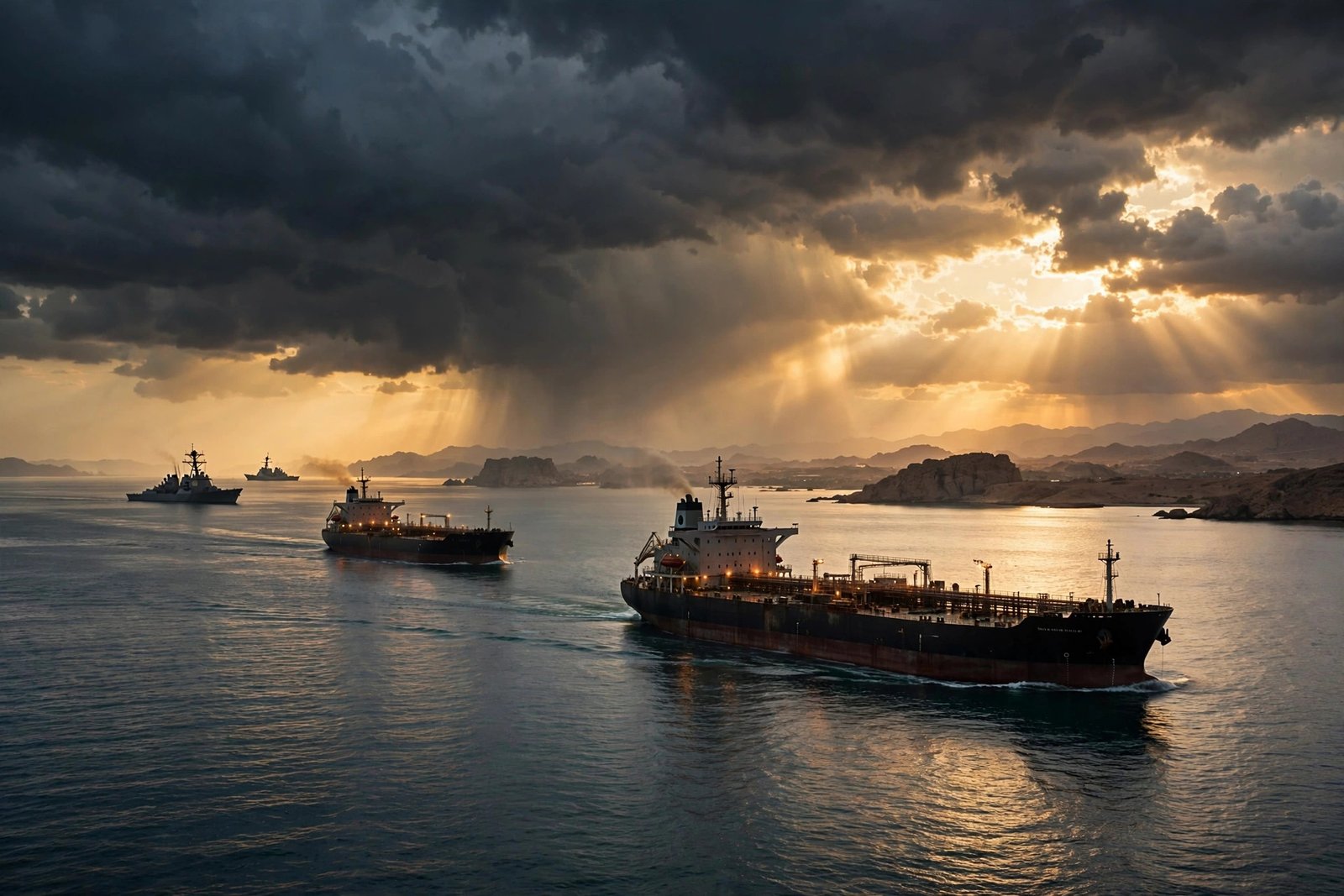
President Donald Trump said on Saturday that the Trump Iran deal signing — an interim deal with Iran to reopen the Strait of Hormuz and end the months-long conflict — is scheduled for Sunday, even as Iranian officials flatly denied that any signing will happen, ruled out new talks, and watched Trump’s own envoys cancel their trip to Pakistan. The collision of announcements, made within hours of each other, left the fate of the most important energy waterway in the world hanging on a single question: whose version of reality is real?
“The Deal is scheduled to get signed tomorrow, and immediately after it is signed, the Hormuz Strait is OPEN TO ALL,” Trump wrote in a social media post on Saturday, capping a week of frantic diplomacy conducted largely through Pakistan, which has served as the go-between for Washington and Tehran. Pakistan’s Prime Minister Shehbaz Sharif confirmed earlier Saturday that Islamabad was preparing an electronic Trump Iran deal signing, “followed by technical level talks next week.” But Iranian state television’s news channel IRIB reported that a spokesman for Tehran had ruled out a signing on Sunday — and Iranian officials spent the day insisting that no new U.S. talks were on the agenda at all.
The Trump Iran deal signing drama is only the latest in a long series of near-announcements: wire reporting notes that Trump has vowed dozens of times that an agreement to end the war that began in February is near, only for none to materialize so far. The primary U.S. objectives remain constant — reopen the Strait of Hormuz and curb Iran’s nuclear program. What changed this weekend is the machinery: a formal Pakistani-mediated framework, a deadline extended to Tuesday evening, and a president publicly canceling his own negotiators’ travel.
- Saturday’s Trump Iran Deal Signing Announcement: A Sunday Signing
- “The Hormuz Strait is OPEN TO ALL”: What the Deal Promises
- Tehran Denies the Trump Iran Deal Signing: No Signing on Sunday, No New Talks
- Witkoff and Kushner Told to Stay Home From Islamabad
- Inside the ‘Islamabad Accord’: The Two-Tier Pakistani Proposal
- ‘Nuclear Dust’: The Fight Over Iran’s Enriched Uranium
- The Tuesday Deadline and the War-Crimes Warning
- The Hormuz Chokepoint: Why One Strait Moves Oil Markets
- What’s Next
- Additional Details
Saturday’s Trump Iran Deal Signing Announcement: A Sunday Signing
The president’s Saturday declaration about the Trump Iran deal signing was characteristically definitive. According to wire reporting, Trump said the interim deal to reopen the Strait of Hormuz and end the conflict with Iran would be signed on Sunday — “tomorrow” in his post — with the waterway opening “immediately after it is signed.” The announcement followed a day of meetings: Trump said he sat down Saturday with American negotiators including special envoy Steve Witkoff and adviser Jared Kushner, along with Vice President JD Vance, to discuss the latest round of proposals for the Trump Iran deal signing. Secretary of State Marco Rubio added to the momentum during a visit to India, saying “news” might arrive “later today.”
Trump also laid down two non-negotiable-sounding conditions in his Saturday remarks. First, he said Iran would not get any money in the deal — a point that had been a key sticking point for Tehran during the Pakistan-mediated negotiations, since the release of frozen Iranian assets has been one of the Islamic Republic’s core demands. Second, he introduced a memorable new phrase into the nuclear debate: the United States would “go in and get the Nuclear Dust” — his term for Iran’s highly enriched uranium — and destroy it either in Iran or in the U.S. once the Trump Iran deal signing’s other components were settled.
Earlier in the week, Trump had announced an indefinite extension of the ceasefire with Iran, which has paused most of the fighting even as the economic fallout of the war — now in its second month — keeps spreading. And in one of his more combative posts, Trump had urged Iran to “open the F***in’ Strait” or face severe consequences, while maintaining that discussions with Tehran were still active. He also said he had ordered the U.S. Navy to “shoot and kill” any Iranian boats allegedly laying mines in the waterway — a directive that raised the temperature even as diplomats worked.
“The Hormuz Strait is OPEN TO ALL”: What the Deal Promises
The contours of the possible agreement have emerged through a patchwork of leaks and official hints. A Pakistani source told Reuters that Iran and Pakistan had submitted a revised proposal to the United States to end the war and reopen the Strait of Hormuz. Axios, citing a U.S. official, reported that the draft deal would reopen the strait with no tolls during a 60-day ceasefire extension, let Iran freely sell oil, and open negotiations on curbing its nuclear program — in exchange for the U.S. lifting its blockade of Iranian ports.
The Associated Press, citing a regional source, reported a broadly matching outline: an official declaration of the war’s end, two months of negotiations on Iran’s nuclear program, the opening of the shipping lane by Iran, and an end to the American port blockade. And the New York Times, quoting three senior Iranian officials, described a deal that would stop the fighting in Iran and in Lebanon, could release $25 billion in Iranian assets frozen overseas, and would set a nuclear agreement to be negotiated within 30 to 60 days.
Sharif, one of the deal’s key mediators, described Trump’s Saturday call with the leaders of Saudi Arabia, Qatar, Turkey, Egypt, the UAE, Jordan and Pakistan as “very useful and productive,” adding: “Pakistan will continue its peace efforts with utmost sincerity and we hope to host the next round of talks very soon.” Pakistan’s army chief, Field Marshal Syed Asim Munir — a central figure in the negotiations who has held meetings in Tehran with President Masoud Pezeshkian and parliamentary speaker Mohammad Bagher Ghalibaf — was also part of the diplomatic traffic.
Tehran Denies the Trump Iran Deal Signing: No Signing on Sunday, No New Talks
Iran’s response to Trump’s announcement was a study in contradiction — even within Tehran’s own messaging. Foreign Minister Abbas Araghchi had echoed Trump’s expectations for a signing in a speech carried by state television on Friday. But by Saturday, a spokesman had ruled out the Trump Iran deal signing on Sunday, according to state-run IRIB news — a direct undercut of the president’s timeline.
The denials went further. Iran’s ambassador to Moscow, Kazem Jalali, told RT that Tehran was not seeking war but was ready to respond, insisting the country remains open to diplomacy only if Washington abandons what it calls bullying. Iranian officials, including Parliament speaker Ghalibaf, have previously accused the U.S. of trying to turn negotiations into “a table of surrender” after failing to achieve victory on the battlefield.
Foreign ministry spokesman Esmaeil Baghaei told a press conference that Iran had “clearly defined its positions” and that negotiations cannot coexist with ultimatums or threats: “Iran does not hesitate to clearly express what it considers its legitimate demands,” he said, adding that this “should not be misconstrued as a willingness to compromise but rather as confidence in its negotiating stance.” Iran’s leadership had earlier stated flatly that the Strait of Hormuz would remain closed, rejecting a proposal for a temporary ceasefire, and said it would disclose its formal response “at an appropriate time.”
Witkoff and Kushner Told to Stay Home From Islamabad
The most tangible sign that the diplomatic track hit turbulence on Saturday came from the travel plans. On Friday, the White House had said Steve Witkoff and Jared Kushner would travel to Pakistan’s capital to attempt to revive ceasefire negotiations ahead of the Trump Iran deal signing. Then Iran’s top diplomat, Foreign Minister Abbas Araghchi, left Islamabad late Saturday evening, two Pakistani officials told the Associated Press. Soon afterward, Trump announced on social media that he had told his envoys not to go.
“If they want to talk, all they have to do is call!!!” Trump wrote. “Too much time wasted on traveling, too much work!” The canceled trip had been meant to follow historic face-to-face talks earlier this month between the U.S. — led by Vice President JD Vance — and Iran, led by parliamentary speaker Ghalibaf. But Iranian officials have questioned how they can trust Washington after U.S. forces began blockading Iranian ports in response to Iran’s grip on the Strait of Hormuz waterway, and Tehran had already said any talks would be indirect. Tehran considers the blockade a direct breach of the ceasefire and argues that talks are pointless as long as it remains in place.
The whiplash is what has defined this negotiation — public optimism one day, public scolding the next — and it came on the same day Pakistan’s prime minister was preparing an electronic signing ceremony for the Trump Iran deal signing.
Inside the ‘Islamabad Accord’: The Two-Tier Pakistani Proposal
Behind the public drama, Pakistan has been quietly building the actual architecture of a deal. A diplomatic source revealed that both Iran and the U.S. have received a “two-tier proposal” — encompassing both a ceasefire and a more comprehensive plan for peace — that was exchanged with both nations overnight. “All elements need to be agreed today,” the source said, explaining that the initial agreement would be formalized through Pakistan, the primary communication channel.
The framework has been dubbed the “Islamabad Accord” — the proposed vehicle for the Trump Iran deal signing. It provides for an immediate ceasefire and the reopening of the Strait of Hormuz, with a timeline of 15–20 days to finalize a broader settlement. Sources familiar with the negotiations indicated that discussions are underway for a 45-day ceasefire that could pave the way for a more permanent resolution. The final agreement is expected to involve Iran halting its nuclear weapons development, receiving sanctions relief, and accessing frozen assets — the very money Trump said on Saturday Iran would not receive, which underscores how far apart the two sides may still be.
Field Marshal Munir has been the deal’s most active shuttle diplomat, reportedly holding multiple calls throughout the night with Witkoff and Araghchi. Sharif’s government, which Trump has publicly credited for its mediation, is now positioned as the indispensable middleman — hosting, drafting, and certifying the Trump Iran deal signing between two countries that refuse to meet face to face.
‘Nuclear Dust’: The Fight Over Iran’s Enriched Uranium
One detail in Trump’s Saturday announcement deserves special attention, because it points to what may be the hardest unresolved issue: the physical stockpile of highly enriched uranium. Trump said the U.S. would “go in and get the Nuclear Dust,” his term for the material, and destroy it in Iran or the U.S. once other components were settled. In plain terms, that means American personnel taking custody of Iran’s most sensitive nuclear material — a demand no Iranian government could accept lightly, and one Tehran has not publicly addressed.
This is the dimension of the talks that most breaking-news coverage has glossed over — and it is where interim deals with Iran historically go to die. The material can be moved, hidden, or diluted; verification requires inspectors on the ground; and the sequencing itself is a gamble: Iran has little incentive to surrender leverage before sanctions relief arrives, and Washington has little incentive to grant relief before the material is accounted for.
What makes the “Nuclear Dust” demand notable is its bluntness. Rather than the diplomatic language of “verification regimes” and “breakout timelines,” Trump has reduced the nuclear question to a physical operation: go in, get the material, destroy it. Whether Tehran ever agreed to anything resembling that — and neither Araghchi nor Baghaei has said anything like it — is the unasked question hanging over Sunday’s planned Trump Iran deal signing.
The Tuesday Deadline and the War-Crimes Warning
Running underneath the diplomacy is a threat that has not gone away. Trump’s original 10-day ultimatum was set to expire Monday; he later extended it to 8 p.m. ET on Tuesday, explicitly linking the deadline to the progress of negotiations toward the Trump Iran deal signing. The ultimatum reportedly covers military action against Iran’s energy infrastructure — a threat Trump has repeated in various forms, including his warning that if Tehran doesn’t make a deal, he is “blowing up everything over there.”
That threat has drawn a sharp rebuke from human rights monitors. Amnesty International has raised alarms about potential war crimes associated with attacks on civilian infrastructure, warning that targeting power plants could cause disproportionate harm to civilians and violate international humanitarian law. “Even if they qualify as military targets, attacking power plants would be unlawful if it causes excessive civilian harm,” said Erika Guevara-Rosas, Amnesty’s Senior Director of Research, noting that such strikes sustain the basic needs of millions of civilians.
The warning matters because the line between Iran’s energy infrastructure and its civilian grid is thin — and because the U.S. has already shown a willingness to apply maximum economic pressure through the port blockade. A separate wire report has also noted that the Pentagon intends to hold a report on an Iran school attack past the midterms — a reminder that the war’s conduct is already a domestic political issue. If the Trump Iran deal signing collapses on Sunday and the Tuesday deadline arrives with the strait still closed, the choice facing the White House will be between escalation and another extension — both of which carry costs with voters already strained by rising gasoline prices.
The Hormuz Chokepoint: Why One Strait Moves Oil Markets
Strip away the diplomacy and the stakes are physical: the Strait of Hormuz is the narrow channel through which a vast share of the world’s seaborne oil and liquefied natural gas must pass. Its near-closure during the two-month war has disrupted global shipments of oil, LNG, fertilizer and other supplies — and the market has noticed. Brent crude has pushed above $100 per barrel as the standoff dragged on, a level that feeds directly into gasoline prices for American drivers.
That is why the Hormuz story is also a midterm story. With the November 3 election just over two weeks away, prediction markets and polls already show Democrats with a strong chance of taking the House, and fuel costs have been one of the most visible pocketbook issues of the campaign. StateLineDaily’s September inflation coverage documented how gasoline surges helped push CPI to 3.7% — and a prolonged Hormuz closure would make that number worse. A deal that reopens the strait with no tolls, as the Axios-reported draft envisions, would be the fastest possible relief for energy prices — which is precisely why Trump is pushing for the Trump Iran deal signing on Sunday.
There is also a geopolitical echo worth noting. Trump’s other big energy-diplomacy move this week — waiving most new Russia sanctions and tariffs under the Graham Act — came after his administration announced an agreement involving Russian diesel fuel meant to ease global energy prices. The pattern is consistent: the White House is reaching for every available lever to bring energy costs down before voters go to the polls, whether the lever is in Moscow or in the Strait of Hormuz.
What’s Next
Will the Trump Iran deal signing actually happen on Sunday?
Trump says yes and Pakistan is preparing an electronic signing ceremony. Iran’s state media says no signing will happen Sunday. Both statements cannot be true — Sunday will settle it.
What happens if Sunday passes with no deal?
The focus shifts to Trump’s extended deadline of 8 p.m. ET Tuesday for the Trump Iran deal signing. The president has threatened strikes on Iran’s energy infrastructure, but Amnesty International’s war-crimes warning and the midterm calendar both argue for another extension.
Will Witkoff and Kushner travel after all?
Trump told them to stay home, saying Tehran can simply call. But if the Trump Iran deal signing collapses on Sunday, the envoys may be needed in Islamabad again — the White House reversed its own travel plan once already this weekend.
What about the “Nuclear Dust”?
Trump’s demand that the U.S. take custody of Iran’s highly enriched uranium is the Trump Iran deal signing’s least-discussed and possibly most explosive element. No Iranian official has endorsed it, and it sits uneasily beside Trump’s claim that Iran gets no money — the two hardest issues, unresolved, in the same package.
Could the war widen anyway?
Separately, the Israel-Hezbollah ceasefire was shaken Saturday as each side fired at the other and Prime Minister Benjamin Netanyahu ordered the military to “vigorously attack Hezbollah targets in Lebanon.” The Times-reported draft deal is supposed to stop fighting in Lebanon too — but Saturday’s exchange shows how fragile every front is.
Additional Details
Description: President Trump said Saturday the Trump Iran deal signing to reopen the Strait of Hormuz would happen Sunday — but Tehran denied any Sunday signing and ruled out new talks, as Trump canceled his envoys’ Pakistan trip and Pakistan pushed its “Islamabad Accord” two-tier proposal ahead of a Tuesday deadline.