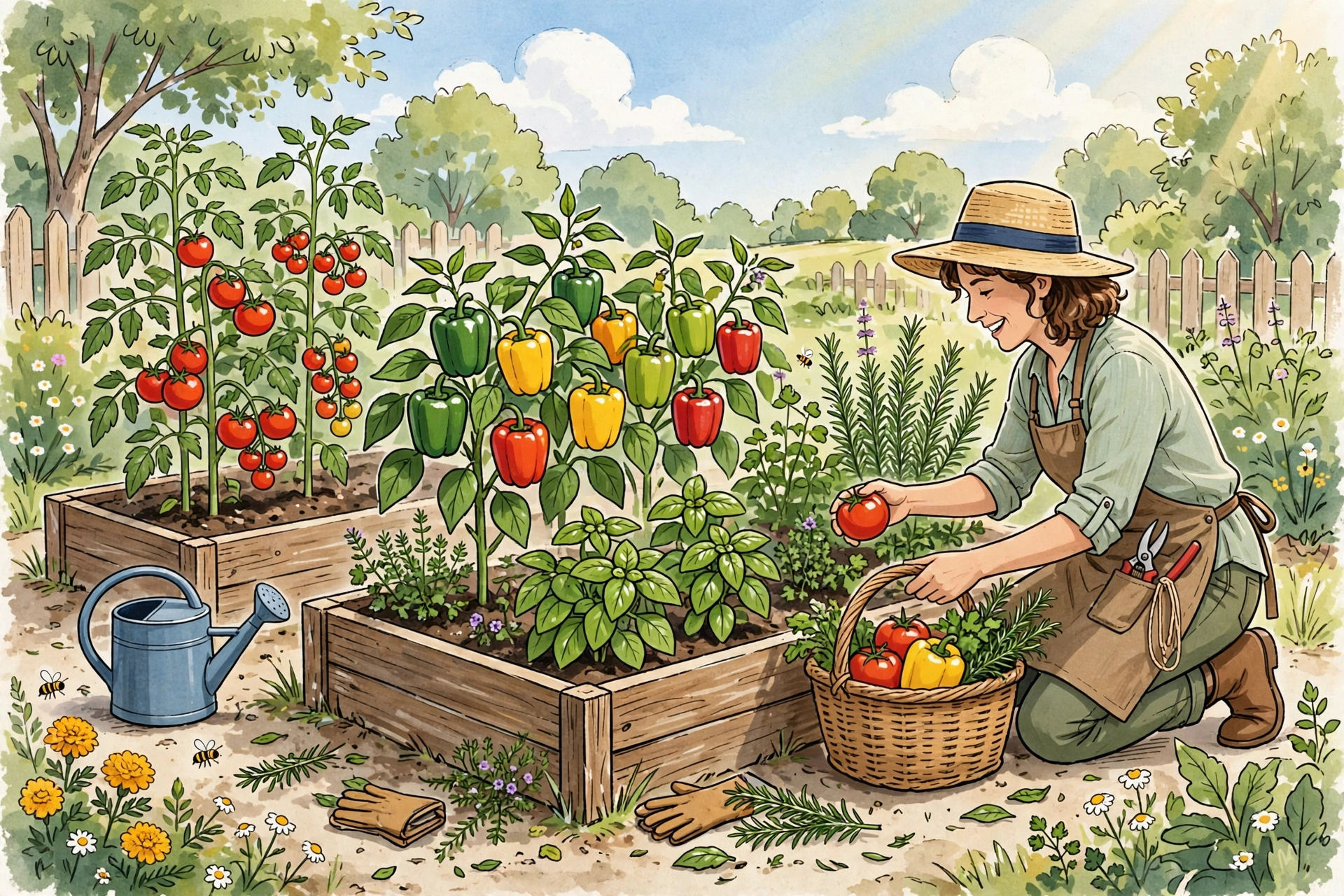
Growing your own food is one of life's most satisfying pursuits — and one of the most practical. A modest vegetable garden can supply fresh, flavorful produce for months, save hundreds of dollars on groceries, get you outdoors, and teach skills that last a lifetime. This vegetable gardening for beginners guide walks you through everything from planning to harvest.
vegetable gardening for beginners: Why Grow Your Own Food
Taste: Homegrown tomatoes, picked ripe, bear almost no resemblance to supermarket versions bred for shipping durability. Fresh herbs transform cooking. Sweet corn eaten minutes after picking is a revelation.
Savings: A $50-100 garden investment routinely returns $500+ in produce. High-value crops (tomatoes, peppers, herbs, salad greens) offer the best returns per square foot.
Health: Gardening is exercise disguised as hobby — bending, digging, carrying. Plus you control exactly what goes on your food: no mystery pesticides.
Resilience: A productive garden is food security you control. Even small harvests supplement groceries meaningfully.
Joy: There is genuine magic in eating something you grew from seed. Children who garden eat more vegetables — the engagement transforms attitudes.
Planning: Start Small, Succeed Big
The number one beginner mistake is starting too big. An overwhelming garden becomes a weedy chore; a small thriving one becomes a beloved habit.
Recommended first garden: A single 4×8 foot raised bed, or 5-10 containers. This grows astonishing amounts: tomatoes, peppers, cucumbers, herbs, salad greens, beans — plenty for a family to enjoy all summer.
Location requirements:
- Sun: Minimum 6 hours of direct sunlight daily; 8+ is ideal. Watch your yard through a day before committing.
- Water access: You will water constantly in summer; proximity to a spigot matters enormously.
- Drainage: Avoid low spots where water pools. Raised beds solve most drainage issues.
- Convenience: The best garden location is the one you will actually visit daily. Near the kitchen beats a perfect-but-distant spot.
Raised Beds vs. In-Ground vs. Containers
Raised beds (recommended for vegetable gardening for beginners): Better soil control, better drainage, fewer weeds, easier on backs and knees, warm up earlier in spring. Build from untreated lumber, or buy kits. Fill with quality raised-bed mix — this is worth the investment.
In-ground: Cheapest to start but requires improving native soil (testing, amending with compost). Best for large gardens.
Containers: Perfect for patios, balconies, and renters. Use large pots (5+ gallons for tomatoes/peppers), quality potting mix, and ensure drainage holes. Container gardens need more frequent watering and feeding.
Soil: The Foundation of Everything
Great gardens are built on great soil. For raised beds and containers, start with quality bagged mix — not garden soil, not topsoil alone. For in-ground, get a soil test through your local cooperative extension (usually cheap); it reveals pH and nutrient needs precisely.
Compost is gardening gold: improves structure, feeds slowly, supports soil life. Start a simple pile or bin — yard waste and kitchen scraps (no meat/dairy) become free fertility. Top-dress beds with compost each season.
Mulch (straw, wood chips, leaves) suppresses weeds, retains moisture, and moderates soil temperature. Mulch everything you are not actively planting.
What to Plant: Beginner Winners
Start with crops that are forgiving, productive, and rewarding:
Easiest (nearly foolproof): Lettuce and salad greens, radishes, green beans, zucchini, herbs (basil, mint, chives, parsley)
Easy and high-reward: Tomatoes (cherry types are most forgiving), peppers, cucumbers, carrots, peas
Save for year two: Corn (needs space and numbers for pollination), melons (long season, space-hungry), celery, cauliflower (finicky)
Buy transplants for: Tomatoes, peppers, eggplant — starting these from seed requires indoor setups beginners need not tackle yet.
Direct-sow seeds for: Beans, peas, lettuce, radishes, carrots, cucumbers, squash, herbs like cilantro and dill.
Timing: When to Plant
Your local frost dates govern everything. Warm-season crops (tomatoes, peppers, beans, squash, cucumbers) go out after the last spring frost when soil warms. Cool-season crops (lettuce, peas, radishes, carrots) tolerate light frost and can plant weeks earlier — and again in late summer for fall harvest.
Your cooperative extension publishes planting calendars for your exact area — the most valuable free gardening resource that exists. When in doubt, local nurseries' timing is trustworthy; big-box stores often stock plants weeks too early.
Watering: The Make-or-Break Skill
Inconsistent watering causes more beginner failures than any pest. Key principles:
- Deep and less frequent beats daily sprinkles — encourages deep roots
- Morning watering reduces disease (leaves dry by evening)
- Soil, not schedule: Stick a finger 2 inches deep; water when dry at that depth
- Mulch cuts water needs dramatically
- Drip irrigation or soaker hoses are the best garden investment after soil — consistent, efficient, disease-reducing
Containers dry fastest; in summer heat, large pots may need daily watering.
Feeding Your Plants
Quality soil and compost handle most needs, but heavy feeders (tomatoes, peppers, squash) appreciate supplemental feeding. Balanced organic fertilizers applied per label directions suffice. Avoid over-fertilizing — especially with nitrogen, which produces lush leaves but no fruit. Yellowing lower leaves often signal nitrogen hunger; poor fruiting with lush growth signals excess.
Pests and Problems: The Organic Approach
Prevention first: Healthy plants resist pests. Rotate crop families yearly. Encourage beneficial insects with flowers. Row covers exclude pests physically.
Common issues and responses:
- Aphids: Blast with water; introduce ladybugs; insecticidal soap for persistence
- Tomato hornworms: Hand-pick (they are dramatic but harmless to you)
- Squash bugs/vine borers: Row covers early; succession plantings as insurance
- Blossom end rot (tomatoes): Calcium uptake issue from inconsistent watering — fix watering, not calcium
- Powdery mildew: Improve air circulation; resistant varieties; neem oil
Accept some losses philosophically — a garden that feeds some insects still feeds you abundantly. Avoid broad-spectrum pesticides that kill pollinators and beneficials.
Harvesting: The Reward
Harvest frequently — it encourages more production. Pick beans, cucumbers, and zucchini young and often (oversized = seedy and signals the plant to stop). Tomatoes at "breaker" stage (first blush of color) ripen perfectly indoors and avoid pest and crack losses. Herbs before flowering for best flavor. Morning harvests offer peak crispness and flavor.
Preserving the surplus: Freeze (tomatoes, peppers, beans, herbs), dehydrate, can (tomatoes, pickles), ferment — or simply share generously. Gardeners' biggest "problem" is abundance.
Season Extension: More Than Summer
Cold frames, row covers, and simple hoop houses add weeks or months to your season. Fall garlic planting yields summer harvests. Overwintering (leaving kale, carrots mulched in ground) provides winter food in many climates. Year two is when gardens truly hit stride — perennials (asparagus, berries, herbs) established now pay for decades.
Your First-Year Timeline
Late winter: Plan, order seeds, learn your frost dates
Early spring: Build beds, fill with soil, plant cool-season crops
After last frost: Transplant warm-season crops, direct-sow beans/cucumbers/squash
Summer: Water, mulch, harvest continuously, succession-plant greens and beans
Fall: Plant garlic, sow cover crops or mulch beds, preserve harvests, plan next year
The Bottom Line
Vegetable gardening rewards beginners generously: start small, invest in soil, water consistently, plant forgiving crops, and harvest often. Your first garden will teach you more than any guide — but this guide ensures those lessons come as pleasant discoveries rather than discouraging failures. The best time to start was years ago; the second-best time is this season. Dig in.