Ukraine launched one of its biggest drone attacks of 2026 on Russia overnight Saturday, striking a key oil terminal in St. Petersburg and other targets across the country — in open defiance of President Donald Trump’s demand that Kyiv stop hitting Russian energy infrastructure. The Ukraine drone attack marks a dramatic escalation in the deteriorating relationship between Kyiv and Washington, just 16 days before America’s midterm elections.
Ukrainian President Volodymyr Zelensky, in a Meet the Press interview aired Sunday, delivered his bluntest warning yet about the Trump administration’s direction. He said it would be a “historic mistake” if the United States formally sided with Russia, and called Trump’s waiver of sweeping Russia sanctions “more support for Russian aggression.” The Ukraine drone attack came hours after those remarks were recorded — and landed exactly as Trump’s own energy ceasefire claims were falling apart.
Here is what happened overnight in this Ukraine drone attack, what Zelensky said on Sunday morning television, and why the White House’s response — or silence — matters for the war, for oil prices, and for the November 3 midterms.
- The Biggest Ukraine Drone Attack of 2026: What Was Hit
- Trump’s “Disgrace” Warning and the Phantom Energy Ceasefire
- Zelensky on Meet the Press: “More Support for Russian Aggression”
- Starlink Curtailed, Intelligence Sharing Restored
- The Sanctions Waiver: 60-Day Pause or Gift to Putin?
- Why This Is Really About Oil Prices and the Midterms
- What Ukraine’s Long-Range Drone Campaign Actually Hits — and Why
- What’s Next
- Additional Details
The Biggest Ukraine Drone Attack of 2026: What Was Hit
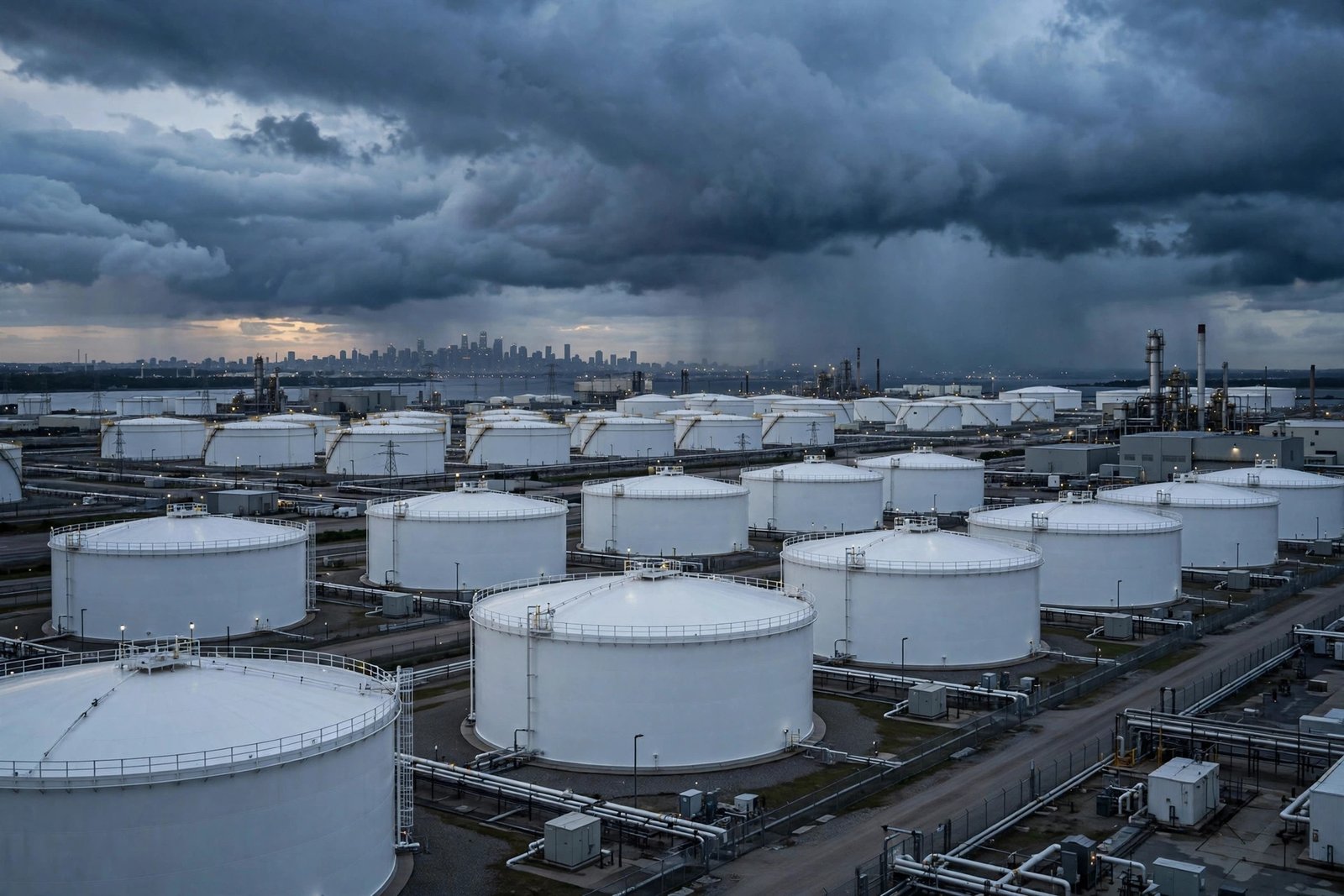
The overnight Ukraine drone attack targeted Russia deep inside its own territory. According to Russian authorities, one of the primary targets was the St. Petersburg Oil Terminal, a facility capable of handling up to 12.5 million tons of oil per year. Ukraine’s Fire Point company — the manufacturer of the drones used in the strike — confirmed there was a fire on the terminal’s grounds following the attack.
The Ukraine drone attack did not stop at the terminal. A logistics center in St. Petersburg was also hit, according to Ozon, the Russian distribution company, along with a data center serving VKontakte, Russia’s largest social media platform.
Russia’s defense ministry claimed its air defenses shot down 1,015 Ukrainian drones overnight into Sunday over various parts of the country — a figure that, if accurate, underscores the sheer scale of the operation. One person was killed and five were wounded in the Russian strikes, with residential homes damaged, according to local authorities.
The human cost played out in the streets of St. Petersburg itself. “They shot one down right above us: there was one bright flash, and it shook us up quite strongly,” a 41-year-old resident told CNN. Another described the terror of the night: “I heard a roar, got everyone out of their beds, took the cat, and we hid in the bathroom.”
The Ukraine drone attack was one of the largest long-range operations of the entire year — and it was deliberately aimed at the energy infrastructure Trump had explicitly told Kyiv to leave alone.
Trump’s “Disgrace” Warning and the Phantom Energy Ceasefire
The Ukraine drone attack arrived against a backdrop of collapsing diplomacy. Last week, Trump publicly scolded Ukraine, calling Kyiv’s strikes on Russian oil refineries a “disgrace” — siding, in effect, with the Kremlin’s complaints over Ukraine’s right to strike back.
About a week ago, Trump announced that Russia and Ukraine had agreed to stop attacking each other’s energy infrastructure. The White House’s motivation was no secret: officials wanted to relieve pressure on oil and diesel prices ahead of the crucial midterm elections on November 3, where voters are already furious about inflation.
There was just one problem: neither Kyiv nor Moscow acknowledged any such agreement. Ukraine briefly paused its long-range strikes — then resumed them. Russia never stopped pounding Ukraine’s energy plants and cities at all.
Over the 24 hours before Sunday morning, eleven people were killed and nearly 50 injured across Ukraine in Russian missile and drone attacks, according to Ukrainian authorities, including what they described as a massive attack on energy facilities in the Odesa region.
Zelensky tore into the fiction of a ceasefire on X Sunday morning: “Since the American President announced the energy ceasefire a week ago, Russia has deliberately attacked Ukraine’s energy and oil and gas sectors 76 times.” The Ukraine drone attack was Kyiv’s answer — on Russian soil.
Zelensky on Meet the Press: “More Support for Russian Aggression”
Hours before the smoke cleared over St. Petersburg, Zelensky sat down with NBC’s Meet the Press for an interview that aired Sunday — and pulled no punches about where American policy is heading.
He said Friday’s Trump executive order waiving sweeping Russia sanctions strengthened Putin’s war against Ukraine at a moment when Moscow is failing on the battlefield, calling it “more support for Russian aggression.”
His starkest line was aimed directly at the White House: it would be “a historic mistake” for the United States to formally side with Russia. “If the United States will officially take the side of Russia, of course if these two countries will be together, of course we will not prevail and we will not be able to stand,” he said, in comments carried by Reuters.
Yet Zelensky refused to close the door on Trump personally. Asked whether the American president was an ally of Ukraine, he answered: “I hope so.” He added: “We want to trust him, and I hope that he will change his decisions, because I think that it’s all mistakes, and it will not help us, and it will not help United States.”
And when asked about Trump’s complaint that Zelensky was harder to deal with than Vladimir Putin, the Ukrainian president did not miss: “better to have partners who are very open and clear than to have those who are killers, even with a smile on their face.”
Zelensky also revealed he spoke Sunday with U.S. envoy Steve Witkoff and Trump’s son-in-law Jared Kushner as part of what he called “nonstop communication” aimed at peace. “We are doing everything on our part to make this happen, and to ensure that America’s position is strong and helps bring peace closer,” he posted on X.
Starlink Curtailed, Intelligence Sharing Restored
Two revelations from the Meet the Press interview exposed how much leverage Washington now holds over Ukraine’s ability to fight — including its capacity for long-range operations like this Ukraine drone attack.
First, Zelensky repeated his charge that the Ukrainian military’s access to Elon Musk’s Starlink system — used to guide short-range and battlefield drones — is still being restricted. “It was a message from the American government to limit the speed. And technically, SpaceX did it,” he said. The Trump administration has denied ordering any restriction, but the timing is hard to ignore: Kyiv reported the limits shortly after Trump criticized Ukraine and urged it to stop targeting Russian oil refineries.
Second, Zelensky disclosed that the United States had blocked intelligence sharing for three days during Russian ballistic missile attacks — blinding Ukraine to incoming strikes. “Only the United States has this unique intelligence to tell our side when Russia uses ballistic missiles. And we didn’t get it during ballistic attacks during three days,” he said. The sharing has since been restored — “We are very thankful for this. Now it works” — but the three-day blackout came as Russian missiles were falling.
The episode echoes an earlier pattern: Trump had said earlier in the week that Washington was still sharing intelligence, even as Ukrainian officials reported some Russian strikes arriving without warning. Treasury Secretary Scott Bessent, appearing on Meet the Press after the Zelensky interview, stressed that Ukraine receives help Russia does not — intelligence sharing and U.S. munitions routed through other countries for resale to Kyiv. But Bessent pointedly did not directly answer when asked multiple times whether the United States views Ukraine as an ally.
The Sanctions Waiver: 60-Day Pause or Gift to Putin?
On Friday, Trump signed an executive order invoking a waiver that exempts Russia from sweeping economic penalties and tariffs adopted by Congress — the Sanctioning Russia and Iran Act of 2026 authored by Senator Lindsey Graham. Read StateLineDaily’s full account of the sanctions waiver here.
The administration insists the move is temporary. Secretary of State Marco Rubio described it Saturday as a 60-day pause to “analyze” the impact on the global economy. The administration’s energy secretary argued that easing the sanctions will pressure Putin to “tone down” the war — a claim that landed awkwardly on the same weekend Russia launched massive strikes on Odesa’s energy grid.
Zelensky isn’t buying it. He called the sanctions waiver “more support for Russian aggression” and warned the diesel deal would “strengthen Putin in his will to occupy us.” The waiver, coming days after Trump’s deal with Putin to release hundreds of thousands of tons of Russian diesel onto the global market, has drawn criticism even from Republicans, according to CNN.
Why This Is Really About Oil Prices and the Midterms
To understand why Trump is siding with Moscow’s energy complaints, follow the diesel. The White House cut a deal with Putin to release hundreds of thousands of tons of Russian diesel onto the global market — explicitly aimed at bringing fuel prices down as voters head to the polls November 3, 16 days from now. With prediction markets giving Democrats 90 percent odds of taking the House, every cent at the pump matters to the White House.
Zelensky offered a counter-argument most American coverage has missed: the diesel deal “will not have a real influence on the oil price in the US” because rising American fuel prices are driven by Iran’s blockage of the Strait of Hormuz — not by the war in Ukraine. As StateLineDaily reported, Trump himself has said an interim deal to reopen the strait could be signed soon — an admission, Zelensky’s logic suggests, that Hormuz is the real price problem.
That makes the politics of the Ukraine drone attack explosive. Every Ukrainian strike on Russian refineries and terminals tightens the global diesel market — directly undercutting Trump’s pre-midterm fuel-price strategy. That is why the president called the strikes a “disgrace.” And it is why Kyiv, whose survival depends on degrading Russia’s war economy, is not stopping — no matter what Washington says.
What Ukraine’s Long-Range Drone Campaign Actually Hits — and Why
Most reporting treats Ukraine’s deep strikes, including this Ukraine drone attack, as tit-for-tat retaliation. The target list from this Ukraine drone attack tells a more strategic story.
The St. Petersburg Oil Terminal is not a symbolic target: at 12.5 million tons of annual capacity, it is a major node in Russia’s petroleum export chain — the revenue stream that funds Putin’s war. The Ozon logistics center and the VKontakte data center show Ukraine is also degrading the digital and supply-chain backbone that keeps Russia’s home front functioning.
Consider the asymmetry Zelensky laid out: Russia struck Ukraine’s energy and oil-and-gas sectors 76 times in the week since Trump’s supposed ceasefire. Ukraine’s long-range campaign is the only tool Kyiv has to impose reciprocal costs — and to remind Russian civilians, in Zelensky’s calculus, that the war has a price at home too.
The Starlink curtailment adds another layer. If the United States can throttle the guidance systems of Ukraine’s short-range drones and blind its missile-warning satellites, Washington now holds a literal kill switch over Kyiv’s war effort. The Ukraine drone attack on St. Petersburg may partly be Kyiv’s way of proving it can still hit hard even with one hand tied.
What’s Next
Will Trump retaliate against Ukraine for the drone attack?
The White House has not yet responded to the overnight Ukraine drone attack. Trump’s previous move — curtailing Starlink and pausing intelligence sharing — suggests his leverage will come through restrictions on Ukraine’s warfighting tools rather than public statements. A further tightening of Starlink access or another intelligence blackout would be the signal to watch.
Will the 60-day sanctions pause become permanent?
Rubio framed the waiver as a two-month analysis period, but the midterm calendar is the real clock: the pause runs past Election Day. If Republicans hold Congress, pressure to reimpose the Graham Act sanctions will be enormous. If Democrats win, a Democratic House could try to force the issue — but Trump holds the veto pen.
Could the U.S. formally side with Russia?
Zelensky called it a “historic mistake” and said Ukraine “will not prevail” in that scenario — but he also said he believes Kyiv retains bipartisan support in Washington and that he still hopes Trump is an ally. His Sunday calls with Witkoff and Kushner suggest back-channel diplomacy is still alive.
What about oil prices before the midterms?
The diesel deal with Putin was supposed to ease prices. But with this Ukraine drone attack hitting Russian terminals and Iran still blocking Hormuz, the White House’s fuel-price strategy is being squeezed from both directions — 16 days before voters decide control of Congress.
Additional Details
Description: Ukraine launched one of its biggest drone attacks of 2026 on Russia overnight October 17-18, striking the St. Petersburg Oil Terminal, an Ozon logistics center, and a VKontakte data center in defiance of Donald Trump. Zelensky told NBC’s Meet the Press the U.S. siding with Russia would be a “historic mistake,” called Trump’s Russia sanctions waiver “more support for Russian aggression,” and revealed the U.S. briefly blocked intelligence sharing and curtailed Starlink access. Eleven people were killed and nearly 50 injured in Russian strikes on Ukraine in the preceding 24 hours.
This is a developing story. StateLineDaily will update this article as the White House responds and new details emerge from Ukraine and Russia about the Ukraine drone attack.
2 thoughts on “Ukraine Drone Attack 2026: Kyiv Defies Trump With Massive Strike on Russian Oil Terminal”