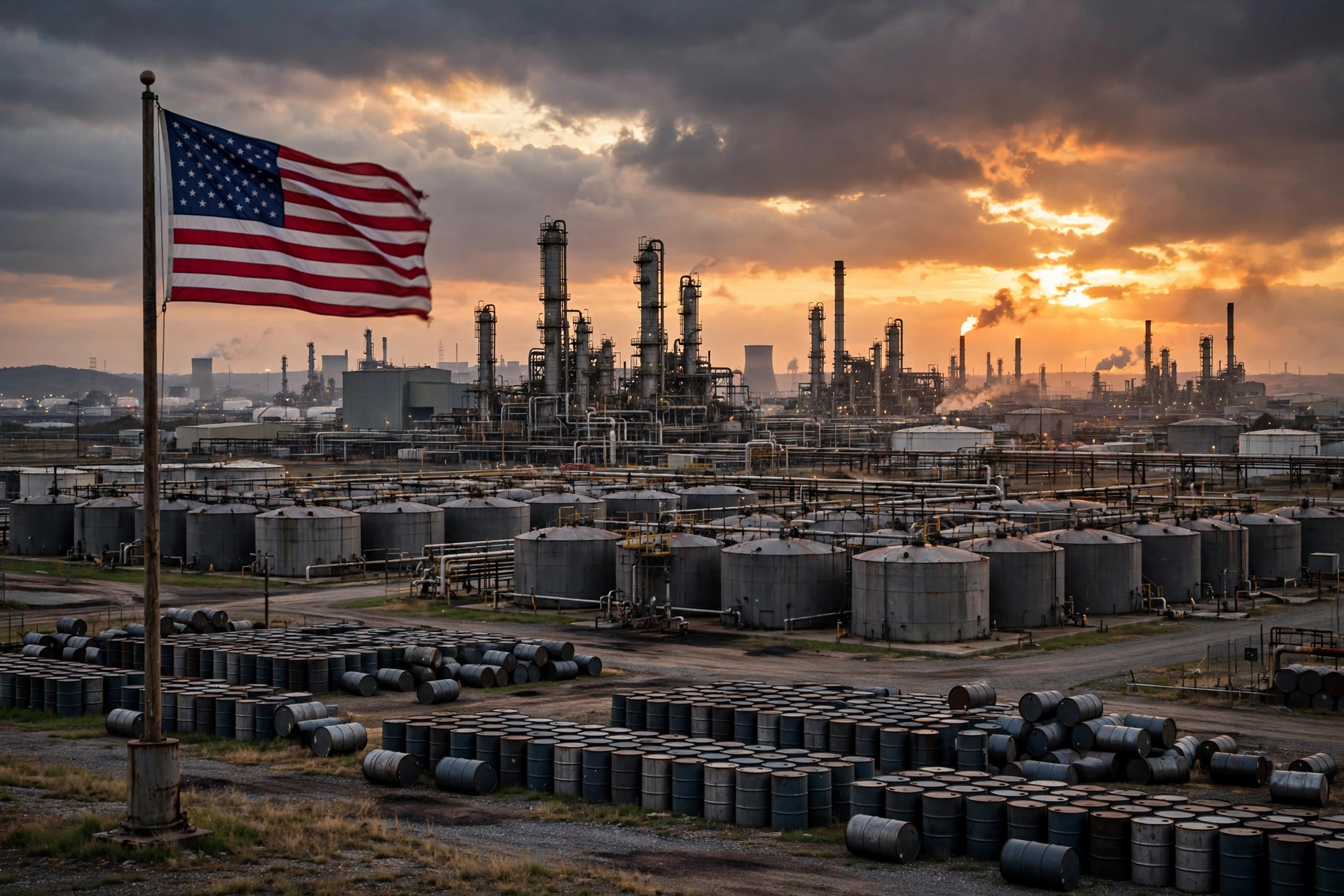
President Donald Trump has ignited one of the fiercest political controversies of his second term with the Trump Russia diesel deal — a major diesel supply agreement with Russia — a deal that has drawn furious condemnation from Ukrainian President Volodymyr Zelensky, divided Republicans, and raised profound questions about America’s energy strategy and foreign policy.
The Trump Russia Diesel Deal Announcement
Trump revealed the Trump Russia diesel deal Friday evening in a post on Truth Social, his social media platform. According to the president, Russia would supply 3 million tonnes of diesel to the United States and global energy markets over what he described as “a short period of time.”
The specifics outlined: an initial delivery of 300,000 tonnes immediately, followed by another 500,000 tonnes during November, with the remainder to follow. Trump presented the arrangement as emergency relief for American consumers crushed by fuel costs.
Why Now: The Fuel Price Crisis
The context is impossible to ignore. Average US diesel prices have surged past $6 per gallon — levels that are devastating for key constituencies:
- Farmers depend on diesel for tractors, combines, harvesters, and irrigation systems. At $6-plus per gallon, planting and harvest seasons become financial nightmares.
- Truckers move the overwhelming majority of American freight by diesel-powered rig. Owner-operators are being squeezed to the breaking point.
- Consumers ultimately pay the price, as transportation costs embed themselves in the price of groceries and every shipped good.
- Rural communities, where driving distances are longest and incomes often lowest, bear a disproportionate burden.
Trump explicitly connected the deal to these pressures, framing it as putting American families first.
Zelensky’s Explosive Reaction
Ukrainian President Volodymyr Zelensky responded with barely contained fury. In a post on X, he accused Russia of cynically exploiting the agreement, writing that Moscow expressed its “thanks” for the lifting of diesel export restrictions by launching fresh attacks on Ukrainian cities.
Zelensky pointed specifically to Russian glide bomb strikes on residential buildings in Zaporizhzhia that followed the announcement. He called the deal a “happy birthday present for Putin” and warned that revenue from diesel sales would flow directly into Russia’s war machine, prolonging a conflict that has devastated his country since Russia’s full-scale invasion in February 2022.
In comments to Axios, Zelensky went further, calling Trump’s decision “not fair and not honest” and predicting it would bring “further terror” to Ukraine.
Trump Hits Back
Trump’s response was characteristically blunt. Speaking to reporters outside the White House on Saturday before departing for a campaign rally in Tennessee, the president said it was time for Ukraine to “get a new president.”
“You’ve lost 30% of your country and you’ve had over a million people killed… I think it’s time for Ukraine to get a new president,” Trump said. He argued that Zelensky “could have settled this war many times — many, many times — and he chooses not to.”
Trump also revealed he had personally asked Zelensky to stop Ukrainian strikes on Russian oil refineries. “I said to him: ‘do what you want, don’t hit refineries,’” Trump told reporters, describing Ukrainian attacks on Russian energy infrastructure as creating “a world problem.”
The Political Calculus
The timing — just weeks before midterm elections — is no accident. Trump was headed to Tennessee, the latest stop in a tour of Republican-leaning states where the party faces unexpectedly tight races. Agricultural states like Iowa and Kansas have emerged as battlegrounds, with party operatives privately attributing vulnerability to high fuel costs hammering farm communities.
For Trump, the deal offers a tangible deliverable: lower fuel prices he can point to on the campaign trail. For critics, it represents a dangerous precedent.
Republican Divisions
Not all Republicans are cheering. Some GOP lawmakers and foreign policy hawks have criticized the arrangement, arguing it undermines years of economic sanctions carefully constructed to pressure Vladimir Putin into ending the war. They warn that purchasing Russian energy — even indirectly through global markets — rewards aggression and weakens Western unity.
Others in the party, particularly those representing agricultural districts, have quietly welcomed any relief for their constituents, even as they avoid publicly endorsing the deal’s geopolitics.
International Reaction
UK Prime Minister Andy Burnham moved quickly to express “complete solidarity” with Zelensky in a phone call, describing the past day as “difficult for Ukraine.” A Downing Street spokesperson confirmed Britain would “continue to strengthen its sanctions on Russia and take further action to constrain the Russian war machine.”
The statement also called for Russia to agree to “an immediate energy ceasefire,” ending strikes on Ukrainian infrastructure and attacks on Black Sea shipping — steps that would “immediately release more energy and food supplies into the global market.”
The Sanctions Question
At the heart of the controversy lies a fundamental tension in Western policy: sanctions are designed to deny Russia revenue, yet global energy markets are deeply interconnected. The Trump administration’s position appears to be that American consumers cannot be held hostage to a perfect sanctions regime while families struggle.
Critics counter that every dollar flowing to Russian energy producers extends the war and costs Ukrainian lives — a moral calculation they say no domestic political benefit can justify.
What Happens Next
Several questions remain unanswered: Will the promised diesel actually reach US markets at meaningful scale? How will Congress respond? Will European allies follow America’s lead or deepen their own sanctions? And how will voters weigh cheaper fuel against geopolitical concerns?
What is certain is that this deal has reshaped the political landscape weeks before Americans head to the polls. StateLineDaily will continue following every development in this fast-moving story.
3 thoughts on “Trump’s Diesel Deal with Russia Sparks Political Firestorm: What It Means for Americans”