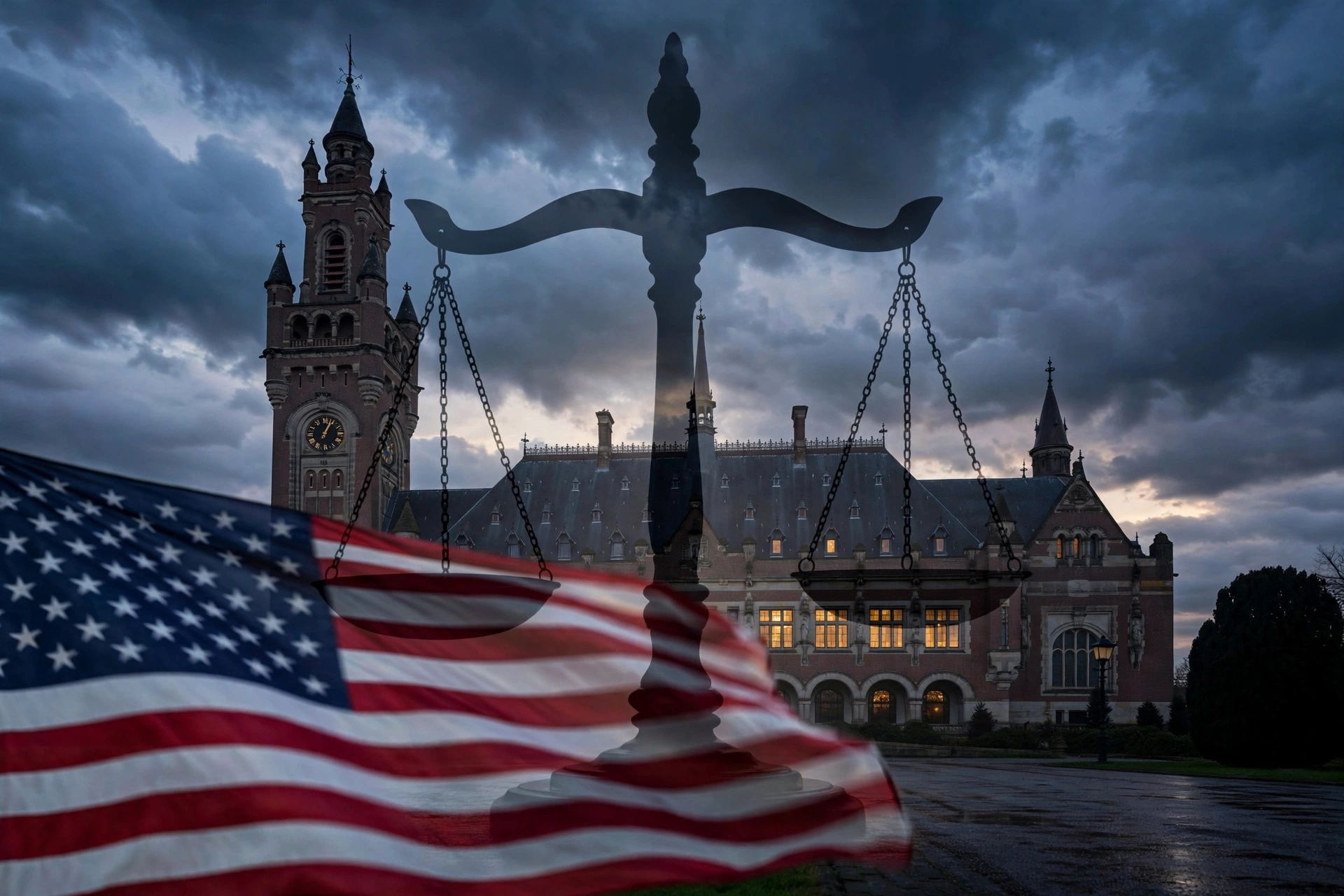
The US sanctions ICC decision marks a dramatic escalation in America’s long-running fight with the International Criminal Court. On Friday, October 9, 2026, the Treasury Department placed the entire court on its sanctions list, making the Hague-based tribunal a sanctioned entity under American law and threatening to cut off its access to the U.S. financial system, American vendors, and dollar-denominated transactions around the world.
Secretary of State Marco Rubio announced the move in blunt terms, calling the court a “rogue court” and vowing that Washington would “continue its campaign to dismantle the ICC, brick by brick.” But the announcement also carried an unusual twist: the most severe measures do not take effect until April 9, 2027, giving the court and its member states a six-month window to meet a list of American demands — or watch the sanctions snap into place.
The US sanctions ICC move instantly split the United States from its closest allies. Within hours, the other members of the G7 — Britain, Canada, France, Germany, Italy, and Japan — joined by Denmark and the Netherlands, issued a joint statement expressing “continued and unwavering support” for the court and saying they “regret and strongly disagree with” the American move. The European Commission called the decision “deeply regrettable” while noting that the delay before the measures bite leaves “room for dialogue.”
What the US Sanctions ICC Measures Actually Do
The designation operates under Executive Order 14203, signed on February 6, 2025. Under the order, the court’s assets held in the United States — or controlled by American citizens, permanent residents, or businesses — are frozen, and those persons and businesses are generally barred from doing business with the tribunal unless a specific exception applies. The order also opens the door to sanctions against foreign individuals or companies that provide what Washington considers material support to the court’s designated activities.
Rubio said the goal was to ban financial transactions with the court, “cutting off their resources and crippling its ability to operate.” In practical terms, that could reach far beyond American soil. The court depends on dollar-denominated payments, American software and cloud providers, and international banks that are reluctant to cross Washington. If major service providers walk away out of caution, the court could find itself unable to pay staff, maintain its IT systems, or keep its insurance in place — even before April.
That fear is not theoretical. Dutch officials have acknowledged that service providers, lacking firm guarantees, may preemptively end their work with the court. The French insurer AXA has already terminated the health insurance contract for court staff, with the coverage ending on September 30. The Netherlands, where the court is headquartered, has said it will “continue to do everything in our power to ensure that the Court can function effectively,” and its foreign minister has assured that Dutch service providers can continue their work — but the unease among private companies is real.
The Demands — and the Deadline
The six-month delay is the most distinctive feature of Friday’s announcement. Rather than imposing full measures immediately, Washington has given the court until April 9, 2027, to satisfy a list of demands. According to the administration, the sanctions can be avoided if the court:
- Cancels the arrest warrants for crimes against humanity issued on November 21, 2024, against Israeli Prime Minister Benjamin Netanyahu and his former defense minister, Yoav Gallant.
- Closes the investigation into alleged crimes by the U.S. military in Afghanistan and by the CIA in secret detention facilities in Lithuania, Poland, and Romania.
- Reforms the Rome Statute so that the court can never prosecute nationals of countries that have not signed the treaty — a group that includes the United States, Israel, Russia, Iran, and Qatar.
Rubio framed the ultimatum starkly: “Either the ICC will end its threats, or we will end the ICC.” He added that Washington expects its allies, many of which are ICC members and rely on American service members for their defense, to “rein in” the court. The administration says it postponed full sanctions in the hope that the court and the states party to the Rome Statute would resolve American concerns on their own — and that, in Rubio’s account, is what did not happen.
A Fight Years in the Making
Friday’s action did not come out of nowhere. The United States has never joined the Rome Statute, the 2002 treaty that created the court to prosecute war crimes, crimes against humanity, and genocide. Washington has long argued the court has no jurisdiction over American citizens — a position Israel shares. But previous administrations mostly expressed that opposition through diplomacy and targeted measures.
The Trump administration has taken a much harder line. Trump sanctioned ICC prosecutors over the Afghanistan investigation, sanctioned the court’s leadership over the Netanyahu warrants, and reimposed broader penalties in 2025. In mid-July, Rubio publicly unveiled his plan to “dismantle” the institution. Since then, American officials have contacted each of the court’s 125 member states, inviting or pressuring them to withdraw from the treaty or cut off funding. So far, only three countries have begun withdrawal procedures: Nauru, Venezuela, and Chad.
The timing of Friday’s announcement added another layer of drama. It came just hours after the Nobel Peace Prize was awarded to Navanethem Pillay, the South African jurist who previously served as a judge at the ICC, for her fight against apartheid. Pillay’s Nobel win put the court in a moment of celebration on the very day Washington moved to isolate it.
How the Allies Responded
The pushback from allies was swift and unusually public. The joint statement from the G7 nations and Denmark and the Netherlands paid tribute to the court’s staff and their families, saying they “work every day to bring those accused of the most serious international crimes to justice and to support their victims.” The statement acknowledged that while the court had taken steps to keep operating, the sanctions would have “a significant impact on the court’s work” — a direct rebuke to Rubio, who had demanded that America’s allies restrain the tribunal.
The ICC itself did not mince words. It called the sanctions “an attempt to obstruct the course of justice” and “an assault on the rule of law and on the very foundations of the international legal order.” The court urged its 125 member states to take concrete steps to protect its operations, while conceding it could not withstand the pressure alone: “The Court cannot stand alone. Its fate now rests also in the hands of the states that created it.”
Deputy Prosecutor Nazhat Shameem Khan told reporters the sanctions “must be condemned,” adding that “our work will continue across all our situations, our investigations and our prosecutions.”
Not everyone was dismayed. On X, Netanyahu welcomed the American decision and condemned what he called “a political body that poses a mortal threat to law abiding democracies worldwide and to the very idea of national sovereignty.”
The Exemptions That Soften the Blow — For Now
The Treasury Department built several escape valves into the sanctions. General License 13 authorizes transactions necessary to maintain or wind down the court’s operations, contracts, and agreements through 12:01 a.m. EDT on April 7, 2027 — two days before the full measures are scheduled to take effect. That license covers member countries’ payments, staff salaries, health insurance, rent, utilities, and routine commercial services, though it does not cover dealings with separately sanctioned officials.
Additional exceptions cover telecommunications, internet, and enterprise software services — including payroll, cybersecurity, and data storage — along with specified pension transactions and services for the continued detention, health, and welfare of people in the court’s custody. Transactions for official U.S. government business are exempt separately. The designation does not immediately shut off every American service the court uses; the practical impact will depend on those authorizations — and on whether providers are willing to continue business that is technically permitted but politically sensitive.
What Comes Next
With the US sanctions ICC ultimatum in place, the six-month clock is now the center of gravity. The European Commission has said it will work closely with the court to keep it running and that the delay provides space for negotiation. The court’s registrar has called on the European Union to have its “blocking mechanism” — a tool designed to protect European businesses from American sanctions with extraterritorial reach — ready if needed. The Netherlands continues to coordinate the international response from The Hague.
The fundamental question is whether any of it will satisfy Washington. The American demands — dropping the Netanyahu warrants, closing the Afghanistan investigation, and rewriting the court’s founding statute — strike at the heart of the institution’s independence. Meeting them would amount to the court subordinating its legal processes to American political demands, something the court’s leadership and its European backers have said they will not do.
If no deal is reached by April 9, 2027, the full sanctions take effect and the court’s ability to function could be severely degraded. Even if a compromise emerges, the episode has already redrawn the map: the United States has moved from criticizing the court to actively trying to dismantle it, while its closest allies have moved from quiet disagreement to open defense of it.
For Americans, the stakes are both legal and geopolitical. The administration argues that a foreign court the United States never joined has no business investigating American service members, and that financial pressure is a legitimate tool to protect national sovereignty. The court’s defenders argue that targeting a judicial institution with sanctions crosses a line — that it is, in the tribunal’s words, an assault on the rule of law itself.
Over the next six months, that argument will play out in courtrooms, foreign ministries, and bank compliance departments across the world. The outcome will determine not just the future of the ICC, but the shape of the American-led international order that the court was built to serve.