President Donald Trump warned the Houthis on Tuesday, October 13, 2026, that the Iran-backed militant group is “behaving very badly” after its deadly missile and drone attacks on Saudi Arabia, and floated the possibility of asking Turkish President Recep Tayyip Erdogan to help strike back at the Yemeni militants. The Trump warns Houthis moment — delivered to reporters before the president departed for a campaign rally in Alaska — marks the sharpest US warning yet in a rapidly widening Middle East confrontation that has already killed at least 13 people, wounded more than 300, and shut down the skies over the Saudi capital.
Speaking to reporters on Tuesday, Trump said he “might” ask Erdogan to intervene in support of Saudi interests. “I have a lot of respect for the president of Turkey,” the president added. “President Erdogan, I think, would do as I ask.”
The remarks landed just hours after a Houthi ballistic missile strike on Riyadh’s King Khalid International Airport — described as the deadliest attack on Saudi Arabia in a decade — and as the kingdom launched retaliatory strikes against Houthi targets in Yemen’s capital. With the eight-month US-Iran war spilling across the region and oil prices climbing toward the November 3 midterm elections, the Trump warns Houthis warning signals that Washington may be moving closer to direct military involvement.
Trump Warns Houthis: “I’ll Be There After the Elections, and I Will Never Forget”
The president’s warning came in two parts on Tuesday. First, Trump took to Truth Social with a blistering post accusing Yemen’s Houthi militants of deliberately trying to drive up oil prices ahead of the US midterm elections. He accused the group of resuming attacks at Iran’s behest after a period of relative quiet following US strikes in Yemen last year.
“The Houthis are behaving very badly,” Trump wrote. He then made clear his warning would extend beyond the November 3 vote: “I’ll be there after the elections, and I will never forget!”
The message was unmistakable. When Trump warns Houthis this way — tying the group’s actions to the midterm elections and vowing a reckoning afterward — it reads as both a campaign warning and a military threat. The president’s language echoes how he has historically telegraphed retaliation: publicly, forcefully, and with an open-ended timeline.
Later on Tuesday, speaking to reporters before his Alaska rally trip, Trump confirmed he had spoken with Saudi Crown Prince Mohammed bin Salman about the attacks. He declined to commit to American strikes when pressed, but acknowledged the conversations with Riyadh about defensive measures and possible coordinated responses. The White House has held off on direct attacks against the Houthis since a May 2025 ceasefire that halted strikes on US vessels in the Red Sea — but Tuesday’s developments suggest that restraint is under review.
Secretary of State Marco Rubio reinforced the warning, saying Washington “strongly condemns” the “terrorist Houthis” for the attacks on Saudi Arabia.
The Deadly Riyadh Airport Attacks
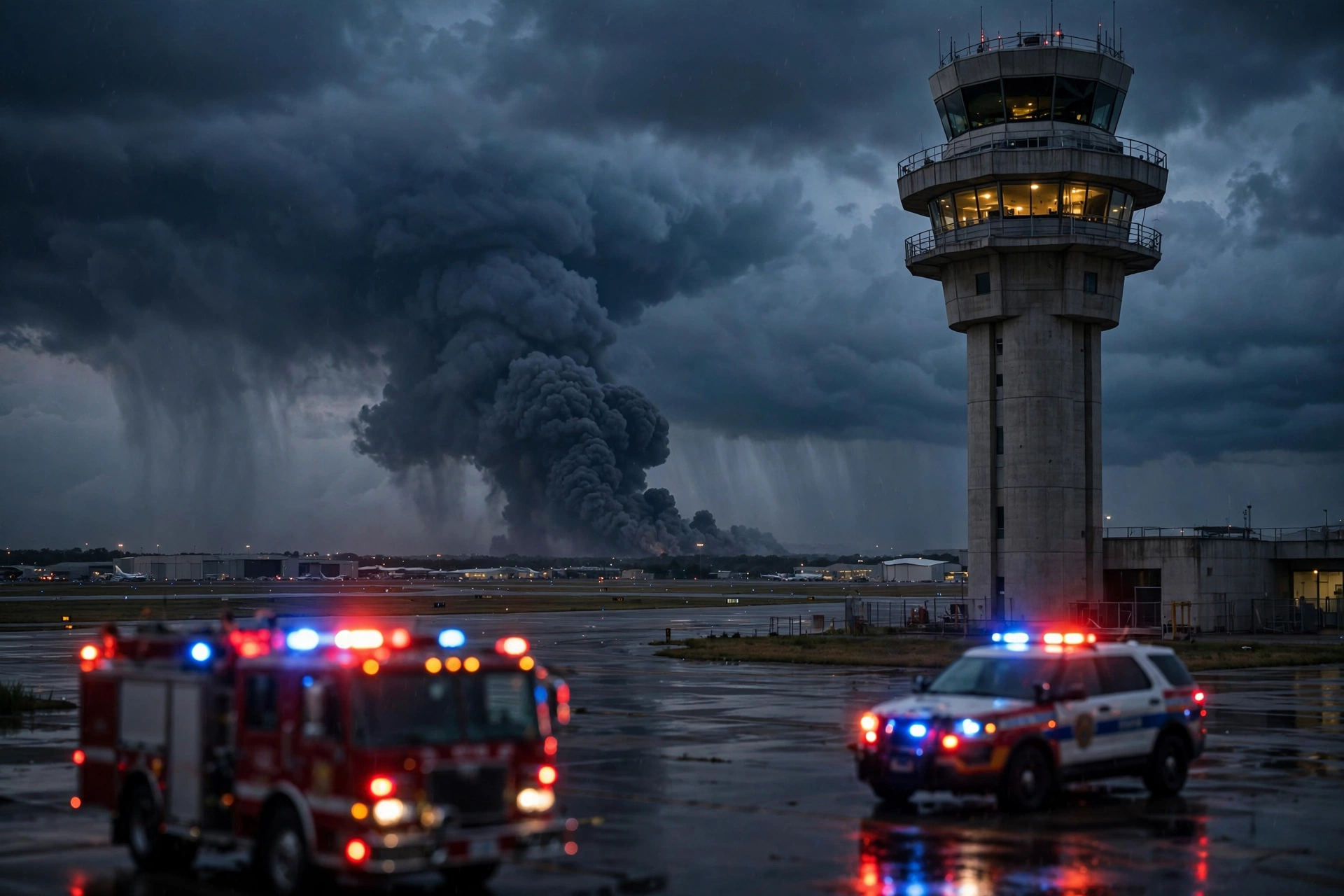
The Houthi assault that triggered the Trump warns Houthis warning unfolded over several days. The group launched missile and drone attacks against Saudi Arabia, including strikes on Riyadh’s King Khalid International Airport that killed at least 13 people, wounded more than 300, and forced the closure of the airport and the skies above the Saudi capital.
Saturday’s ballistic missile strike on the Riyadh airport was the deadliest in Saudi Arabia for a decade. The attack killed at least a dozen people, including one American citizen, and left hundreds more injured. It was the kind of civilian-target attack that has historically drawn the sharpest American responses — an airport full of travelers hit by a ballistic missile.
Rather than showing restraint, a Houthi spokesperson celebrated the assault on civilians on Sunday, announcing that airports had become “a theatre of operations for our forces” — while claiming the Saudis bore “responsibility for any failed interceptions.” Following Saturday’s airport strike, the militants launched additional missile and drone attacks against Saudi Arabia, widening the campaign.
The strikes also came with an economic warning: the group renewed earlier threats it had issued to oil workers in Saudi Arabia, telling them to stay away from sites that could be potential targets. With a major energy conference underway in the kingdom even as flights were grounded, the message to global energy markets was deliberate.
Saudi Arabia Strikes Back in Yemen
Riyadh is not waiting for Washington. The Saudi cabinet, chaired by de facto ruler Crown Prince Mohammed bin Salman, issued a statement saying the Houthis would face consequences for their repeated attacks on the kingdom. Saudi Arabia has resumed its military campaign in Yemen in support of the internationally recognized government and has struck Houthi targets in the Yemeni capital.
The Saudi counteroffensive is aimed at reversing the Houthis’ sudden gains last month, when the group swept down the Red Sea coast to the critical Bab el-Mandeb Strait — the southern gateway to the Red Sea and one of the world’s most important shipping chokepoints. A government offensive that began about a week ago has pushed the militants back from the area closest to the strait, but the group remains entrenched near Taiz and has shown they can strike deep into the kingdom.
Saudi Arabia has also been seeking wider support from allies for its campaign against the Houthis and help warding off their missile and drone attacks — a diplomatic effort that now includes the Turkey conversation Trump raised on Tuesday.
Why Turkey’s Erdogan Entered the Picture
The most surprising element of the Trump warns Houthis warning was the Turkey angle. Turkey commands NATO’s second-largest army, making it a formidable potential partner — but also a controversial one in the Turkish domestic debate.
Erdogan told Crown Prince Mohammed bin Salman on Tuesday that Ankara would stand by the kingdom, according to the Turkish presidency. That call came against the backdrop of a mutual defense pact Turkey and Pakistan signed with Saudi Arabia this summer — though Turkey’s parliament still needs to ratify the treaty before it takes full effect.
Turkish opposition leader Özgür Özel has warned that Ankara risks becoming a direct party to another Middle Eastern war, reviving the debate over whether the pact drags Turkey into the Saudi-Houthi conflict. Trump’s suggestion that he might ask Erdogan to intervene has reignited that controversy in Turkey just as the agreement sits before parliament.
Importantly, Trump stopped short of announcing any formal request to Ankara, and there has been no confirmation that Turkey has agreed to undertake military operations in Yemen. The distinction matters: for now, the Turkey angle is a signal of intent from the White House, not a deployment.
Still, Washington’s posture is evolving. Riyadh has sought more direct US assistance, and while the US has so far provided intelligence and target-identification support, it has not launched new direct strikes in this phase of the confrontation. The Trump warns Houthis warning — paired with the Erdogan float — is the strongest indication yet that the “intelligence only” phase may be ending.
What the Trump Houthi Warning Means for America
For American readers, this story reaches far beyond Yemen. The Houthis have been fighting the Saudi-backed Yemeni government in a civil war since 2014, but the conflict has intensified sharply since the US began its eight-month war on Iran. The group has recently escalated attacks on commercial shipping in the Red Sea and the vital Bab al-Mandab Strait — and since February, when Iran closed the Strait of Hormuz leading from the Gulf to the Indian Ocean, the Red Sea route has become even more critical for global energy supplies.
The renewed attacks have raised serious concerns about disruptions to global oil supplies and shipping routes, threatening to push energy prices higher. Trump himself tied the Houthi attacks directly to the midterm elections, accusing the group of trying to drive up oil prices — and voters’ pain at the pump is the kind of kitchen-table issue that decides elections. The president’s vow that he will “never forget” the attacks, extending beyond Election Day, suggests retaliation could be timed for after the vote.
There is also the direct American angle: one of the people killed in the Riyadh airport attack was an American citizen. When US citizens die in foreign attacks, the pressure on any president to respond with force rises sharply — and the Trump warns Houthis warning shows the White House feels that pressure.
This is also consistent with the broader trajectory of the Trump administration’s foreign policy this fall — a pattern of sharp public warnings followed by concrete action. For continuing coverage of these fast-moving stories, see our latest US News reporting.
What’s Next
Several questions now hang over the crisis:
Will the US strike? Trump declined to commit to American strikes on Tuesday, but his “never forget” vow and the open-ended timeline point to retaliation being prepared. The key variable is whether Washington moves from intelligence support to direct participation.
Will Turkey get involved? No formal request has been made and no Turkish deployment confirmed. Watch Turkey’s parliament, where the mutual defense pact awaits ratification, and the domestic political fight over it.
Will oil prices spike? The Houthis’ threats to oil workers and the attacks on Saudi infrastructure are designed to rattle energy markets. Any disruption around the Bab al-Mandeb Strait or Saudi production would hit prices just weeks before the midterms — exactly the scenario Trump warned about.
Can the Saudi campaign reverse Houthi gains? The Saudi-backed offensive has retaken ground near the strait, but the Houthis remain entrenched near Taiz and have shown they can strike deep into the kingdom.
For now, the Trump warns Houthis warning stands as the defining American statement on the crisis: the militants are “behaving very badly,” the US may soon bring Turkey into the response, and whatever comes next will not be forgotten.
Sources: Reuters, New York Post
1 thought on “Trump Warns Houthis After Deadly Riyadh Airport Attacks, Floats Asking Turkey’s Erdogan to Help Strike Back”