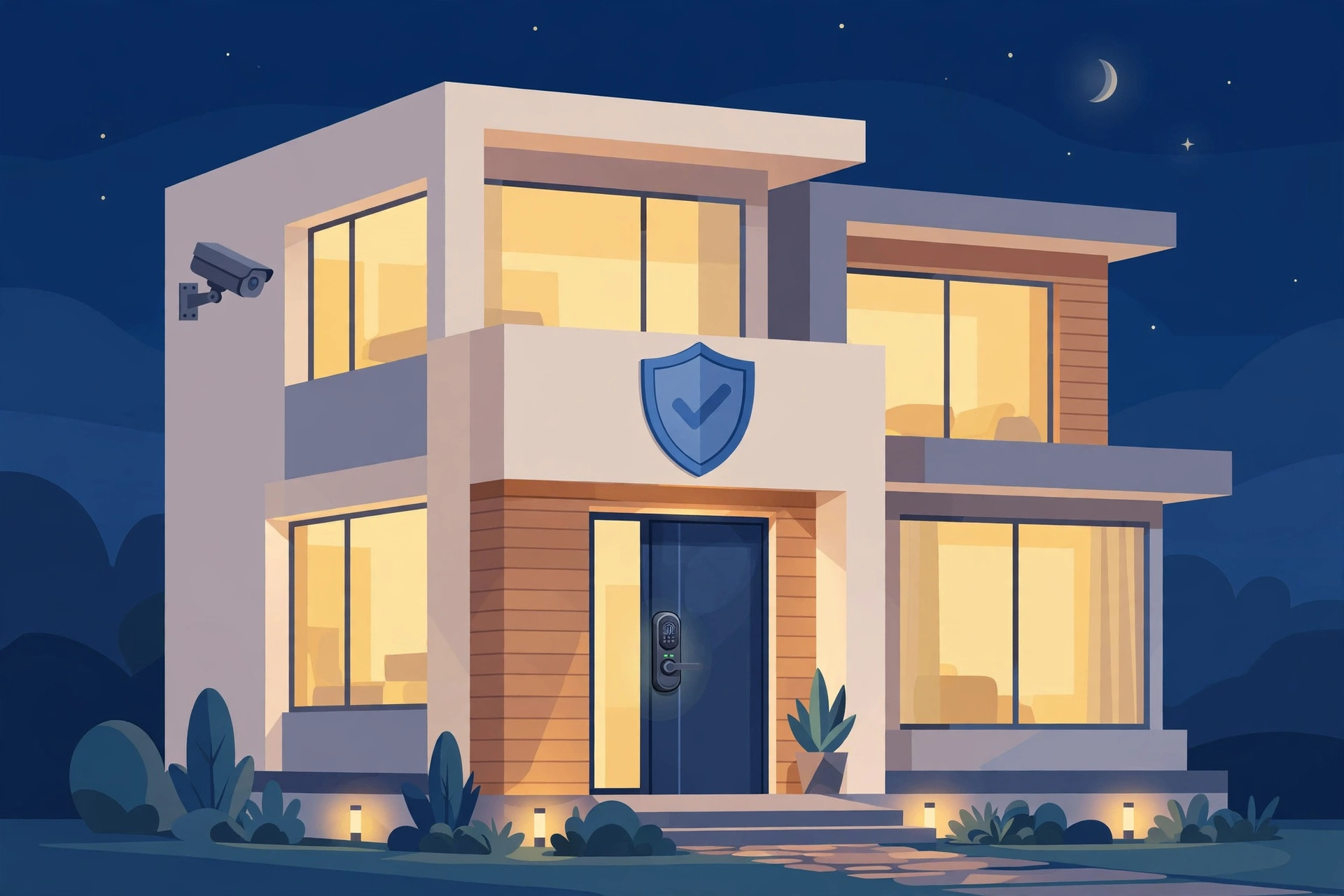
Your home is your sanctuary — and protecting it is both a practical necessity and a profound responsibility. Home security in 2026 blends timeless principles (good locks, alert neighbors) with powerful technology (smart cameras, AI monitoring). This home security tips guide covers everything: assessing risks, physical security, smart systems, and the habits that deter crime.
Home Security Tips: Understanding the Fundamentals
Burglars are overwhelmingly opportunistic. Studies of convicted burglars reveal consistent patterns: they choose easy targets, avoid occupied homes, spend under 10 minutes inside, and flee at any resistance or complication. Your goal is not Fort Knox — it is making your home a harder target than the alternatives. Most deterrence is psychological: visible difficulty and risk.
The three layers of security:
- Deterrence — convincing criminals to skip you (lighting, visibility, signs)
- Detection — knowing when something happens (alarms, cameras, dogs)
- Delay/Response — slowing intruders and summoning help (locks, reinforced doors, monitoring)
- Entry points: Every door and ground-floor window is a potential entry. Sliding doors, basement windows, and side doors get less attention but equal vulnerability.
- Visibility: Overgrown bushes hide intruders. Dark areas invite approach. Can neighbors or passersby see your entry points?
- Routine signals: Piled-up mail, dark houses at regular hours, social media vacation posts — all advertise absence.
- Valuables visibility: Expensive electronics visible through windows invite targeted break-ins.
- Deadbolts: Install quality deadbolts (1-inch throw minimum) on every exterior door. The strike plate — where the bolt meets the frame — matters as much as the lock; reinforce with 3-inch screws into the wall stud, not just the door frame.
- Door construction: Solid-core or metal doors resist kicking; hollow-core doors do not. Most residential doors fail at the frame before the lock — reinforcement kits are cheap and effective.
- Smart locks: Keypad and app-controlled locks eliminate key vulnerabilities (copies, under-mat keys) and provide access logs. Choose reputable brands; change codes when relationships change.
- Locks: Ensure every window locks; add secondary locks (pins, dowels) to vulnerable ones.
- Reinforcement: Security film makes glass shatter-resistant — intruders expecting quick entry face unexpected difficulty. Laminated glass in new installations is even better.
- Sliding doors/windows: Place dowels or security bars in tracks; add auxiliary locks. These are notoriously easy to lift off tracks — anti-lift devices close the gap.
- Motion-activated floods covering approaches, sides, and back — sudden light startles and exposes
- Consistent entry lighting on timers or dusk-to-dawn sensors
- Interior timers simulating occupancy when away — varying patterns beat predictable ones
- Avoid: Blinding lights that create deep shadows elsewhere; lighting that annoys neighbors into complaints rather than vigilance
- Cover: All entry points, driveway, and backyard. Doorbell cameras are the single highest-value addition for most homes.
- Quality matters: 1080p minimum; night vision essential; wide dynamic range handles backlighting.
- Storage: Local storage avoids subscription fees and cloud vulnerabilities; cloud offers off-site protection if equipment is stolen. Many use both.
- Privacy: Point cameras at your property, not neighbors’ windows. Inform household members and guests. Know local recording laws (audio recording has stricter rules than video in many states).
- Lock everything, always. Most burglaries involve unlocked doors or windows. Make locking automatic — every time, even for quick errands.
- Know your neighbors. Connected communities watch out for each other. Exchange contact info, watch homes during absences, report suspicious activity.
- Manage your signals. Stop mail/newspapers when traveling. Use light timers. Never announce trips on public social media — post vacation photos after returning.
- Secure valuables disproportionately. Safes (bolted down) for irreplaceable items and documents. Do not leave keys, garage openers, or valuables visible in cars.
- Landscaping for security: Trim bushes below window height; thorny plants under vulnerable windows; maintain clear sightlines.
- Smoke and CO detectors: On every floor, in every bedroom area. Test monthly; replace batteries yearly (or buy 10-year sealed units).
- Fire extinguishers: Kitchen, garage, and each floor. Know how to use them (PASS: Pull, Aim, Squeeze, Sweep).
- Escape planning: Two exits from every room; practiced family escape plan; meeting point outside.
- Water sensors: Cheap devices under sinks, water heaters, and washing machines catch leaks before they become disasters.
Weakness in any layer can be compensated by strength in others — but all three matter.
Assessing Your Home's Vulnerabilities
Walk your property with a burglar's eyes:
Physical Security: Locks, Doors, and Windows
Doors: Your Primary Defense
Windows
Garage
Garages are overlooked entry points: often unlocked interior doors, windows, and automatic openers vulnerable to simple hacks. Secure the interior door like any exterior door, cover windows, and consider a garage door monitor.
Lighting: The Simplest Deterrent
Criminals hate light. Effective lighting strategy:
Smart Home Security Systems
What Modern Systems Offer
Today's systems integrate cameras, door/window sensors, motion detectors, smoke/CO monitoring, and professional monitoring in app-controlled packages — capabilities that cost thousands a decade ago now available for hundreds.
DIY vs. Professional Installation
DIY systems (dominant now): Lower cost, no contracts, self-installation in hours, app control. Best for tech-comfortable homeowners and renters (many offer renter-friendly no-drill options).
Professional systems: Expert installation, integrated design, often required for insurance discounts. Best for large homes, complex needs, or those wanting hands-off setup.
Cameras: Placement and Practice
Monitoring: Self vs. Professional
Self-monitoring (phone alerts) is free but depends on you noticing and acting — useless if you are asleep, in a meeting, or without signal. Professional monitoring ($20-60/month) ensures trained humans respond 24/7, dispatching police/fire. For high-risk situations or frequent travelers, professional monitoring justifies its cost. Many use hybrid: self-monitoring daily with professional backup.
The Human Elements: Habits and Community
Technology amplifies but never replaces fundamentals:
Special Situations
Renters: Focus on portable solutions — door reinforcement devices, window locks, portable alarms, cameras not requiring drilling, renters insurance (essential and cheap). Know your landlord's obligations for locks and security.
Vacations: The highest-risk period. Beyond timers and mail stops: ask trusted neighbors to park in your driveway occasionally, vary lights, keep some blinds as usual (fully closed blinds signal absence), and consider smart systems' vacation modes.
New homeowners: Rekey or replace all locks immediately — you have no idea how many key copies exist. Change alarm codes. Audit the previous owner's smart devices (remove their access).
Families with children: Teach kids security basics (locking, not opening doors to strangers, not sharing family absence online). Smart locks with unique codes per family member provide both convenience and accountability.
Fire and Environmental Safety (The Other Half of Home Security)
Security is not only about intruders:
Insurance: The Financial Layer
Homeowners/renters insurance is security's financial backstop. Document belongings (video walkthrough stored off-site). Understand your coverage — replacement cost vs. actual cash value, deductible levels, and exclusions (floods and earthquakes typically need separate policies). Security systems often earn insurance discounts — ask your agent.
Putting It Together: Prioritized Action Plan
This weekend (free/cheap): Audit entry points; upgrade strike plates; trim landscaping; set up light timers; establish lock-everything habit; photograph valuables.
This month ($100-500): Doorbell camera; window security film or locks; motion lighting; safe for documents; smoke/CO detector check.
This year: Full smart system if desired; professional monitoring evaluation; insurance review; family emergency planning.
The Bottom Line
Home security in 2026 is accessible, affordable, and effective — but only if implemented. The burglar choosing between your house and the neighbor's picks the easier target; these measures ensure it is never yours. Start with the free fundamentals this weekend, layer in technology thoughtfully, build community connections, and sleep better knowing your sanctuary is genuinely secure.