President Donald Trump is trying to push off his sworn testimony in the $10 billion defamation lawsuit he filed against the BBC until January 2027 — and the British broadcaster has now asked a federal judge to force him to sit for the deposition. The Trump BBC deposition fight escalated this week when BBC lawyers filed a motion in Florida federal court accusing the president of dodging the most important witness in his own case: himself.
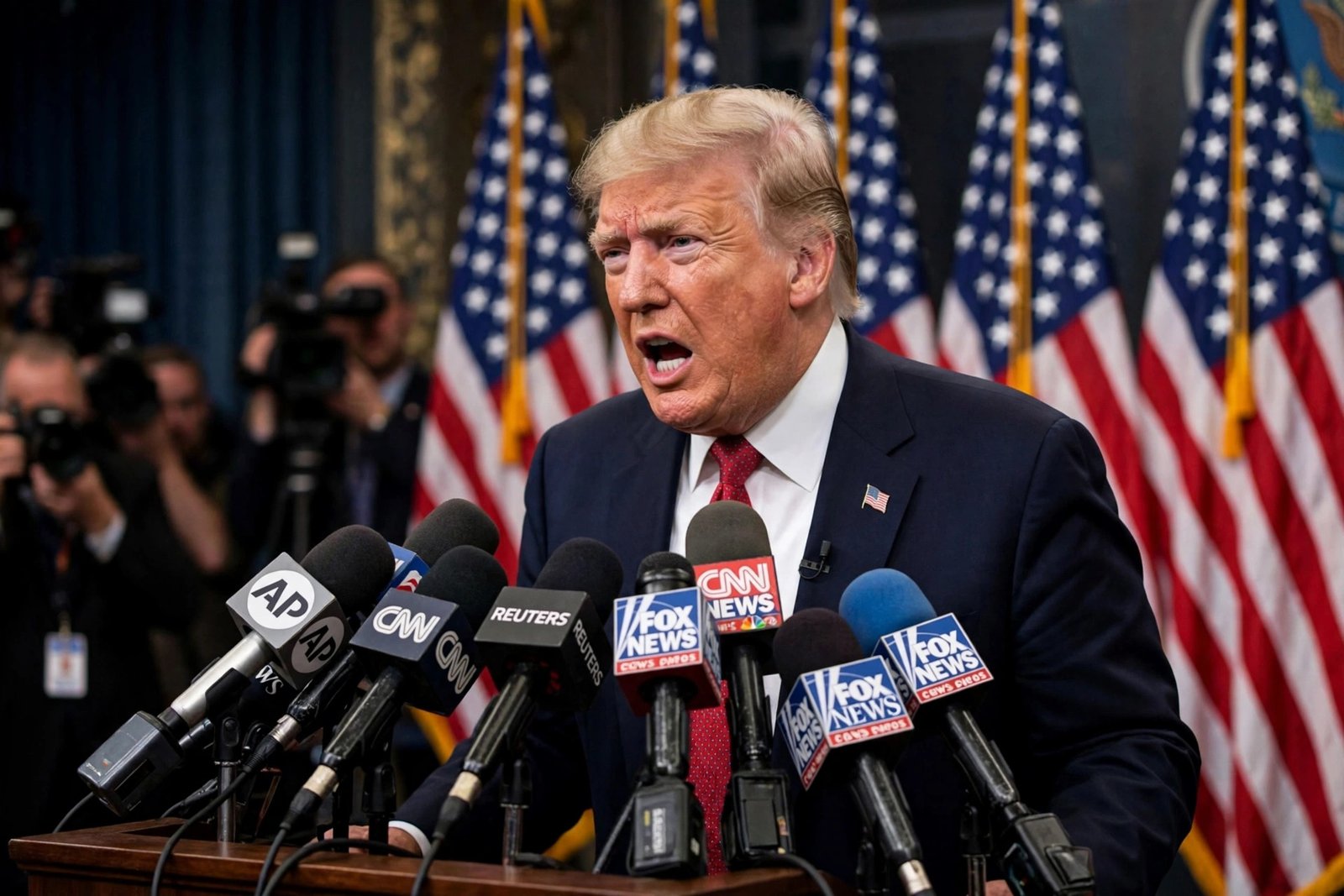
According to the Associated Press, Trump’s legal team canceled an agreed-upon deposition date of October 16, telling the BBC the president was unavailable due to “matters of national importance.” The BBC’s filing says Trump’s lawyers then proposed rescheduling the Trump BBC deposition for the second or third week of January 2027 — without offering any specific date — and indicated Trump has “no availability whatsoever” before the discovery period closes on December 18, 2026.
The Trump BBC deposition dispute is the latest flashpoint in a lawsuit that has already shaken Britain’s public broadcaster to its core. Trump sued the BBC last December over a documentary that spliced together his January 6, 2021 speech, and the fallout has included an apology, the resignation of the BBC’s top leadership, and now a courtroom battle over whether the plaintiff himself will answer questions under oath.
- BBC Files Motion to Compel Trump Deposition
- Canceled October 16 Date: “Matters of National Importance”
- Trump’s January 2027 Delay Request
- The $10 Billion Lawsuit: Background
- The January 6 Documentary Edit at the Center
- The Resignations: How the Edit Toppled the BBC’s Top Two Leaders
- Can a Sitting President Be Forced to Testify?
- What’s Next
- Additional Details
BBC Files Motion to Compel Trump Deposition
The BBC’s lawyers asked a Florida federal court this week to order Trump to set a firm date for his deposition and to take up the matter at an October 22 hearing already scheduled for other procedural issues, AFP reported. The broadcaster’s legal team argued it has been unable to question Trump despite months of discovery, during which seven BBC witnesses have already given depositions.
“Nearly eight months into discovery, after seven depositions of BBC witnesses, and with only two months of discovery remaining, the BBC still has not been able to depose, and does not even have a schedule to depose, the most central figure in this case: Plaintiff himself,” the BBC’s lawyers wrote in the filing. BBC attorney Charles D. Tobin put it more bluntly to the court: “Those delays have flouted the cooperative spirit of discovery and precluded the BBC from obtaining the evidence necessary to robustly litigate its defense,” the Associated Press reported.
The BBC’s lawyers acknowledged that scheduling a deposition with a sitting U.S. president “requires additional planning” and said they were willing to accommodate that reality — but stressed that Trump’s testimony in the Trump BBC deposition is essential because he initiated the lawsuit and is seeking enormous damages, according to details of the filing.
Canceled October 16 Date: “Matters of National Importance”
The two sides had previously agreed that Trump would sit for the deposition on October 16, 2026. But the BBC’s filing lays out a timeline of unanswered requests: its counsel reached out on September 16 to confirm a location and logistics, and Trump’s lawyer said he was “inquiring” and would get back — but never did.
When the BBC followed up on September 24, Trump’s lawyer responded four days later that the president “is no longer available for his deposition on October 16 due to other matters of national importance,” yet failed to propose a replacement date by the end of that week as promised.
On October 7, the BBC once again asked Trump’s team to identify a new date, time and location. Again, no date was provided. Only after the BBC threatened to go to the court did Trump’s lawyers respond in detail — saying the president would not be available for the Trump BBC deposition until next year, News Central reported, citing the court filing.
Trump’s battles with the press have escalated on multiple fronts this year. Read StateLineDaily’s full report on the federal judge blocking the White House press ban here.
Trump’s January 2027 Delay Request
According to the BBC’s filing, Trump’s counsel proposed seeking an extension of the discovery period and insisted that if the BBC agreed, Trump would make himself available for the Trump BBC deposition in the second or third week of January 2027 — but provided no specific date. The filing states bluntly: “Plaintiff’s counsel informed the BBC’s counsel that Plaintiff has no availability whatsoever for the Trump BBC deposition before discovery is set to close on December 18, 2026.”
The BBC objects to the January timing because it could fall after the discovery deadline, leaving the broadcaster limited time to obtain and evaluate evidence before the trial, which is scheduled for February 2027, AFP reported. A deposition is a standard part of civil litigation in which attorneys question a party under oath, and the testimony is recorded for potential use at trial — for the BBC, questioning Trump in the Trump BBC deposition is critical to testing the factual basis of his allegations and the harm he claims the documentary caused, Legal United States noted.
The request for judicial intervention does not automatically mean Trump has been ordered to sit for the Trump BBC deposition. The judge must weigh both sides’ arguments and decide what action, if any, is appropriate under the rules — and the October 22 hearing is now the next venue where the Trump BBC deposition scheduling fight will play out.
The $10 Billion Lawsuit: Background
Trump filed the lawsuit against the BBC in December 2025, seeking at least $5 billion in damages for each of two defamation counts — bringing the total demand to $10 billion, AFP reported. The 33-page complaint accused the broadcaster of airing a “false, defamatory, deceptive, disparaging, inflammatory, and malicious depiction of President Trump,” calling it “a brazen attempt to interfere in and influence” the 2026 U.S. presidential election, according to the Associated Press.
The AP also noted that Trump, who brought the case, has a history of avoiding depositions — an irony the BBC’s lawyers have leaned into as they press the court to compel his appearance. The broadcaster has denied that it defamed Trump, denied the documentary caused him any real injury, and has moved for the case to be dismissed outright.
The January 6 Documentary Edit at the Center
At the heart of the case is “Trump: A Second Chance,” a BBC documentary that admittedly spliced together quotes from different sections of the speech Trump delivered to supporters on January 6, 2021 — before the storming of the U.S. Capitol — in a way that made it appear he was directly urging violence, the Associated Press reported.
Britain’s publicly funded broadcaster apologized to Trump over the edit, and the fallout was swift: the head of the BBC and the broadcaster’s top news executive both resigned. See StateLineDaily’s coverage of Trump’s ongoing legal battles with the press for the wider context of his media lawsuits.
The Resignations: How the Edit Toppled the BBC’s Top Two Leaders
Long before the Trump BBC deposition battle reached a courtroom, the documentary edit had already ended the careers of the BBC’s two most senior leaders. On Sunday, November 9, 2025, Director-General Tim Davie and BBC News CEO Deborah Turness both resigned amid the fallout, the Associated Press reported via NPR.
Davie, stepping down after five years at the helm, told staff the decision was “entirely my decision,” adding: “Overall the BBC is delivering well, but there have been some mistakes made and as director-general I have to take ultimate responsibility.” Turness said the controversy “has reached a stage where it is causing damage to the BBC — an institution that I love,” declaring that “as the CEO of BBC News and Current Affairs, the buck stops with me.”
The pressure had been building since the Daily Telegraph published parts of a dossier compiled by Michael Prescott, an adviser the BBC itself had hired to review its standards and guidelines.
Critics charged that the documentary’s edit was misleading precisely because it cut out the section in which Trump said he wanted supporters to demonstrate peacefully — the same edit now at the center of the $10 billion lawsuit. The resignations marked one of the most dramatic leadership collapses in the broadcaster’s century-long history, and they unfolded a full month before Trump even filed his December 2025 suit.
Can a Sitting President Be Forced to Testify? The Precedent Says Yes — With a Caveat
Trump’s bid to delay the Trump BBC deposition until 2027 runs into a landmark Supreme Court precedent. In 1997, the Court ruled unanimously — 9-0 — in Clinton v. Jones that a sitting president can face a civil lawsuit over unofficial conduct, flatly rejecting the argument that the separation of powers requires courts to freeze private cases until a president leaves office, FindLaw’s case summary notes.
But here is the caveat most coverage misses: the Congressional Research Service points out that the Jones court “explicitly avoided the question of compelled presidential testimony.” Past presidents have voluntarily given depositions and answered written questions, but no sitting president has ever been ordered to testify in open court, according to CRS. That unresolved legal question is exactly what makes the Trump BBC deposition motion — and the Florida judge’s upcoming ruling — significant far beyond this single $10 billion case.
What’s Next
Will the judge force Trump to sit for the deposition? The BBC wants the Trump BBC deposition scheduling issue addressed at the October 22 hearing. The judge could order Trump to propose dates within the discovery window, extend discovery into January, or deny the motion — each outcome reshapes the trial timeline set for February 2027.
Could discovery be extended into January 2027? Trump’s team has already floated extending the discovery period to accommodate a January Trump BBC deposition. If the court agrees, the February trial date could slip — a significant shift in a $10 billion case.
Does the BBC’s motion to dismiss still stand? Yes. The broadcaster continues to argue the case should be thrown out entirely, denying Trump’s claims caused him real injury. The Trump BBC deposition fight and the dismissal motion are proceeding on parallel tracks.
Why does this matter before the midterms? The Trump BBC deposition battle lands less than three weeks before the November 3 midterm elections, adding a courtroom drama to an already crowded political calendar — and keeping Trump’s adversarial relationship with the press in the headlines.
Additional Details
Description: The BBC has asked a Florida federal judge to compel President Donald Trump to set a date for the Trump BBC deposition in the $10 billion defamation lawsuit Trump filed over the documentary “Trump: A Second Chance.” Trump canceled an agreed October 16, 2026 date for the Trump BBC deposition, citing “matters of national importance,” and his lawyers proposed January 2027 instead, with discovery set to close December 18, 2026 and trial scheduled for February 2027. BBC attorney Charles D. Tobin accused Trump’s team of flouting discovery cooperation.
The article also covers the November 2025 resignations of BBC Director-General Tim Davie and news CEO Deborah Turness over the edit, and the Clinton v. Jones precedent on compelling a sitting president’s testimony. Key figures: $10 billion in claimed damages, seven BBC witnesses already deposed, October 22 hearing next.
1 thought on “Trump BBC Deposition: BBC Asks Judge to Force Testimony as Trump Seeks January 2027 Delay”