The Fifth Circuit bond hearings fight reached a decisive turning point on Friday, October 23, 2026, when the full U.S. Court of Appeals for the Fifth Circuit ruled 10-7 that detained immigrants classified as applicants for admission have no constitutional right to a bond hearing while their deportation cases are pending. The en banc decision is a major legal victory for the Trump administration’s mandatory detention policy and a sharp reversal for detainees in Texas, Louisiana, and Mississippi, the three states covered by the court.
The ruling swept aside three lower-court orders that had freed long-term residents and restored the government’s power to hold them without an individualized hearing on whether they are a flight risk or a danger to the community. For the men at the center of the Fifth Circuit bond hearings case — two Mexican citizens and one Honduran citizen who have lived in the United States for years — it means detention can continue without a judge ever weighing whether they should be released on bond.
The decision lands just 11 days before the November 3 midterm elections, as immigration enforcement remains one of the defining issues of the campaign, and it deepens a national split among federal appeals courts that only the Supreme Court can now resolve.
- What the Fifth Circuit Bond Hearings Ruling Decided
- The 10-7 Split Inside the Court
- Fifth Circuit Bond Hearings: A Year of Legal Whiplash
- Who the Fifth Circuit Bond Hearings Ruling Affects
- Reaction to the Fifth Circuit Bond Hearings Decision
- Extra Knowledge: Two Questions, One Fight
- Extra Knowledge: Detention in Context
- What’s Next
- Additional Details
What the Fifth Circuit Bond Hearings Ruling Decided
At the heart of the case is Section 1225(b)(2)(A) of the Immigration and Nationality Act, which requires the detention of certain noncitizens classified as applicants for admission while their removal proceedings are pending. The question before the full Fifth Circuit was whether the Constitution demands something more than what Congress wrote: an individualized bond hearing where a detainee can argue for release.
Writing for the majority, Circuit Judge Cory Wilson concluded that it does not. Detainees in this category, the majority held, receive only the procedures Congress provided by statute and are not entitled to additional due-process bond proceedings. The International Business Times reported that the decision reversed a July 2026 panel ruling and upheld the administration’s position on the constitutional question.
The practical effect is immediate. The court ordered its mandate to issue “forthwith,” sending the cases back to the district courts at once, and federal judges within the Fifth Circuit can no longer use the due-process theory the court just rejected to impose bond hearings that Congress did not provide for this category of detainees.
The 10-7 Split Inside the Court
The 10-7 vote shows how divided the judiciary is over the limits of executive detention power. Seven judges dissented, warning that the majority’s reasoning permits effectively indefinite detention without meaningful process.
Among the dissenters was U.S. Circuit Judge Dana Douglas, an appointee of Democratic President Joe Biden, who wrote that “unchecked, executive authority to arrest and detain, indefinitely, echoes fearfully from history,” according to Reuters reporting carried by KELO-FM. The dissenters described the majority’s historical and legal reasoning as deeply flawed, a view immigrant advocates echoed within hours of the ruling.
The majority, by contrast, treated the case as a straightforward question of statutory design: Congress set the procedures for this class of detainees, and the Constitution does not require courts to add a bond hearing on top of them. That framing is what makes the ruling so consequential — it does not merely resolve three individual cases but removes a legal tool that detainees and their lawyers had used to seek release across the Fifth Circuit.
Fifth Circuit Bond Hearings: A Year of Legal Whiplash
The October 23 decision is the third turn in a dizzying year for the Fifth Circuit bond hearings question, and the whiplash itself tells the story of how contested mandatory detention has become.
In February 2026, the Fifth Circuit adopted the administration’s reading of immigration law as requiring mandatory detention for this category of detainees. Then in July, a 2-1 panel of the same court held that Immigration and Customs Enforcement could not constitutionally detain people for more than 90 days without providing hearings to argue for release on bond. The full court then agreed to rehear the case en banc — and on Friday, it reversed course entirely, concluding that detained immigrants are not constitutionally entitled to proceedings in immigration court beyond what Congress provided by statute.
The roots of the dispute go back further. In 2025, the Trump administration expanded its interpretation of Section 1225(b)(2)(A) to cover certain undocumented immigrants already living in the United States who had not been legally admitted. The Justice Department’s Board of Immigration Appeals adopted that interpretation in September 2025, prompting lawsuits from detainees who argued they should have an opportunity to seek release on bond. Those lawsuits produced the three release orders the Fifth Circuit has now swept aside.
Who the Fifth Circuit Bond Hearings Ruling Affects
The Fifth Circuit bond hearings ruling is binding precedent in Texas, Louisiana, and Mississippi, the three states within the Fifth Circuit’s jurisdiction. That geography matters enormously: Texas and Louisiana house the nation’s largest numbers of immigration detainees, so the decision reaches the very facilities where the most people are held.
The three men whose cases produced the ruling — two Mexican citizens and one Honduran citizen — had lived in the United States for years, even decades, before challenging their detention. Their cases became the vehicle for a question affecting far more people: whether long-term residents swept into mandatory detention get any individualized hearing at all.
Advocates say the answer now given will leave tens of thousands of people imprisoned without the government ever having to explain why they, individually, must remain locked up. The administration says the answer simply enforces the law Congress wrote. Both sides agree on one thing: the ruling changes the daily reality of detention in the three states more than any single court decision this year.
Reaction to the Fifth Circuit Bond Hearings Decision
The administration celebrated immediately. James Percival, the general counsel for the U.S. Department of Homeland Security, hailed what he called a “big win in the 5th Circuit on mandatory detention for illegal aliens” in a social media post. Attorney General Pam Bondi praised the ruling as “a significant blow against activist judges who have been undermining our efforts to make America safe again at every turn.”
Immigrant advocates reacted with alarm. Ellie Norton, a lawyer for the non-U.S. citizens in the case at the National Immigration Project, said in a statement: “This ruling opens the door to more people being locked up for no reason, with devastating consequences for them, their loved ones and their community.”
Rep. Joaquin Castro of Texas was blunter still, writing on social media: “Today, the Fifth Circuit stripped immigrants facing detention in Texas, Louisiana, and Mississippi of their right to due process. People who have lived in our communities for years, even decades, can now be locked away with no chance to see a judge or ask for bond. It’s a radical departure from decades of legal precedent and violates the Fifth Amendment of the Constitution, which protects everyone.”
The ruling also arrives in the middle of a fierce midterm debate over the administration’s immigration record. The administration has touted its enforcement push all year, while Democrats have pointed to detention practices as a central campaign issue. Just this week, State Line Daily reported that deportations reached 660,000 in the last fiscal year, far below the administration’s 1 million goal — a reminder that the detention system and the removal system are two different machines, and Friday’s ruling governs the first of them.
Extra Knowledge: Two Questions, One Fight
One distinction competitors have largely missed is that the Fifth Circuit answered only half of the legal fight — and the other half is headed to the Supreme Court within weeks.
The Fifth Circuit decided a constitutional question: does the Constitution itself require bond hearings for this category of detainees, beyond what the statute provides? Its answer was no. But the Supreme Court is preparing to hear a related statutory challenge in early November that asks a different question: does federal immigration law, properly read, require bond hearings in the first place? The statutory question differs from the constitutional issue the Fifth Circuit addressed on October 23, and the Supreme Court’s answer could set the national rule on inland mandatory detention.
That means Friday’s ruling, sweeping as it is, may not be the last word. If the Supreme Court reads the statute to require bond hearings, detainees could regain the hearings the Fifth Circuit just denied them on constitutional grounds — this time as a matter of what Congress actually wrote. Conversely, if the Supreme Court sides with the administration on the statute too, mandatory detention without bond hearings would be locked in nationwide, not just in the Fifth Circuit’s three states. The administration has also sought further review of the broader dispute, so the legal battle is far from over.
There is a second nuance worth understanding. The ruling covers noncitizens classified as “applicants for admission” — people the law treats as seeking entry, even if they have lived in the United States for years without ever being lawfully admitted. That classification is the hinge of the whole case: it is why the administration argues Congress’s detention mandate applies, and why detainees argue the label cannot erase their constitutional rights. Lawful permanent residents and people formally admitted to the country stand on different legal footing, which is why Friday’s decision does not touch every detainee in the system — only the category Congress placed in Section 1225(b)(2)(A).
Extra Knowledge: Detention in Context
Friday’s Fifth Circuit bond hearings ruling also needs to be read against the sheer scale of the detention system it governs. The administration’s enforcement push has made detention a central instrument of immigration policy, not just a holding step before removal. When courts require bond hearings, detention has a pressure valve: people who are not flight risks and not dangers can argue their way out while their cases proceed, which can take months or years. When courts remove that valve, detention becomes the default for the entire length of a case.
That is why advocates frame the decision as an indefinite-detention ruling even though the court framed it as a procedural one. A removal case with no bond hearing means the government’s initial detention decision is effectively final for as long as the case lasts, with no periodic judicial check on whether continued detention still makes sense for that person.
The context also connects to the administration’s broader use of detention infrastructure. State Line Daily has previously reported on the administration’s $100 million domestic surveillance and intelligence plan and on the criminal investigation into a former top Homeland Security figure — both reminders that the Department of Homeland Security’s enforcement apparatus has been under intense legal and political scrutiny all year. Friday’s Fifth Circuit decision is the administration’s most significant courtroom win in that fight so far, and it strengthens the detention pillar of its strategy just as voters head to the polls.
What’s Next
Will the Supreme Court overturn the Fifth Circuit bond hearings ruling? Not directly — the Supreme Court’s early-November case asks a statutory question, not the constitutional one the Fifth Circuit decided. But a ruling that the statute requires bond hearings would restore them in practice, while a ruling for the administration would cement mandatory detention nationwide.
What happens to the three men in the case now? Their cases return to the district courts under the Fifth Circuit’s mandate, which issued forthwith. The release orders that freed them are swept aside, and they face continued detention while their removal proceedings continue, without a bond hearing under the theory the court rejected.
Does the ruling affect detainees outside Texas, Louisiana, and Mississippi? Not as binding precedent. But it deepens a split among the appeals courts over mandatory detention, which is exactly the kind of conflict that pushes the Supreme Court to settle the national rule.
Could Congress change the outcome? Yes. Congress wrote Section 1225(b)(2)(A), and Congress could amend it to require bond hearings expressly. With control of Congress itself at stake on November 3, the midterm results may decide whether that legislative path opens or closes.
Additional Details
Description: The full Fifth Circuit ruled 10-7 on October 23, 2026, that detained immigrants classified as applicants for admission under 8 U.S.C. 1225(b)(2)(A) have no constitutional right to bond hearings, reversing a July panel ruling and three release orders, in a decision binding in Texas, Louisiana, and Mississippi as the Supreme Court prepares to hear a related statutory challenge in early November.
- Court: U.S. Court of Appeals for the Fifth Circuit, sitting en banc
- Decision date: October 23, 2026
- Vote: 10-7
- Majority author: Circuit Judge Cory Wilson
- Key dissent: Circuit Judge Dana Douglas
- Statute at issue: 8 U.S.C. 1225(b)(2)(A)
- States affected: Texas, Louisiana, Mississippi
- Next step: Supreme Court statutory challenge, early November 2026
The Fifth Circuit bond hearings ruling will now shape detention in Texas, Louisiana and Mississippi, and the Fifth Circuit bond hearings question will return to the Supreme Court, where the Fifth Circuit bond hearings statutory dispute could restore the hearings the court denied.
For readers following the Fifth Circuit bond hearings case, the Fifth Circuit bond hearings timeline matters: the Fifth Circuit bond hearings panel ruling in July, the Fifth Circuit bond hearings en banc reversal in October, and the Fifth Circuit bond hearings Supreme Court argument in November will define detention law.
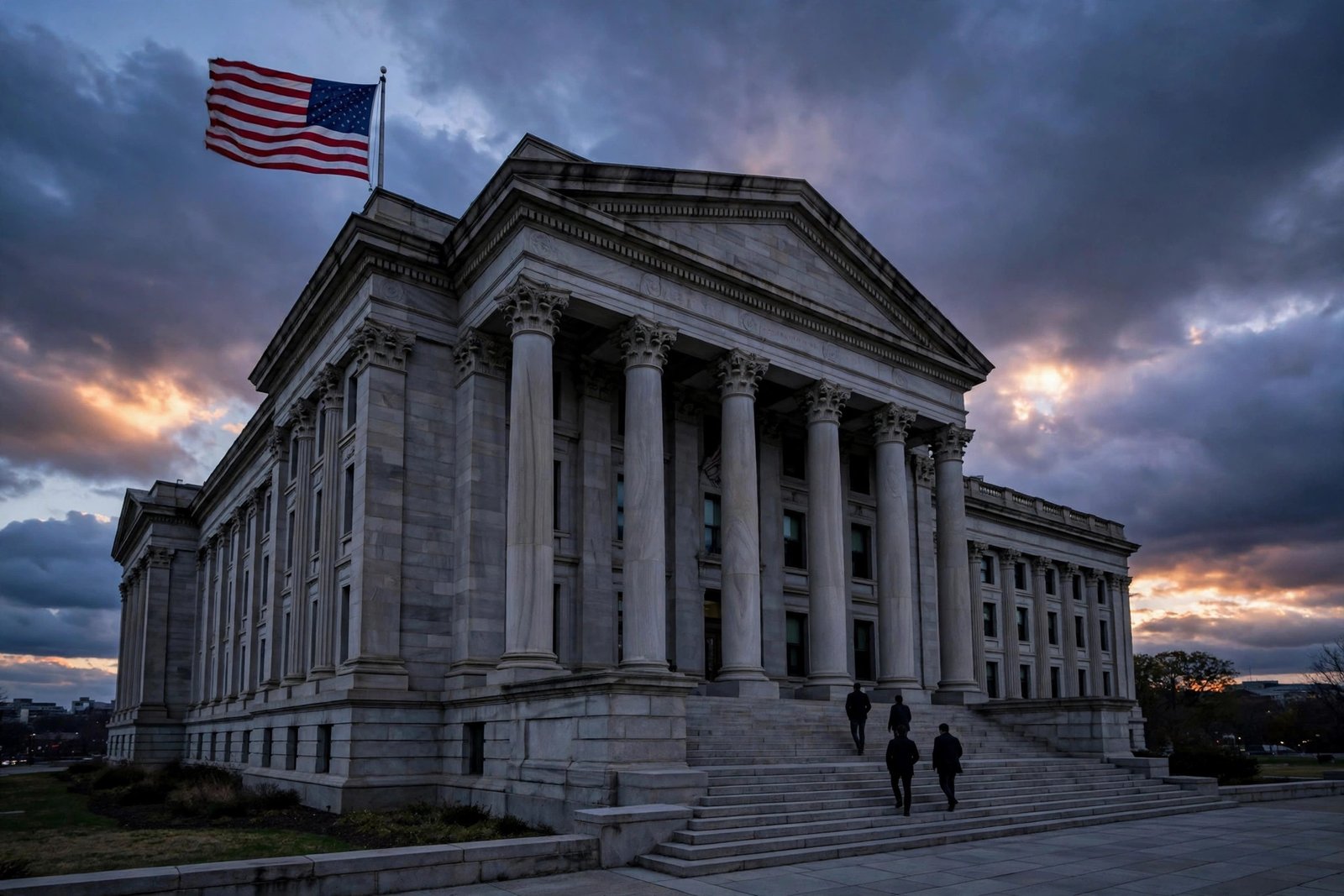
The Fifth Circuit bond hearings debate will continue after the Fifth Circuit bond hearings ruling, as the Fifth Circuit bond hearings litigation, the Fifth Circuit bond hearings dissent, and the Fifth Circuit bond hearings Supreme Court case keep the Fifth Circuit bond hearings issue at the center of detention policy.