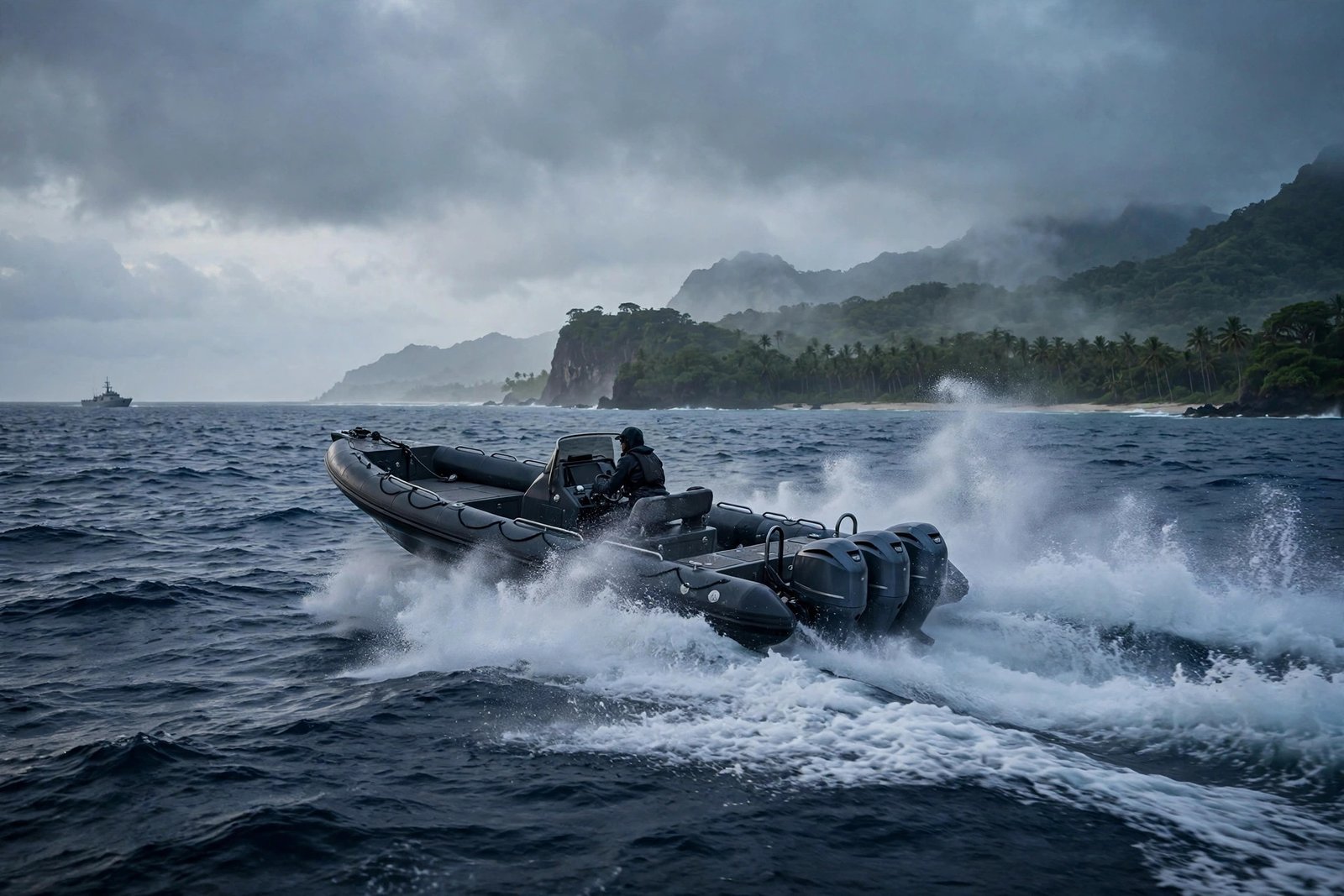
Cuba has accused the United States of allowing terrorists to operate with impunity on American soil, pointing to new details from its investigation into a February speedboat incursion that ended in a deadly gun battle off the island’s northern coast. The Cuba speedboat raid allegation, reported by Reuters on October 19, 2026, reopens one of the most serious armed confrontations between Cuban authorities and US-based exiles in decades — and drags a Florida political figure into the center of the storm.
According to Cuban law enforcement officials, the investigation into the February 25 Cuba speedboat raid includes confessions from detained survivors and evidence that the would-be insurgents trained on a farm in Florida owned by a Cuban-born woman living in the United States. Cuban prosecutor Edward Roberts said some of those involved in training the group “remain at large” in the US — a claim Havana says proves Washington is looking the other way while militants prepare armed operations against the island from Florida soil.
The accusation lands at a moment of already severe tension between the two countries. Cuba is grappling with a deepening fuel crisis that Havana blames in part on US pressure limiting Venezuelan oil shipments, and the Trump administration has taken a harder line on Cuba in its second term. Monday’s announcement ensures the eight-month-old Cuba speedboat raid will now fuel a fresh diplomatic fight.
- Cuba Speedboat Raid: What Havana Said on October 19
- The February 25 Gun Battle: What Happened
- The Arsenal on Board: 13,000 Rounds, Rifles and Starlink
- The Florida Connection: Lugo Fernandez and the Training Farm
- Washington’s Response: Rubio’s Investigation Pledge
- Why This Is Flaring Up Now: The Cuba Fuel Squeeze
- What’s Next: Terrorism Charges and a Diplomatic Fight
- Additional Details
Cuba Speedboat Raid: What Havana Said on October 19
HAVANA — Cuban law enforcement officials on Monday alleged that the United States was allowing terrorists to operate with impunity on American soil, Reuters reported, citing details of an eight-month investigation into the February Cuba speedboat raid that led to a gun battle at sea with deaths and injuries on both sides.
The core of Havana’s case, as described by state-run media, is that the February 25 Cuba speedboat raid was not a spontaneous voyage but a planned armed infiltration — and that the planning, training, and financing all happened inside the United States. The Cuba speedboat raid investigation, officials say, ties every stage of the operation to US territory.
Officials said the investigation into the Cuba speedboat raid included confessions from those detained by Cuban authorities, and that those confessions showed some of the people involved in training the insurgents remain at large in the US. The message from Havana is blunt: the shooters may be dead or in Cuban custody, but the network that built them is still operating freely in Florida.
That framing — the Cuba speedboat raid as an armed operation conceived, armed, and trained on US territory — is why Cuba is calling it terrorism rather than an immigration stunt or a smuggling run gone wrong. Under Cuban law, the detainees face terrorism charges, which carry the island’s harshest penalties.
The February 25 Gun Battle: What Happened
On the morning of February 25, 2026, Cuba’s Interior Ministry says an illegal speedboat was detected inside Cuban territorial waters, registered in Florida, USA, with registration number FL7726SH. The vessel approached to within one nautical mile northeast of the El Pino channel, in Cayo Falcones, Corralillo municipality, in Villa Clara province — well inside Cuba’s maritime boundary.
A patrol vessel from Cuba’s Border Guard Troops, carrying five service members, approached the speedboat to verify the identities of those on board. According to Cuba’s account, the speedboat’s crew opened fire first, striking and injuring the Cuban commander of the patrol vessel. What followed was a sustained exchange of gunfire at sea.
The toll of the Cuba speedboat raid, by Cuba’s accounting: four aggressors aboard the foreign vessel were killed in the initial confrontation — a figure Cuban authorities later revised upward — and six were injured. Those wounded were evacuated and given medical assistance.
According to the October Reuters update, five of the ten Cuban exiles aboard were ultimately killed, and the rest, including some who were wounded, are now in custody facing terrorism charges. The Cuban Embassy in Washington posted the Interior Ministry’s statement on X at the time, declaring that “in the face of current challenges, Cuba reaffirms its determination to protect its territorial waters” and safeguard its sovereignty.
Cuban officials identified the men on the boat as Cuban nationals living in the United States, not random boaters. In February, Havana described the group as an armed infiltration team and labeled its actions terrorist in nature.
One of the dead was identified by Cuban state media as Michel Ortega Casanova; others named as having been aboard included Amijail Sánchez González and Leordan Enrique Cruz Gómez, both described by Cuba as wanted for alleged involvement in terrorism-related activities, along with Duniel Hernández Santos, who Cuban officials say was arrested and confessed to his role in the attempted infiltration.
The American side never confirmed Cuba’s version of events. At the time, the incident sent shockwaves through diplomatic circles and reignited longstanding tensions, with the whereabouts and treatment of the wounded detainees remaining unclear for months. Eight months on, the Cuba speedboat raid remains one of the most hotly disputed episodes in modern US-Cuba relations.
The Arsenal on Board: 13,000 Rounds, Rifles and Starlink
What the ten exiles brought with them on the Cuba speedboat raid is the strongest evidence, in Cuba’s telling, that this was a paramilitary operation rather than a refugee crossing. According to the Cuban investigation described by state-run media on Monday, the arsenal seized in the Cuba speedboat raid included nearly 13,000 rounds of ammunition, 11 rifles, 15 handguns, Molotov cocktails, a VHF radio, and Starlink satellite communication equipment.
The manifest reads like an invasion kit. Nearly 13,000 rounds of ammunition for a ten-man team suggests a force that expected to fight — not flee. The Molotov cocktails point to sabotage or arson plans, the VHF radio and Starlink gear to coordinated communications with handlers off the boat. Reuters notes the Cuba speedboat raid arsenal was assembled, financed, and transported from within the United States.
The presence of Starlink hardware aboard the vessel is a detail with wider resonance. Starlink terminals have become a recurring feature of modern conflict zones — StateLineDaily has covered how Starlink connectivity shaped Ukraine’s war effort and how the White House ordered a slowdown of the network for Ukraine’s drones after Elon Musk approached President Trump with the proposal.
Read StateLineDaily’s full timeline of the Starlink Ukraine slowdown here: Starlink Ukraine Slowdown: White House Ordered Starshield Cap After Musk Proposal, Reports Say. In Cuba’s hands, the terminals are exhibit evidence; in Washington’s, the brand is now repeatedly entangled in armed operations abroad.
Cuba also says the men aboard had known histories of criminal and violent activity — an assertion meant to undercut any claim that they were ordinary asylum seekers who blundered into Cuban waters. Havana’s prosecutor framed the weapons stockpile as proof that the Cuba speedboat raid’s backers intended sustained violence on the island, not a one-way trip.
The Florida Connection: Lugo Fernandez and the Training Farm
The most explosive new detail in Monday’s Cuba speedboat raid announcement is the naming of a Florida resident. Cuban authorities accused Maritza Lugo Fernandez, a Cuban national residing in Florida, of helping to organize the alleged plot. According to Cuba’s investigation, some of those detained confessed that they had trained on a farm property in Florida owned by Lugo Fernandez.
Lugo Fernandez leads the Florida-based “Partido Democrático 30 de Noviembre” — the Democratic Party of November 30 — a Cuban exile political group. Reuters reports that Lugo Fernandez denies the allegations. As of publication, no US law enforcement agency had publicly confirmed that the farm is under investigation, and no charges in the United States have been announced in connection with the plot.
The allegation matters because it is the hinge of Havana’s “impunity” charge in the Cuba speedboat raid case: a named person, a named place, an alleged training site on American soil — and, in Cuba’s telling, no American consequences. “It is also important to highlight … the crimes still being committed today by individuals and organizations that, from within the United States, provided the property used to carry out these acts,” prosecutor Edward Roberts said, explicitly tying the Florida farm into the terrorism case.
Cuba has a long history of accusing South Florida of harboring anti-Castro militants, and South Florida has a long history of producing them. The question Washington now faces is whether US federal law enforcement views the Cuba speedboat raid farm allegation as a matter for investigation or as Havana’s propaganda.
Either way, the naming of Lugo Fernandez puts the FBI and federal prosecutors in an uncomfortable spotlight: if the training happened as Cuba describes, federal statutes on terrorism-related activity on US soil would apply. If it didn’t, Havana has just handed US officials a formal claim to investigate and, presumably, rebut.
Washington’s Response: Rubio’s Investigation Pledge
When news of the Cuba speedboat raid gun battle first broke in February, the US response was cautious. Then-Secretary of State Marco Rubio said the United States would investigate and “determine the facts” — a formulation that neither accepted Cuba’s account nor defended the speedboat’s crew. Florida Rep. Carlos Giménez condemned the shooting at the time, and it was unclear whether the occupants of the speedboat were American citizens, only that they were identified by Cuba as Cuban nationals living in the US.
That holding pattern on the Cuba speedboat raid has lasted eight months. Monday’s Cuban announcement on the Cuba speedboat raid effectively dares Washington to break it: Havana has now put names, places, and confessions on the record and asked, in so many words, why no one in Florida is facing charges. A US State Department response had not been reported at the time of publication, and neither the White House nor federal law enforcement had publicly addressed the renewed accusation.
The politics inside the United States are genuinely complicated. South Florida’s Cuban-American community is one of the most politically organized diasporas in the country, and Cuban exile politics have shaped Florida elections for generations. An aggressive federal prosecution of an alleged anti-Castro plot organizer would reverberate through that community — just as a failure to investigate would hand Havana a propaganda victory and anger those who see armed infiltration as indefensible regardless of the cause.
There is also a practical problem for any US investigation of the Cuba speedboat raid: the surviving witnesses are all in Cuban custody, their confessions obtained by Cuban authorities, and their reliability would be contested in any American court. That evidentiary gap is precisely why Havana’s “impunity” framing may be difficult for Washington to answer cleanly — even if it wanted to.
Why This Is Flaring Up Now: The Cuba Fuel Squeeze
Cuba did not choose this week at random to release its Cuba speedboat raid findings. The announcement arrives as the island faces a deepening fuel crisis that Havana and independent analysts say has been worsened by US actions limiting Venezuelan oil shipments to the island — Venezuela being Cuba’s longstanding regional ally and energy lifeline.
The February clash itself took place against this backdrop of heightened US-Cuba tensions. In its original statement, Cuba’s Interior Ministry explicitly linked its maritime enforcement to the broader pressure campaign, saying the country reaffirmed its determination to defend its territorial waters in the face of current challenges. Eight months on, the fuel crisis has only deepened, and Havana’s rhetoric has hardened with it.
The Trump administration’s second-term Cuba policy has been markedly tougher than its predecessor’s, and the Cuba speedboat raid accusation gives Havana a counter-narrative to Washington’s pressure: the US, Cuba argues, is not merely sanctioning the island — it is tolerating armed aggression against it. Whether or not the claim holds up under independent scrutiny, it is designed to resonate with countries already skeptical of US policy in the hemisphere.
There is a second, subtler audience: Russia, China, and Iran, all of which have expanded ties with Cuba in recent years. An accusation that Washington harbors terrorists targeting a sovereign state is the kind of claim that finds a sympathetic hearing in Moscow and Beijing — and it costs Havana nothing to make it. The timing, two weeks before the US midterms, also guarantees the story will circulate in an American media environment already saturated with foreign-policy drama.
What’s Next: Terrorism Charges and a Diplomatic Fight
What happens to the detained exiles from the Cuba speedboat raid now? They face terrorism charges in Cuba, which carry the island’s most severe penalties. Havana has said the confessions of the detained support the prosecution’s case. Given the history of US-Cuba prisoner disputes, any trial will be watched closely in Washington — and could become a bargaining chip in future diplomacy.
Will the US investigate the Florida farm? That is the question Havana is forcing about the Cuba speedboat raid. No public US investigation of the farm has been announced, but Monday’s formal accusation — with a named organizer and a named property — makes continued silence harder to sustain. If US authorities open a case, expect it to be slow and evidence-starved; if they don’t, expect Havana to keep saying “impunity.”
Could the Cuba speedboat raid escalate into a broader US-Cuba confrontation? It already has, rhetorically. The harder question is whether it affects policy — new sanctions, new travel restrictions, or retaliatory Cuban moves. With the island’s fuel crisis deepening and the US midterms two weeks away, both governments have reasons to keep the temperature high.
Is there any chance of an independent investigation? Almost none. The crime scene is Cuban territorial waters, the witnesses are in Cuban custody, and neither side trusts the other’s account. The facts of the Cuba speedboat raid will likely remain disputed for years — decided less by evidence than by which government you believe.
Additional Details
Description: Cuba accused the United States on October 19, 2026, of letting terrorists operate with impunity on American soil, citing its investigation into the February 25 Cuba speedboat raid from the Florida Keys that ended in a gun battle with Cuban border guards. Ten Cuban exiles aboard the Florida-registered boat FL7726SH carried nearly 13,000 rounds of ammunition, rifles, handguns, Molotov cocktails, and Starlink equipment; five were killed and the survivors face terrorism charges.
Cuban prosecutor Edward Roberts alleged the plotters trained on a Florida farm owned by Maritza Lugo Fernandez, who denies the allegations, and said trainers remain at large in the US. Secretary of State Marco Rubio said in February the US would “determine the facts”; no US charges have been announced.
Cuba’s Interior Ministry said the vessel approached within one nautical mile northeast of the El Pino channel, Cayo Falcones, Corralillo municipality, Villa Clara province, and that the crew opened fire first, wounding the Cuban patrol commander. StateLineDaily’s related coverage of deportation policy and immigration enforcement can be found here: Trump Plan to Deport Ukrainians: What the Reported TPS Revocation Means for 240,000 Refugees.