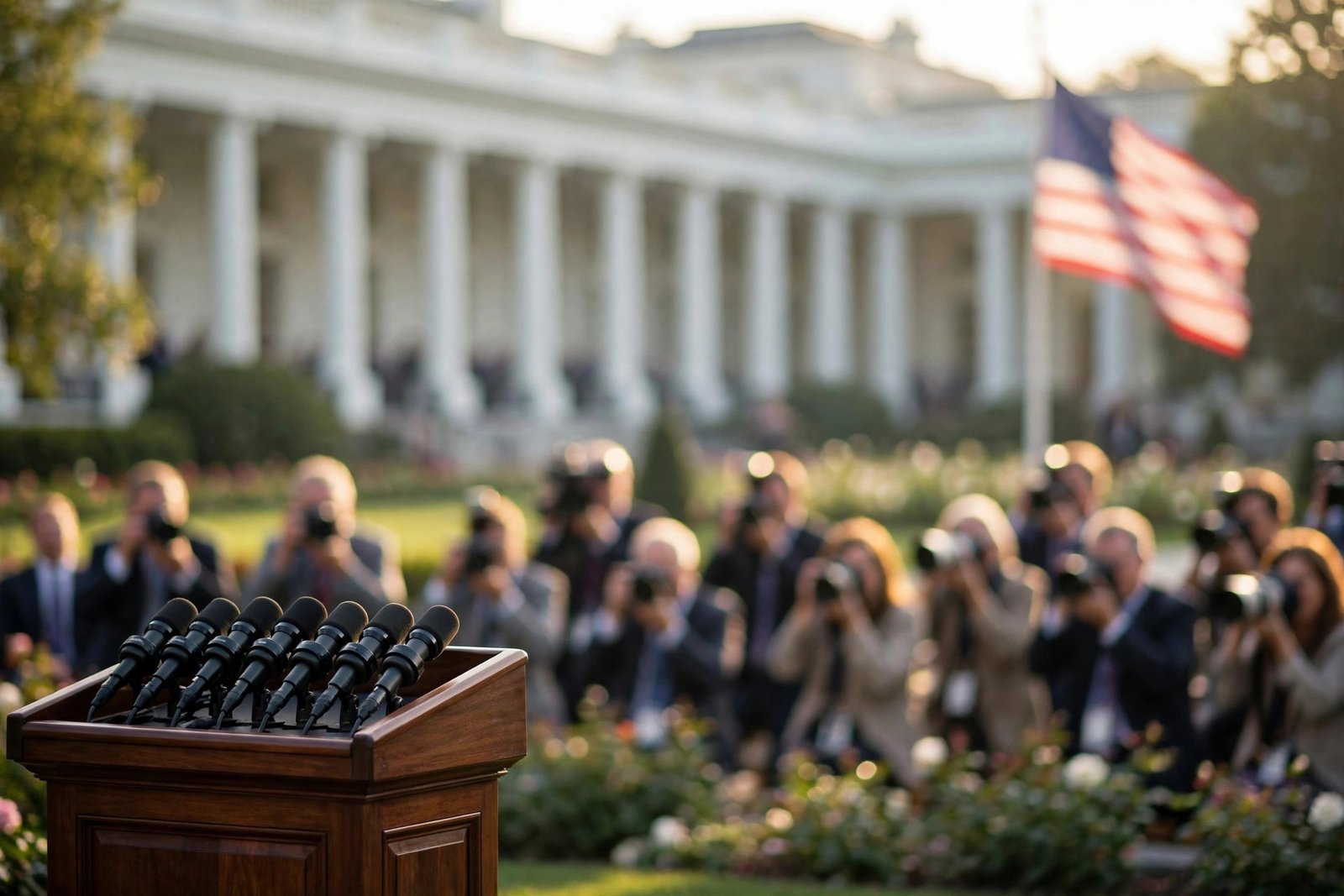
President Donald Trump signed a Trump women’s health executive order in the White House Rose Garden on Monday morning, standing alongside First Lady Melania Trump to create a new Women’s Health Division inside the National Institutes of Health and a White House Women’s Health Task Force aimed at closing the research gap between women’s and men’s medicine. The order, signed at 11:00 a.m. ET on October 19, 2026, was the centerpiece of a rare public appearance by the first lady, who told the audience the initiative would establish “a new standard for women’s health in America.”
The Trump women’s health executive order is the administration’s biggest federal move on women’s health policy in Trump’s second term — and it arrives just 15 days before the November 3 midterm elections, in which Republicans are battling to hold their narrow 218-214 House and 53-47 Senate majorities. First reported by USA Today, the initiative was driven personally by the first lady, who has rarely appeared at the White House alongside the president in recent months.
The Trump women’s health executive order directs federal research money toward cures for diseases that affect women disproportionately, orders the use of artificial intelligence to speed up medical discoveries, pushes therapies to move faster from the laboratory to patients, and targets affordability of care and women’s health education. Notably, the order does not specify any funding targets — and it lands amid an administration record of NIH budget cuts, canceled research grants, and a downsized federal health workforce, a tension critics were quick to highlight.
- Trump Women’s Health Executive Order: What Was Signed
- The NIH Women’s Health Division: What It Will Do
- Melania Trump Takes the Lead on Women’s Health
- Susie Wiles and RFK Jr. Will Lead the Task Force
- The Cuts Contradiction: A Health Push After NIH Budget Slashing
- Why Now? The Midterm Timing Question
- What’s Next
- Additional Details
Trump Women’s Health Executive Order: What Was Signed
President Trump and the first lady signed the Trump women’s health executive order together at the Rose Garden podium, with the president praising his wife’s “extraordinary leadership and skills” and saying she would “help improve the health of our nation’s women and girls.” A White House post on X described the order as creating “a Women’s Health Division at the NIH & a White House Women’s Health Task Force, aiming to close research gaps & modernize care for women,” according to Reuters.
The order has two main parts. First, it establishes a new Women’s Health Division within the National Institutes of Health. The division will not replace the NIH’s existing Office of Research on Women’s Health but will carry a broader mandate beyond research, a White House official told Reuters. Second, it creates a White House Women’s Health Task Force to coordinate the initiative across the federal government, with its first meeting scheduled for Monday afternoon in the Roosevelt Room.
Melania Trump told the Rose Garden audience the task force would overhaul the federal government’s approach to women’s health and “improve outcomes in all phases of life” — language the White House echoed in its official announcement. In her planned remarks, the first lady addressed the need to use artificial intelligence to speed up women’s health discoveries, along with access and affordability of care, the White House official said.
USA Today first reported the initiative, noting that the first lady had been pressing her husband’s administration to give women’s health greater priority in medical research. The story set up Monday’s ceremony as the culmination of a months-long push inside the White House.
The NIH Women’s Health Division: What It Will Do
The Trump women’s health executive order lays out a five-point directive for the new NIH division and the broader research effort. It will direct research funds toward finding cures for diseases that affect women in a disproportionate way; use AI to enhance medical research; accelerate the process of getting therapies from the lab to women; ensure women can afford medical treatment; and expand education around women’s health.
According to the Associated Press, the initiative is expected to address research gaps and conditions including maternal health, mental health, endometriosis, osteoporosis, heart disease, and stroke — areas where women’s health research has long lagged behind funding for men’s health conditions.
Researchers have documented the funding gap for years: women’s health conditions such as endometriosis, which affects an estimated 10% of women of reproductive age worldwide, have historically received a fraction of the research funding devoted to conditions of comparable prevalence affecting men. Maternal mortality in the United States, which remains the highest among wealthy nations, has also been a persistent flashpoint. The new division’s broader mandate beyond research — spanning care delivery, affordability, and education — signals the White House wants the unit to do more than publish studies.
One honest caveat, reported by the AP: the order does not specify funding targets. Without appropriated dollars or earmarked research money, the division’s practical impact will depend on how the NIH — an agency the administration has targeted for cuts — prioritizes the mandate in its existing budget.
Melania Trump Takes the Lead on Women’s Health
The first lady’s prominent role in the Trump women’s health executive order marks one of her most visible White House appearances of Trump’s second term. Melania Trump has been a rare sight at the White House in recent months, making the joint Rose Garden signing a notable moment for an initiative she personally championed.
According to USA Today’s reporting, Melania Trump pressed her husband’s administration to give women’s health greater priority in medical research — a push that culminated in Monday’s Trump women’s health executive order. Her remarks framed the initiative around speed and fairness: using artificial intelligence to accelerate discoveries and ensuring women can access and afford the care that results from them.
The “new standard for women’s health in America” framing positions the first lady as the public face of the initiative, and the White House leaned into that positioning at the ceremony, with the president crediting her leadership directly at the podium.
Susie Wiles and RFK Jr. Will Lead the Task Force
The Trump women’s health executive order puts the task force in the hands of two high-profile figures: White House Chief of Staff Susie Wiles and Health and Human Services Secretary Robert F. Kennedy Jr., according to the White House.
Wiles recently announced that she is cancer-free after a breast cancer diagnosis — personal context that gives her leadership of a women’s health task force added resonance. Read StateLineDaily’s coverage of the questions surrounding Susie Wiles’ role as Trump’s chief of staff for background on her standing inside the White House.
Kennedy, as HHS secretary, oversees the NIH itself, making his co-leadership role a practical one: any real research reorientation at the NIH will need his department’s cooperation. His tenure at HHS has been one of the most controversial of the second term, spanning vaccine policy battles, a controversial safety review of the abortion pill mifepristone, and the removal of a longstanding safety warning from many hormone replacement therapy products.
The pairing is unusual: a chief of staff with a personal cancer history and a health secretary whose policies have drawn fire from major medical groups. Whether that combination can credibly drive the women’s health research agenda the Trump women’s health executive order envisions — or whether the medical establishment will cooperate — is one of the order’s biggest open questions.
The Cuts Contradiction: A Health Push After NIH Budget Slashing
Here is the context competitors are likely to underplay: the Trump women’s health executive order arrives after an administration record of gutting the very research infrastructure it now says it wants to energize.
Since Trump’s second term began, the administration has pushed for healthcare cuts, including at the NIH, and moved to downsize the federal healthcare workforce, as Reuters reported. It sought to cut NIH grants for research on diversity-related topics and has reportedly moved to allow political appointees to control health-research funding — a shift that has alarmed scientists across the country.
The administration also launched a controversial safety review of the abortion pill mifepristone that could pave the way for restrictions; earlier this month, U.S. officials told a court the review would be completed by March. U.S. health officials removed a longstanding safety warning from many hormone replacement therapy products — a move that tightened supplies and led to shortages — while urging more manufacturers to study testosterone therapies for women. HHS also targeted family planning funds, announcing for the first time that applicants for Title X funding must align their programs with Trump’s political priorities, prompting legal action.
That record is exactly why critics questioned Monday’s ceremony: a women’s health research push is easy to announce, but research requires researchers — and the administration spent the past year shrinking the workforce and the grant pool. If the new NIH division gets no dedicated funding targets, as the AP reported, its fate will rest on whether the administration is willing to spend on an agency it has otherwise treated as expendable.
Why Now? The Midterm Timing Question
The Trump women’s health executive order landed 15 days before the November 3 midterms — and the timing is impossible to separate from the campaign calendar. Trump heads to Wichita, Kansas, on Monday evening for a 6:00 p.m. CDT rally at the Heartland Credit Union Arena, part of a closing blitz across battleground states. Read StateLineDaily’s coverage of Trump’s Kentucky rally to see how the president has been framing the stakes of the midterm fight.
Women’s health has become a potent electoral issue, particularly among suburban women who have drifted from the GOP in recent cycles. National polls put Trump’s approval at record or second-term lows of 33% to 36% just two weeks out, driven by voter dissatisfaction over the cost of living — the affordability pillar of the order speaks directly to that pressure. Read StateLineDaily’s coverage of September’s inflation report for the economic backdrop voters are feeling.
The question every analyst is asking: is the order a genuine research agenda or a 15-day-out outreach play? The answer will become visible quickly. The task force meets for the first time Monday afternoon in the Roosevelt Room. If it produces concrete funding, research targets, and timelines — rather than ceremony — it will earn the credibility the announcement promises. If it stalls after the midterms, the critics will have their answer.
What’s Next
When does the task force start work?
The White House Women’s Health Task Force, created by the Trump women’s health executive order, holds its first meeting Monday afternoon in the Roosevelt Room at the White House, hours after the Rose Garden signing.
Will there be new money for women’s health research?
The Trump women’s health executive order does not specify funding targets, per the AP. Whether the NIH’s new Women’s Health Division gets dedicated appropriations or must compete within the NIH’s existing budget is unresolved — and the administration’s record of cutting NIH grants makes that question central.
Does the new division replace the existing NIH women’s health office?
No. The new Women’s Health Division will not replace the NIH’s Office of Research on Women’s Health but will have a broader mandate beyond research, according to the White House.
What does the medical establishment think?
HHS officials could not be immediately reached for comment when Reuters reported the order, and the AP reported the order’s full details were still emerging from the Monday ceremony. Reaction from major medical groups — which have clashed with Kennedy’s HHS on the mifepristone review and other policies — will be worth watching this week.
How does this fit Trump’s Monday schedule?
After the 11:00 a.m. ET signing, Trump’s schedule had him departing the White House in the afternoon for Wichita, Kansas, where he delivers remarks at 6:00 p.m. CDT at the Heartland Credit Union Arena.
Additional Details
Description: President Trump and First Lady Melania Trump signed the Trump women’s health executive order on October 19, 2026, creating a Women’s Health Division at the NIH and a White House Women’s Health Task Force led by Susie Wiles and RFK Jr. The order targets research gaps, AI-driven discoveries, therapy speed, affordability, and education — but names no funding targets. It comes 15 days before the Nov. 3 midterms and amid an administration record of NIH and healthcare cuts.