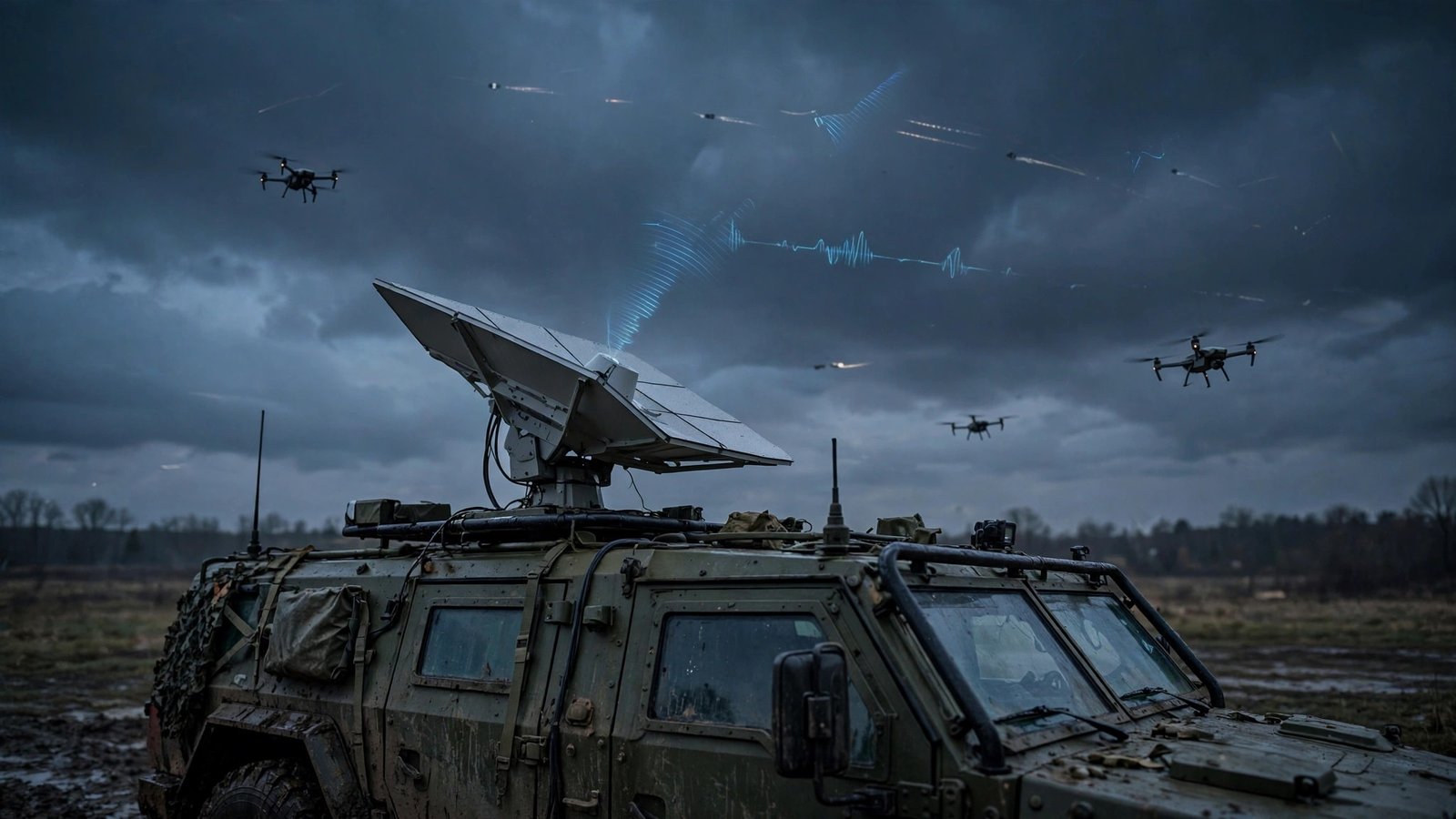
The order to slow down Ukraine’s battlefield internet came from inside the White House itself. That is the conclusion of a string of explosive reports about the Starlink Ukraine slowdown that have rocked Washington and Kyiv — with Reuters, The Telegraph, and Axios all pointing to the same startling sequence: billionaire Elon Musk proposed restricting Ukraine’s satellite service, President Donald Trump agreed, and the Pentagon carried out the order that left Ukrainian drones blind in midair.
On October 14, 2026, Ukrainian military units discovered without warning that their Starlink terminals would no longer work in motion above roughly 100 miles per hour — about 160 kilometers per hour. According to Serhiy Beskrestnov, a defense technology adviser to President Volodymyr Zelensky, the sudden speed restriction severed communications for attack drones operating at higher velocities, disrupting front-line operations in the middle of an intensifying war. The Starlink Ukraine slowdown, officials said, arrived with no notice and no explanation.
What followed was a week of denials and contradictions. Trump said neither he nor Musk was responsible. Musk said the decision ultimately rests with the U.S. president. And a growing stack of sourced reporting said the truth is that both men were involved — a “planned operation,” in Zelensky’s words, that may have cost Ukrainian lives. As NewsQuill’s reconstruction of the reporting puts it, three significant pieces of reporting “fit together” into one damning picture.
- What Happened on October 14: The Night Ukraine’s Drones Went Blind
- Reuters: The Order Came From Inside the White House
- The Telegraph: Musk Proposed It, Trump Agreed
- Trump’s Denial: “It Wasn’t Me, and I Don’t Think It Was Elon”
- Musk’s Defense: “Ultimately POTUS” Decides
- Zelensky: A “Big Mistake” That Will Bring “Human Losses”
- The Crimea Precedent: Musk Has Done This Before
- No Alternative: Europe Scrambles for a Starlink Replacement
- Bipartisan Backlash and the Investigation Push
- What’s Next
- Additional Details
What Happened on October 14: The Night Ukraine’s Drones Went Blind
The Starlink Ukraine slowdown began as a technical mystery. Ukrainian units operating long-range attack drones — the same aircraft Kyiv has been using to strike Russian oil refineries deep inside Russian territory — suddenly lost their satellite connections when the drones exceeded roughly 100 miles per hour. Ukraine’s 7th Rapid Reaction Corps reported connection drops lasting 10 to 20 seconds at speeds of 110 to 120 kilometers per hour, with some missions cancelled outright as a result. Officials said they received no advance warning before the restriction took effect.
The timing was not incidental. The restriction arrived in the middle of Ukraine’s escalating long-range drone campaign against Russian energy infrastructure — the same campaign that Trump had publicly attacked, calling Kyiv’s refinery strikes a “disgrace” and demanding that Ukraine stop targeting Russian oil facilities. Read StateLineDaily’s full timeline of Ukraine’s defiant drone strikes on Russian refineries here.
The cap’s mechanics were brutally simple: Starlink terminals in motion above the speed threshold would disconnect, forcing drones to slow to vulnerable speeds or fly blind. For a drone fleet built around speed and satellite guidance, the restriction was the equivalent of grounding the aircraft. Ukrainian commanders scrambled to adapt, but the damage to ongoing operations was immediate — and, as Zelensky would later argue, the human cost may have been measured in lives.
Reuters: The Order Came From Inside the White House
The first shoe dropped on October 15, when Reuters reported that the order to limit Starshield service came from inside the White House, citing two U.S. officials and one Western official briefed on the matter. Starshield is SpaceX’s military-grade satellite service — the government-oriented variant of Starlink built for national security customers, including the U.S. Department of Defense.
The Reuters reporting was careful: it did not name the individual who originated the instructions. But its sourcing — three officials, two American and one Western — placed the decision at the very top of the chain. Pentagon leadership, the report said, received instructions that Ukraine’s Starshield service needed to be slowed. The question immediately became: who in the White House gave the order?
The report landed amid an already tense moment in U.S.-Ukraine relations. Days earlier, Trump had signed an executive order waiving key Russia sanctions and tariffs under the Sanctioning Russia and Iran Act of 2026 — the Graham Act — just before an October 18 enforcement deadline. See StateLineDaily’s coverage of the Trump Russia sanctions waiver for the full background. In Kyiv’s eyes, the Starlink Ukraine slowdown looked like one more lever pulled against Ukraine at the same moment Moscow was being handed relief.
The Telegraph: Musk Proposed It, Trump Agreed
The second shoe dropped the next day. The Telegraph reported, citing four sources familiar with the discussions, that Musk had personally approached Trump with the proposal to throttle Starshield speeds for Ukraine — and that Trump agreed, clearing the way for the Pentagon to implement the slowdown.
The newspaper’s account added a revealing detail: according to a senior source, Musk became concerned about the potential backlash among European customers after the restrictions disrupted Ukrainian operations during intense Russian attacks. The source suggested that Musk’s subsequent public statements assigning responsibility for Starshield decisions to the U.S. government were an effort to distance himself from the consequences. The source’s description of the alleged Musk–Trump understanding was succinct: “The reality is that they were both in it.”
Then, on October 17, Axios delivered the third piece of the puzzle: a source familiar with the Musk–Trump conversation independently confirmed that Trump did not object to Musk’s proposal. As NewsQuill’s analysis notes, the distinction between the reports is worth preserving — the Telegraph says Trump agreed; Axios says he did not object — but both accounts describe Musk presenting the proposal to the president before the restrictions were imposed.
Trump’s Denial: “It Wasn’t Me, and I Don’t Think It Was Elon”
On October 16, as he left the White House for a trip to Georgia, Trump was asked by a reporter who gave the order to restrict Starlink. His answer was a flat denial: “I don’t know if it was anyone, because it wasn’t me, and I don’t think it was Elon.”
Trump also said that restrictions on Ukraine’s access to the Starshield system had not been imposed by the United States, and added that he had a good relationship with Ukrainian President Volodymyr Zelensky. The denials put Trump directly at odds with the sourced accounts from Reuters, the Telegraph, and Axios — a conflict that has only deepened as more details emerged.
The denial also sat uneasily alongside Musk’s own public framing. If the United States had not imposed the restrictions, as Trump claimed, and SpaceX had not imposed them, as Musk implied — then who, exactly, throttled Ukraine’s battlefield internet? Neither man has offered an answer to that question.
Musk’s Defense: “Ultimately POTUS” Decides
Musk’s public response was more legalistic than Trump’s. On October 16, in response to former Ukrainian defense minister Mykhailo Fedorov posting that Starlink connectivity at speeds up to 160 km/h was being restored, Musk replied that “Starshield systems are owned and controlled by the US government” and that “any limits on speed or usage are decided by the US military and ultimately POTUS.”
He added a second, crucial assertion: “Starlink is a commercial service owned and controlled by SpaceX. Usage of Starlink is limited to civilian or defensive activities and cannot be used for offensive military action, as doing so would be inappropriate for a commercial company.”
The “defensive activities only” doctrine is Musk’s long-standing position — and it is doing a lot of work in his defense. Ukraine’s long-range strikes on Russian refineries are, by definition, offensive military action. If the October 14 restriction targeted terminals in motion at drone-attack speeds, Musk’s framing suggests the cap was a commercial enforcement of SpaceX’s usage terms — not a political favor to Moscow. But critics note that the timing, the lack of warning, and the White House’s alleged role make the “terms of service” explanation ring hollow.
Zelensky: A “Big Mistake” That Will Bring “Human Losses”
Kyiv’s reaction was furious. Zelensky described the Starlink Ukraine slowdown as “a big mistake that will bring a lot of human losses”, framing the issue around the human and battlefield cost rather than the political dispute over its origin. For a president who has watched his drone fleet become Ukraine’s most effective weapon against Russian energy infrastructure, the restriction struck at the heart of the war effort.
On October 17, Zelensky went further, calling the throttling a “planned operation” after Ukrainian technicians tested terminals in European countries and found them working fine — evidence, Kyiv argued, that the restriction was geographically targeted at Ukraine’s battlespace rather than a system-wide technical change. The claim directly undercut any suggestion that the slowdown was a routine network adjustment.
The episode has deepened Zelensky’s already strained relationship with the Trump White House. In recent days, Trump has publicly blamed Kyiv for prolonging the war, accused Zelensky of “not wanting to end this war” on Truth Social, and pressured Ukraine to halt its refinery-strike campaign — while simultaneously easing sanctions pressure on Moscow and, according to the Journal, entertaining Putin’s proposal for a three-way summit on Ukraine’s future without Zelensky at the table. Read StateLineDaily’s breakdown of the Putin Trump Xi summit proposal here. In that context, Kyiv reads the Starlink Ukraine slowdown not as an accident, but as part of a pattern.
The Crimea Precedent: Musk Has Done This Before
What most coverage of the Starlink Ukraine slowdown has missed is that Musk has restricted Starlink access for Ukrainian military operations before — and admitted it. In September 2023, Musk confirmed that he had refused a Ukrainian request to extend Starlink coverage to Crimea to support a drone attack on Russia’s Black Sea Fleet, saying he feared being complicit in a “major” act of war and that enabling the attack would make SpaceX explicitly complicit.
The Crimea episode established Musk’s doctrine in public: Starlink is a commercial system that he believes should not be weaponized for offensive strikes, and he has personally intervened to prevent its use in attacks he considers escalatory. His biographers and critics have debated ever since whether that restraint was prudent de-escalation or a billionaire unilaterally vetoing a sovereign ally’s military operation.
That history matters for the October 2026 incident in two ways. First, it gives Musk’s “defensive activities only” defense a genuine track record — this is not a new argument invented for the current controversy. Second, it shows exactly why Kyiv and its European allies are so alarmed: one private individual, whose company controls the overwhelming majority of the world’s active communications satellites, has now twice demonstrated the ability to switch off Ukraine’s offensive capabilities at a decisive moment — and this time, according to multiple news organizations, he did it with the president’s blessing.
No Alternative: Europe Scrambles for a Starlink Replacement
The second underreported consequence of the Starlink Ukraine slowdown is the shock it has sent through European capitals — and the scramble it has triggered for an alternative. As one analyst put it this week, after the October throttling there is still no viable replacement for Musk’s system, even after years of efforts.
Todd Harrison, a fellow at the American Enterprise Institute, told commentators that Ukraine’s “next best hope” would be Amazon’s Project Leo — whose largest shareholder is Jeff Bezos. “Another billionaire,” Harrison observed wryly, “and just hope that Leo doesn’t throttle them or cut them off randomly.” The remark captured the structural problem: every alternative to Starlink is either years away or controlled by another private actor with the same theoretical leverage.
The numbers are stark. SpaceX operates more than 11,000 satellites. Eutelsat, the Paris-based company helping build the European Union’s planned IRIS2 constellation — Europe’s would-be Starlink rival — has roughly 600 satellites in orbit. In August, the EU moved up IRIS2’s first satellite launch to 2029, and Bloomberg reported this week that Brussels is now fast-tracking antitrust approval for the project in direct response to the Starlink crisis. Finnish companies Nokia and ICEYE announced a satellite-communications partnership in early October, but analysts say that too is years from operational relevance.
In other words, the Starlink Ukraine slowdown has exposed a dependency with no short-term exit. Ukraine’s military communications rest on a single company’s constellation, governed by Pentagon contracts whose decision authority — who can order a slowdown, with what notice, under whose authority — remains murky. Until a documented, enforceable agreement governs those questions, episodes like the October 14 restriction are likely to recur, and each one will reopen the same question about who is actually in charge: SpaceX, the Pentagon, or the White House.
Bipartisan Backlash and the Investigation Push
The political fallout in Washington has crossed party lines. A bipartisan group of lawmakers has penned a letter calling for an investigation into the Starshield disruption — a rare show of unity in a Congress otherwise consumed by midterm-election combat. The letter’s premise is straightforward: if the White House ordered a private company to degrade an ally’s military communications during wartime, the public deserves to know who decided it, on what authority, and why.
The push for an investigation has been amplified by the administration’s other recent Ukraine moves. The October 16 executive order waiving Graham Act sanctions on Russia, the diesel-purchase arrangement with Moscow, and the pressure campaign on Zelensky over refinery strikes have combined in critics’ telling into a pattern of concessions to the Kremlin — a pattern the Starlink Ukraine slowdown appears to fit.
For Trump, the stakes are compounded by the calendar. The midterm elections are on November 3, just 15 days away, and foreign-policy controversies involving Russia and Ukraine have a history of cutting against incumbents. Whether the investigation push gains subpoena power will depend heavily on which party controls the House come January — a question the midterms will answer.
What’s Next
Will there be an investigation? A bipartisan letter demanding one is already in motion, but real investigative power — hearings, subpoenas, compelled testimony — likely depends on the November 3 midterms. If Democrats take the House, expect the Starlink Ukraine slowdown to become a marquee probe of the Trump administration’s second term.
Can Ukraine reduce its dependence on Starlink? Not quickly. Amazon’s Project Leo, Europe’s IRIS2 (first launch 2029), and the Nokia-ICEYE partnership are all years from matching Starlink’s 11,000-satellite constellation. In the near term, Kyiv’s only options are diplomatic: pressure on Washington to guarantee uninterrupted service, and on SpaceX to codify clear rules.
Will the Pentagon clarify who controls Starshield? Musk says the U.S. government — ultimately the president — decides. The White House has not said who gave the order. The contract terms governing Starshield service levels, notice periods, and decision authority have never been publicly disclosed. Pressure is building for the Pentagon to publish them.
Does the slowdown change the war? The speed cap has reportedly been eased, but the trust is broken. Ukraine’s military planners must now assume their primary communications link can be throttled on political orders — a constraint that will shape how Kyiv conducts long-range strikes for the rest of the war.
What about Musk’s European customers? The Telegraph reported Musk worried about backlash from European customers after the disruption. European governments are both SpaceX clients and Ukraine’s biggest backers — and they now have vivid evidence that their satellite provider can be turned against their ally’s war effort. Expect European defense contracts to carry new sovereignty clauses going forward.
Additional Details
The Starlink Ukraine slowdown began on October 14, 2026, when a speed restriction of roughly 100 miles per hour (160 km/h) was imposed on Starlink terminals in motion, severing connections for Ukrainian military drones. Reuters reported on October 15 that the order to limit Starshield came from inside the White House, citing two U.S. officials and one Western official. The Telegraph reported on October 16 that Elon Musk had proposed the throttling to Donald Trump and that Trump agreed, clearing the Pentagon to implement it, citing four sources. Axios reported on October 17 that a source confirmed Trump did not object to the proposal. Trump denied responsibility on October 16, saying “it wasn’t me, and I don’t think it was Elon.” Musk said Starshield limits are decided by the U.S. military and “ultimately POTUS.” Zelensky called the restriction “a big mistake” that would bring “human losses” and later a “planned operation.” A bipartisan group of U.S. lawmakers called for an investigation. The EU is fast-tracking antitrust approval for its IRIS2 satellite constellation as an alternative.
Description: The Starlink Ukraine slowdown was ordered from inside the White House after Elon Musk proposed it to Donald Trump, Reuters, the Telegraph and Axios report. StateLineDaily breaks down the October 14 speed cap that blinded Ukraine’s drones, the denials, Zelensky’s fury, the Crimea precedent, and Europe’s scramble for a Starlink alternative.