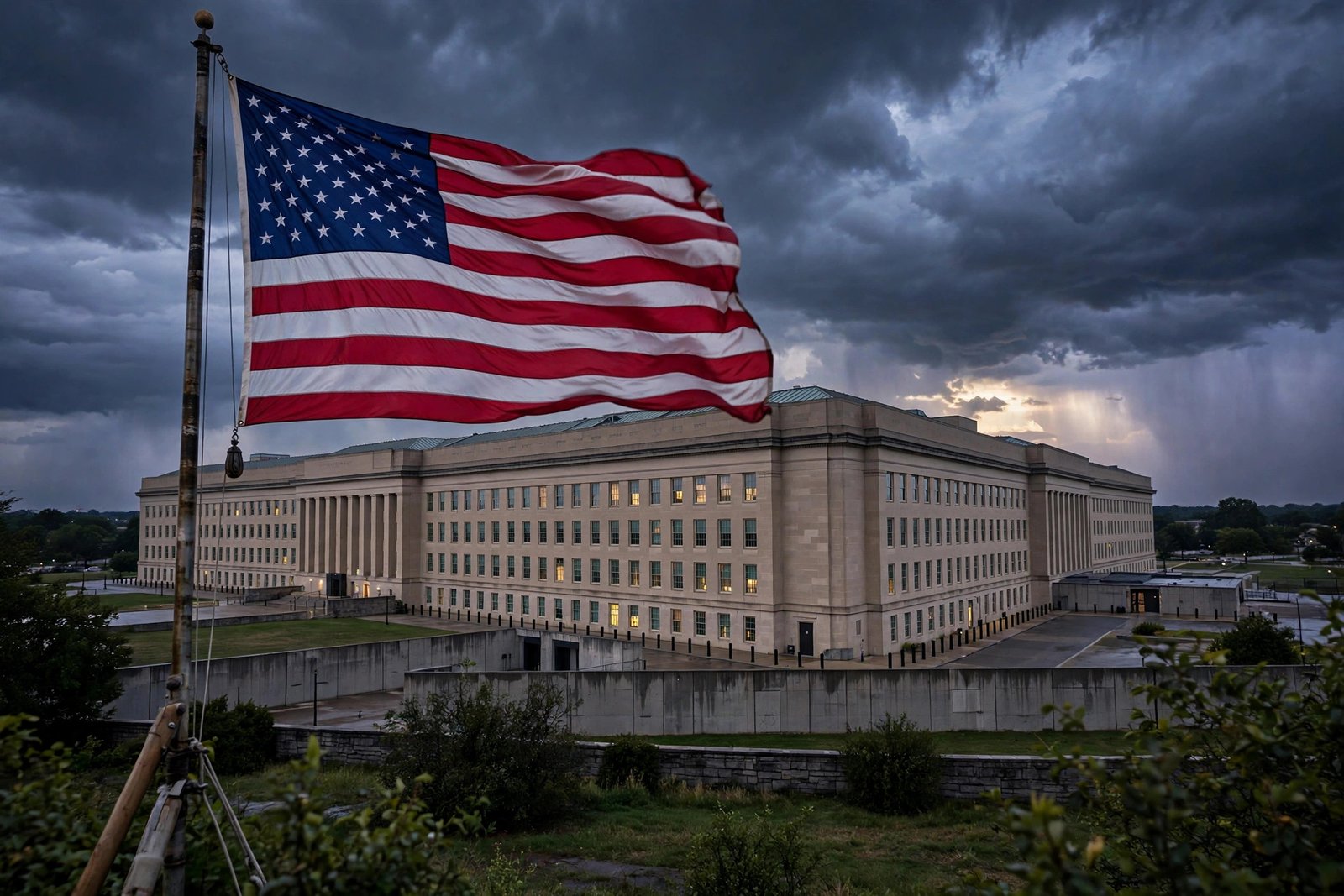
President Donald Trump has canceled a plan to livestream the firing squad execution of Fort Hood shooter Nidal Hasan, overruling Defense Secretary Pete Hegseth in a rare public disagreement that ended less than a week of bipartisan fury. The decision means Hasan — the former Army psychiatrist convicted of killing 13 people in the 2009 Fort Hood attack — will still be executed by firing squad on December 3, but no cameras will be allowed to broadcast the event to the public.
The canceled Hasan execution livestream had been announced by Hegseth last week, and it almost immediately became a political problem for the White House. Trump’s reversal, posted to Truth Social on Thursday, October 15, 2026, came as polls showed the vast majority of Americans opposed televising the execution and after allies including Vice President JD Vance and House Speaker Mike Johnson publicly distanced themselves from the plan.
For readers following the Hasan execution livestream controversy, the bottom line is straightforward: the execution itself remains on schedule, victims’ families may still attend in person, and the livestream is dead. What makes the episode remarkable is not just the outcome, but what it revealed — about how the plan was made without the president’s knowledge, about military law, and about why this execution would be historic regardless of whether cameras were present.
- Trump Cancels the Hasan Execution Livestream
- What Trump Wrote on Truth Social
- How Hegseth’s Livestream Plan Sparked Backlash
- The Bipartisan Revolt: Vance, Johnson and Religious Leaders
- Extra Knowledge: No Country Livestreams Executions — and Army Rules Wouldn’t Allow It
- Extra Knowledge: Why This Would Be the First Military Execution in 65 Years
- Extra Knowledge: The Paralysis Detail Trump Reportedly Didn’t Know
- What’s Next
- Additional Details
Trump Cancels the Hasan Execution Livestream
The Hasan execution livestream is officially off. President Donald Trump announced on Thursday that he had scrapped the Pentagon’s plan to broadcast the December 3 firing squad execution of Nidal Malik Hasan, the former Army major found guilty of gunning down 13 people and wounding 32 others at Fort Hood, Texas, on November 5, 2009.
The decision marked a rare public break between Trump and Defense Secretary Pete Hegseth, one of the president’s closest allies. The Pentagon, for its part, insisted after the announcement that Trump and Hegseth were “completely aligned” on the decision, according to Pentagon spokesperson Sean Parnell.
But reporting around the canceled Hasan execution livestream tells a more complicated story. Trump and his advisers had been unaware of the livestream plan before Hegseth unveiled it, a White House official speaking on condition of anonymity told Reuters. CNN reported that people across the Pentagon and the Army were caught off guard by Hegseth’s announcement — and that the president himself was not aware the secretary was going to announce the plan last week.
Trump’s cancellation of the Hasan execution livestream lands less than three weeks before the November 3 midterm elections. The Washington Post noted that the move amounts to a significant rebuke of a senior Cabinet official whom Trump has defended through numerous controversies — even as support for Hegseth has flagged within parts of the Republican Party.
The timing matters politically. The White House has been working to keep the focus on midterm priorities, and a national debate over broadcasting a military execution — with the president’s own vice president refusing to watch — was becoming a distraction. Read StateLineDaily’s full coverage of Trump’s approval rating and the midterm polling picture here.
What Trump Wrote on Truth Social
Trump explained his decision to cancel the Hasan execution livestream in a Truth Social post on Thursday morning. He argued that broadcasting the execution might have served as a deterrent — but said that many Americans simply did not want to watch a man die.
In the post, Trump described Hasan as a terrorist and noted that 13 people, including a pregnant soldier and her unborn child, were killed in the 2009 attack, with 32 others seriously wounded, according to a summary of the president’s statement. He wrote that streaming the execution might have demonstrated how America deals with terrorists — but acknowledged the objections of “many very good and well meaning people” who would rather not watch Hasan die through streaming or any other visual device.
The key line of the post, confirmed across multiple news outlets: “He will die, as scheduled, by firing squad, but this event will not be streamed.”
Trump added that the immediate families of the victims will be allowed to witness the execution in person if they choose — consistent with standard practice at American executions, where victims’ relatives are among the authorized witnesses.
The president had hinted over the weekend that he was reviewing the issue, telling reporters there were arguments both for and against the broadcast — a signal, observers said, that he was not yet sold on Hegseth’s plan. The Thursday announcement settled it.
How Hegseth’s Livestream Plan Sparked Backlash
The canceled Hasan execution livestream began as a social media announcement. Last Thursday, Hegseth posted that the administration planned to let the public watch Hasan’s execution, arguing that Americans should be able to witness the punishment imposed on a convicted terrorist.
The reaction was swift — and it crossed party lines. Within days, the plan to livestream the Hasan execution faced opposition from Republican and Democratic lawmakers, religious leaders, victims’ families, survivors of the attack, and large majorities of the public.
CNN reported earlier in the week that the president and his advisers were actively debating whether to call off the plan. By Thursday, public opinion data made the political calculus clear: an ABC News/Washington Post/Ipsos poll released that morning found that roughly 80 percent of Americans opposed livestreaming the execution — including 64 percent of Republicans. A slim majority, about 53 percent, supported the firing squad method itself, drawing a sharp line between the punishment and its broadcast.
Some survivors of the Fort Hood attack argued that televising Hasan’s death would turn the punishment into a spectacle rather than an act of justice. Others worried that footage of the execution could be repurposed as propaganda by extremist groups — turning a moment of accountability into a recruitment tool.
Hegseth has stood by the underlying decision to execute Hasan and has touted his hardline stance on military discipline since taking office. But the livestream episode is the latest in a string of controversies surrounding the Pentagon chief — and it is one of the few times Trump has publicly overruled him. Read StateLineDaily’s full report on the reported White House shakeup and Trump’s relationship with his top officials here.
The Bipartisan Revolt: Vance, Johnson and Religious Leaders
The opposition to the Hasan execution livestream was notable for who joined it. Vice President JD Vance questioned the plan publicly, saying he would not watch the broadcast — though he stressed that the controversy over the broadcast method should not overshadow the killings for which Hasan was convicted.
House Speaker Mike Johnson warned that footage of the execution could be used as terrorist propaganda, echoing concerns raised by national security observers. Republican Rep. Austin Scott and Democratic Rep. Adam Smith also opposed the broadcast, giving the backlash a bipartisan stamp in Congress.
Religious leaders added their voices. Archbishop Timothy Broglio, who oversees the spiritual care of Catholic members of the U.S. armed forces, raised objections to the livestream. Pope Leo has condemned capital punishment in all its forms — a position that put the Vatican at odds not only with the broadcast plan but with the execution itself.
Victims’ families were divided but largely uneasy. While some wanted the world to witness justice being done, others told reporters they feared the broadcast would reduce their loved ones’ deaths to a media event. Several survivors said they had already lived through the worst day of their lives once and had no interest in watching it become a spectacle.
The breadth of the opposition helps explain why Trump moved to end the controversy. With the midterms three weeks away and his own party’s leadership uncomfortable, the political cost of defending the livestream was rising by the day. See StateLineDaily’s coverage of the midterm money race for more on what’s at stake on November 3.
Extra Knowledge: No Country Livestreams Executions — and Army Rules Wouldn’t Allow It
Here is a detail most coverage of the canceled Hasan execution livestream has only mentioned in passing: no other country in the world is known to televise or livestream a judicial execution. Had Hegseth’s plan gone forward, the United States would have been the first.
That is not an accident. Modern military and civilian execution protocols are built around controlled, private witness lists — not public broadcast. And in the U.S. military, the rules are explicit.
Army Regulation 190-55, the Army’s governing document for military executions, identifies a specific set of authorized witnesses: military officials, the condemned person’s attorneys, victims’ relatives, and news media representatives. But it contains no express provision authorizing a livestream — and its sample media advisory for executions actually prohibits media witnesses from bringing recording devices into the witness room, legal analysts noted.
In other words, the military’s own rulebook appears to assume executions will be witnessed in person, by a limited audience, without cameras. Legal experts raised serious questions about whether the Pentagon even had the authority to order a broadcast — a question that is now moot, but one that would have fueled lawsuits had the plan survived.
There is also a practical concern that got less attention: security. Broadcasting the time, location, and method of a military execution in advance creates obvious operational risks at a working military installation. Fort Hood — now officially Fort Cavazos — is one of the largest Army bases in the world, and turning an execution into a live public event would have created an unprecedented security challenge.
Extra Knowledge: Why This Would Be the First Military Execution in 65 Years
Even without cameras, the December 3 execution of Nidal Hasan would be historic. It would be the first execution carried out by the United States military in more than 65 years.
The last one took place on April 13, 1961, when U.S. Army Private John A. Bennett was hanged at Fort Leavenworth, Kansas, after being convicted by court-martial of raping and attempting to murder an 11-year-old girl while stationed in Austria, according to historical records. Bennett’s victim and her parents had pleaded for clemency, but President John F. Kennedy declined to commute the sentence — and Bennett went to the gallows at age 25.
The military death penalty still exists under the Uniform Code of Military Justice, which authorizes capital punishment for 15 offenses. But the path from sentence to execution is extraordinarily narrow: a military jury must be unanimous in both its verdict and its sentence, and — unlike civilian cases — the President of the United States must personally confirm a military death sentence before it can be carried out, according to the Death Penalty Information Center.
That presidential-confirmation requirement is one reason military executions are so rare. Another is the appeals process, which can stretch for decades. Army Private Ronald Gray, for example, has been on military death row since 1988; President George W. Bush approved his execution in 2008, but a federal judge issued a stay later that year and the case has been in litigation ever since.
Hasan’s case moved faster than most because he barely defended himself at his 2013 court-martial. Military justice experts described him as an unusual litigant who seemed to want the proceedings over as quickly as possible — a posture that limited the usual avenues of appeal. Even so, the gap between his 2013 sentence and the scheduled 2026 execution spans 13 years.
Six inmates currently sit on military death row at the U.S. Disciplinary Barracks at Fort Leavenworth. If Hasan’s execution proceeds on December 3, he will be the first to leave it for the execution chamber since Bennett in 1961 — a span of 65 years and 8 months.
Extra Knowledge: The Paralysis Detail Trump Reportedly Didn’t Know
One of the more revealing details to emerge from the canceled Hasan execution livestream debate is something the president apparently learned only this week: Nidal Hasan is paralyzed from the waist down.
CNN reported that Trump remarked privately that he did not initially know Hasan was paralyzed — a detail that reportedly gave him pause as he weighed the livestream question.
Hasan has been in a wheelchair since the day of the attack. On November 5, 2009, as he opened fire inside the Soldier Readiness Processing Center at Fort Hood, he was shot by responding civilian police officers — Sergeant Kimberly Munley and Sergeant Mark Todd — and the gunfire severed his spine. He has used a wheelchair ever since, including throughout his 2013 court-martial, where he represented himself for much of the trial.
The paralysis adds an unavoidable visual dimension to any discussion of broadcasting the execution: a livestream would have shown a wheelchair-bound man being put to death by firing squad. For some of the plan’s critics, that image captured exactly what troubled them — not the punishment itself, which majorities support, but the transformation of a solemn act of military justice into televised content.
Hasan, now 56, was an Army psychiatrist who had become increasingly radicalized in the years before the attack, communicating with the extremist cleric Anwar al-Awlaki. At trial, prosecutors presented evidence that the shooting was a deliberate act of terrorism; Hasan, who shouted “Allahu Akbar” as he fired, was convicted on 13 counts of premeditated murder and 32 counts of attempted premeditated murder. The military jury sentenced him to death unanimously.
What’s Next
Will the execution still happen on December 3? Yes. Trump’s announcement changed only the broadcast plan. Hasan is still scheduled to be executed by firing squad at Fort Hood on December 3, 2026, and victims’ immediate family members may attend in person.
Could the livestream plan come back? The president’s Truth Social post was definitive — “this event will not be streamed” — and the Pentagon says it is aligned with the decision. Reversing course now would require Trump to overrule himself, which appears unlikely with the midterms approaching.
Will there be legal challenges to the execution itself? Hasan’s attorneys could still file last-minute appeals, as is standard in capital cases. But his limited defense at trial and the exhaustion of most appellate avenues make a stay less likely than in a typical death penalty case.
What does this mean for Hegseth? The public rebuke adds to a difficult stretch for the defense secretary, who has faced flagging support from within the Republican Party. Whether Trump continues to stand by him through the midterms is now an open question — and one that Washington will be watching closely.
How will this play before the midterms? The episode is likely to fade from the headlines, but it fits a pattern of late-campaign controversies that keep the administration’s internal divisions in view. With 80 percent of Americans opposed to the livestream, Trump’s decision to cancel it is the politically safe move — but the fact that the plan was announced without his knowledge will fuel questions about who is running the Pentagon.
Additional Details
Description: President Donald Trump canceled the Hasan execution livestream on October 15, 2026, overruling Defense Secretary Pete Hegseth’s plan to broadcast Nidal Hasan’s December 3 firing squad execution at Fort Hood. The Hasan execution livestream drew bipartisan backlash, with Vice President JD Vance, House Speaker Mike Johnson, religious leaders, and 80 percent of Americans opposing the broadcast in an ABC News/Washington Post/Ipsos poll. Hasan, convicted of killing 13 people in the 2009 Fort Hood attack, will still be executed by firing squad on December 3 — which would be the first U.S. military execution since Army Private John A. Bennett was hanged at Fort Leavenworth in 1961. Trump’s Truth Social post said the victims’ immediate families may attend in person, and that the event “will not be streamed.”
The article also covers the Pentagon’s claim that Trump and Hegseth are “completely aligned,” Army Regulation 190-55’s prohibition on recording devices in execution witness rooms, the 65-year gap since the last military execution, and the detail — reported by CNN — that Trump did not initially know Hasan is paralyzed from the waist down. Key figures: 13 killed and 32 wounded on November 5, 2009; execution set for December 3, 2026; 80 percent opposed the livestream including 64 percent of Republicans; 53 percent supported the firing squad method.
2 thoughts on “Trump Cancels Hegseth’s Plan to Livestream Fort Hood Shooter Nidal Hasan’s Firing Squad Execution”