The United States and Israel are drawing up detailed plans for renewed Trump Iran strikes after the November 3 midterm elections, according to a New York Times report published October 21, 2026, that cites American officials and people briefed on the deliberations. The potential campaign would be “short but intensive” — roughly three days of strikes targeting Iran’s nuclear facilities, energy infrastructure, and missile and drone arsenals — even as President Donald Trump has repeatedly vetoed proposals for a return to major combat this year and publicly pledged on October 8 not to attack Iran before Americans vote.
The report, relayed by Haaretz on October 22, says the two militaries have stepped up exercises in recent weeks, including flights over Iraq to rehearse strike maneuvers. A White House official told the Times that the administration does not comment on military plans “that may or may not exist,” but added that Trump is keeping all options on the table to ensure Iran cannot acquire a nuclear weapon. The revelation landed hours after Trump told a South Carolina rally that the United States “could leave now” but wants to make sure any outcome with Iran “lasts for a long time.”
The timing is electric: with the midterms just 13 days away, the question of whether the war ends or escalates has become one of the most consequential unknowns hanging over the election. Read StateLineDaily’s full timeline of Trump’s Iran deal promises for background on how the stalled diplomacy got here.
- ► The New York Times Report: What the Trump Iran Strikes Plan Includes
- ► ‘We’ll Finish It Together’: Netanyahu, Hegseth and the Monday Sortie
- ► Why Trump Keeps Vetoing the Attack Plans
- ► ‘Trump Strait’: The Rally Message of ‘We Could Leave Now’
- ► Iran’s Warning: Data Centers, Internet Cables and the ‘Father of All Bombs’
- ► What Eight Months of War Has Already Cost
- ► What’s Next for the Trump Iran Strikes Plan
- ► Additional Details
The New York Times Report: What the Trump Iran Strikes Plan Includes
The Times report, published late Wednesday and circulating widely on Thursday, paints the most detailed picture yet of post-midterm military planning — the emerging Trump Iran strikes plan. According to the newspaper, preparations are advancing for a campaign that would likely include strikes on Iranian nuclear facilities, missile and drone systems, and energy infrastructure. Some U.S. officials believe an intensive three-day offensive “could cause enough economic damage to change the Iranian position,” the report said.
The Trump Iran strikes plan could also include a strike on Pickaxe Mountain, a deeply buried nuclear-related site that planners have long viewed as one of the hardest targets in Iran’s program. The rehearsal activity has been increasingly visible: U.S. and Israeli aircraft have been flying over Iraq to practice strike maneuvers, and preparations have intensified in recent weeks, per the report.
Separately, reporting by The Financial Times added a striking near-miss to the timeline: the Israel Defense Forces had prepared for several days of fighting with Iran about a week and a half earlier — with a target list that reportedly included civilian infrastructure such as power plants and nuclear facilities — but Trump opposed resuming hostilities before the midterm elections and blocked the operation. The Jerusalem Post, citing IDF sources, disputed that characterization, reporting that the military had not been planning a strike on the October 10 weekend — a discrepancy that underscores how closely held and contested the planning really is.
One thing the reports agree on: no decision has been made, and no operation has been approved. The Times stressed that it is “far from certain” Trump will sign off on the Trump Iran strikes plan, noting that he has vetoed multiple proposals for a return to major combat this year — most recently this very month.
We Will Finish It Together’: Netanyahu, Hegseth and the Monday Sortie
The planning is playing out against a backdrop of visible military motion. Axios reported Wednesday, citing Israeli and American officials, that dozens of Israeli Air Force fighter jets conducted an operational sortie on Monday, flying as far as the vicinity of Iran’s border — roughly 1,300 kilometers from Israel. The flight took place on the same day that Defense Secretary Pete Hegseth met with Prime Minister Benjamin Netanyahu at Ovda Air Base during an unannounced visit to Israel; Axios reported the sortie was unrelated to Hegseth’s visit.
Hegseth’s trip itself was the kind of secretive consultation that fuels strike speculation: the Pentagon declined to provide details of the Netanyahu meeting, and Hegseth posted only about visiting American service members at CENTCOM. Netanyahu, meanwhile, made the message public. In a phone call posted online Monday, the Israeli prime minister told Trump: “Donald, we have a job to finish.” “We’ll finish it together,” he added.
The remark was a sharp turn from earlier this month, when Trump told Time magazine he was “not involved in [Israeli] politics anymore” — a posture that evaporated with his full-throated endorsement of Netanyahu days later. The Axios reporting on Hegseth’s unannounced visit was first flagged on StateLineDaily’s coverage of Vance’s break with Trump over the Netanyahu endorsement, which noted the Hegseth trip as it unfolded.
Why Trump Keeps Vetoing the Attack Plans
The central tension in the Times reporting on the Trump Iran strikes plan is the gap between the planners and the president. Trump has held off proposal after proposal this year, and on October 8 he said publicly that the United States would not attack Iran before the midterms because the two sides were engaged in “productive discussions.” Officials told the Times there is a small chance he could still order a campaign this month, but that political considerations make an operation after November 3 more likely.
The calculus is straightforward. A memorandum of understanding signed in June by the U.S. and Iran — brokered through Pakistani and Qatari mediation — has stalled amid disagreements, including over navigation in the Strait of Hormuz. The Strait has been effectively closed since the U.S. and Israel launched the war on February 28, and the global energy shock it triggered has pushed U.S. gasoline prices to an average of $4.30 a gallon, according to AAA — a figure Democrats are weaponizing in the final weeks of the campaign.
With Trump hitting record-low approval — Reuters/Ipsos has him at 31%, and CNN/SSRS polling this week found 32% — and Democrats leading the congressional generic ballot by as much as 12 points, a major new war before Election Day would hand Democrats a potent closing argument about chaos and costs. As StateLineDaily reported on Trump’s midterm pitch, the president is leaning on executive authority as his closing case — and a veto on new strikes fits that image of control.
The flip side is the one Trump’s own allies raise: if the plans leak and he does nothing, the “tough” brand takes a hit with the base that cheered the February strikes. Netanyahu’s “we have a job to finish” was not subtle about which side of that argument Israel is on.
‘Trump Strait’: The Rally Message of ‘We Could Leave Now’
At his South Carolina rally on Wednesday, Trump offered his own framing. “It’ll end very soon. We could leave now, but we want to make sure it lasts for a long time,” he said, claiming the United States had defeated Iran militarily and financially and adding that Tehran would “never have a nuclear weapon.”
He also said the United States has a blockade on the Strait of Hormuz — the waterway Iran effectively closed to commercial traffic when the war began — and floated a rename that drew the biggest laugh of the night: “We changed the name of the Gulf of Mexico. Why can’t we change the name of the Hormuz Strait?” He called the waterway the “Trump Strait,” a riff on his administration’s January 2025 order renaming the Gulf of Mexico the “Gulf of America.”
The joke landed in a week when Trump also traveled to Sioux City, Iowa — his Thursday schedule had him headlining remarks at the Sioux Gateway Airport at 6:30 PM local time as part of a 32-day midterm blitz. The rally message on Iran was classic Trump: claim victory, promise permanence, and keep every option alive at once. But behind the one-liners, the Times reporting suggests the military machinery is being positioned for the day after the election — positioned, not yet authorized.
Iran’s Warning: Data Centers, Internet Cables and the ‘Father of All Bombs’
Tehran is not waiting quietly. Iranian officials have warned that any renewed conflict would not be “short,” threatening to expand the target set beyond commercial shipping and energy infrastructure to data centers and undersea internet cables — a threat that carries weight in a global economy where a single cut cable can disrupt markets on two continents.
Mahdi Mohammadi, a senior adviser to Iran’s negotiator General Mohammad Bagher Ghalibaf, rejected the prospect of a swift end to renewed hostilities, dismissing the idea that the U.S. could conclude another round of strikes within 72 hours as a “fantasy.” Iran, he said, would determine when the war would end. “Our attacks will be more fierce, creative and different,” he added. “We are determined and confident and strong planning has been put in place.”
Some reporting has also pointed to Iranian claims about a “Father of All Bombs”-style weapon — a claim analysts treat with skepticism but one that signals Tehran wants to project an escalatory edge. The message is aimed as much at Washington’s planners as at the American public: the cheap, quick war that some U.S. officials imagine is not the war Iran intends to fight.
What Eight Months of War Has Already Cost
This is the context competitors often skim over — what the first phase of the war actually did, which is precisely why the second phase is so fraught. The Times report itself sounded a cautionary note: there are reasons to be skeptical that renewed hostilities would be any more successful than the first phase of intense U.S.-Israeli strikes between February and April.
Those rounds of fighting drove up energy prices and inflation worldwide, eroded security across the Middle East, and — critically — severely strained the Pentagon’s supply of missile interceptors, according to the report. That interceptor shortage is the underreported engine of the current debate: air and missile defense inventories take years to replenish, and a three-day campaign against an adversary that has had eight months to disperse and harden its assets would consume munitions the Pentagon may not be able to spare without leaving other theaters exposed.
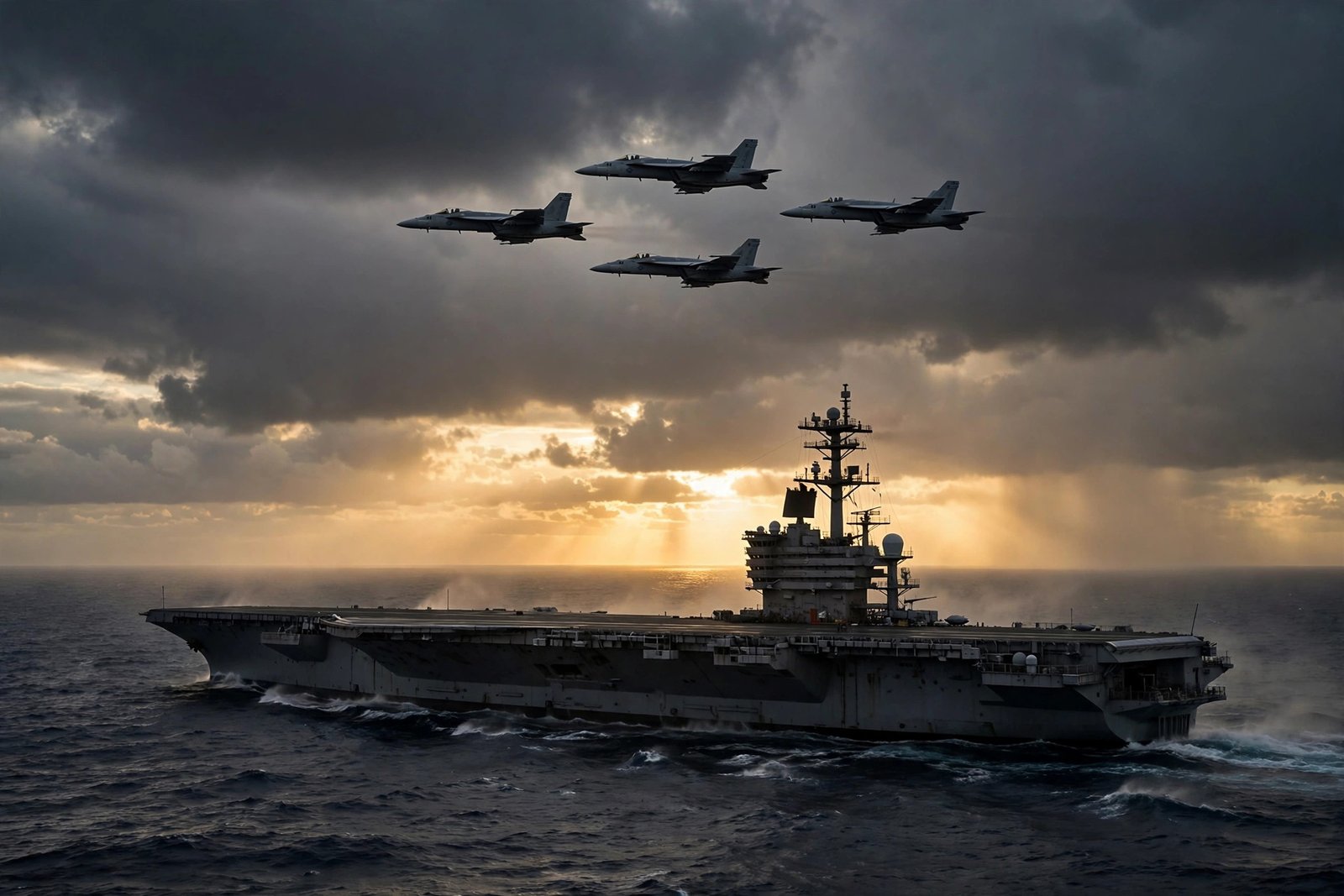
The report also described a substantial American force expected to be fully in place by early November — three aircraft carriers, thousands of Marines, fighter jets and Special Operations forces. That is a deployment posture that can sit in place for weeks as a signal, a threat, or a launch platform. Washington is also seeking to use the threat of renewed military action as leverage in negotiations over Iran’s nuclear program and control of the Strait of Hormuz, per the report — though Iranian negotiators have resisted making concessions on the nuclear issue, insisting it be addressed later in the talks.
The bottom line from the Times on the Trump Iran strikes plan: a second phase might not work any better than the first — but it is being prepared anyway, with full American force, timed for the days after the midterms.
What’s Next for the Trump Iran Strikes Plan
Will Trump approve strikes before the midterms?
The Times reports officials see a small chance of a Trump Iran strikes campaign this month, but the president’s own October 8 pledge and the election math make a pre-November 3 attack unlikely.
What happens November 4?
Watch for two signals: whether Trump publicly extends his pledge, and whether the carrier deployments that are due in place by early November stay put or quietly draw down.
Does the diplomacy have any life left?
The June memorandum of understanding brokered by Pakistan and Qatar is stalled over strait navigation and the sequencing of nuclear talks — and renewed strike threats are both leverage for and a threat to any revival.
Could Iran hit back at American infrastructure?
Tehran is explicitly threatening data centers and undersea internet cables — a warning that turns any “short” campaign into a potentially open-ended one.
How does this affect the midterms?
Gas prices at $4.30 a gallon are already a Democratic attack line; the mere existence of post-election Trump Iran strikes plans lets Republicans promise toughness while letting Democrats warn of chaos — each side gets something from the leak.
Additional Details
Topic: Trump Iran strikes — US-Israel military planning for renewed strikes on Iran after the 2026 midterms, per The New York Times; Trump’s rally comments; Iran’s counter-threats.
Published: October 22, 2026
Category: Politics
Description: The New York Times reports the US and Israeli militaries are drawing up detailed plans for renewed Trump Iran strikes after the November 3 midterms — a short but intensive 3-day campaign on nuclear and energy targets. Trump has vetoed plans repeatedly; Iran warns of wider retaliation.